

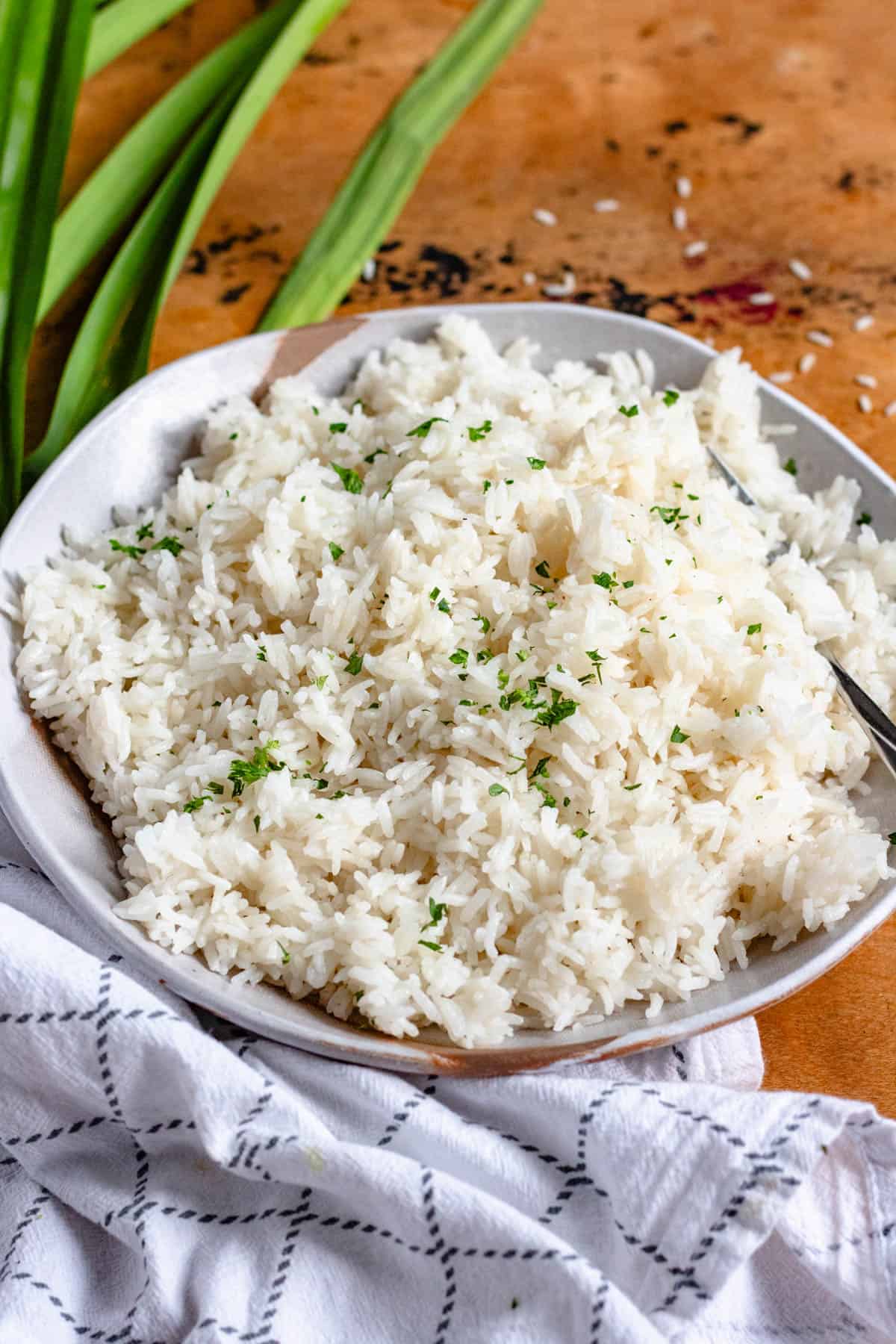
Coconut Rice is fragrant, creamy, fluffy and the perfect side to balance out a savory meat dish. It’s also easy to make and instantly elevates the whole meal! This article will teach you how to make it perfectly on the stovetop.
Hello Reader! I try my hardest to research recipes as best as I can before posting to ensure I am representing each culture correctly. If this recipe is from your country and I have made a mistake or you have suggestions for how to make it more authentic, I would love to hear! Please leave a comment below letting me know what should be different, and I will rework the recipe. It is always my intention to pay homage and respect to each cultural dish that I cook. Thanks for reading!
There’s something so sophisticated about a bowl of coconut rice. It’s fragrant, fluffy, creamy and with just a hint of indulgent sweetness. It’s the perfect balance for spicy curries, grilled meat (like this Chicken Satay) or a salty Shrimp Stir Fry.
It’s also incredibly easy to prepare. Just add a little coconut milk into your rice water and instantly you’ve infused each grain of rice with a rich flavor that you’ll savor with every bite. If you’re looking for an easy way to step up your rice game, this recipe is it!
How Coconut Rice Varies Around the World
Coconut rice takes on a unique personality wherever it’s made. It may be made with dried coconut or shaved coconut. It may also be infused with other spices or sweeteners. It may be mixed with beans or meat or may be served as a side.
In Thailand, it’s often lightly sweetened and served with mango in mango sticky rice or alongside spicy curries. In Sri Lanka and southern India, cooks add aromatic spices like cardamom, curry leaves, and cinnamon for depth.
In the Caribbean, coconut rice (Pigeon rice and peas) includes pigeon peas and is cooked with cilantro and scallions. Meanwhile, in Malaysia, it’s more savory, cooked with pandan leaves, ginger, and sometimes a hint of chili for heat. Each version celebrates the creamy, subtle flavor of coconut that adds depth to a meal.
This version of coconut rice was inspired by the Malaysian version, but can be adapted to the other variations as well.
Why You’ll Love this Recipe
- Beautiful Flavor and Texture: Rice soaks up creamy coconut milk perfectly, leaving you with a fluffy, creamy rice that is packed with sweet coconut flavor.
- Incredibly Versatile: Coconut rice’s popularity around the world demonstrates its versatility. As you can see from my Malaysian Nasi Lemak recipe, it pairs with spicy meat just as well as it does with salty anchovies or sweet fruit.
- Easy to Make: If you can make sushi rice or white rice, you can make coconut rice. It’s so simple to make and tastes restaurant-worthy!
Key Ingredients for Coconut Rice
Here is a visual overview of the ingredients in the recipe. Scroll down to the recipe at the bottom for quantities.
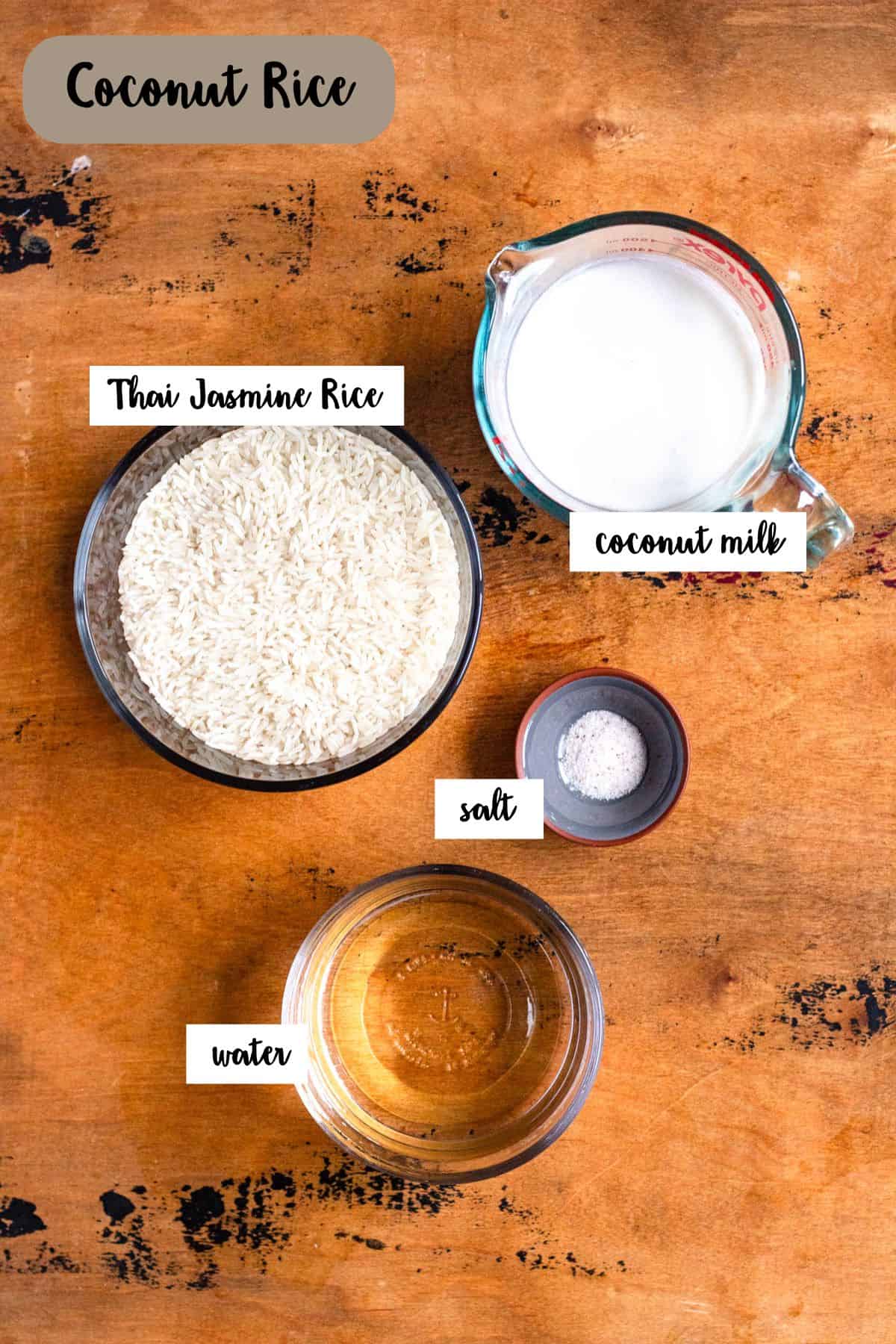
- Thai Jasmine Rice: You can use any kind of rice you want but with most Asian dishes, Jasmine rice is your best bet. It reacts perfectly with the coconut milk leaving you with rice that is fluffy, not sticky. Rinse the rice to remove any excess starch to keep the rice from getting sticky/mushy.
- Coconut Milk: The coconut flavor is the star of the show, so be sure and choose a high quality coconut milk. You can definitely use a lighter coconut milk if you want to cut out some fat. You will have a creamier and more flavorful rice using full fat but using light coconut milk will still elevate your rice!
- Salt: The salt in this recipe is really necessary to counter the sweetness of the coconut milk. If you add aromatics in this recipe (like ginger, pandan leaves, etc) it also enhances those flavors.
How to Make This Recipe
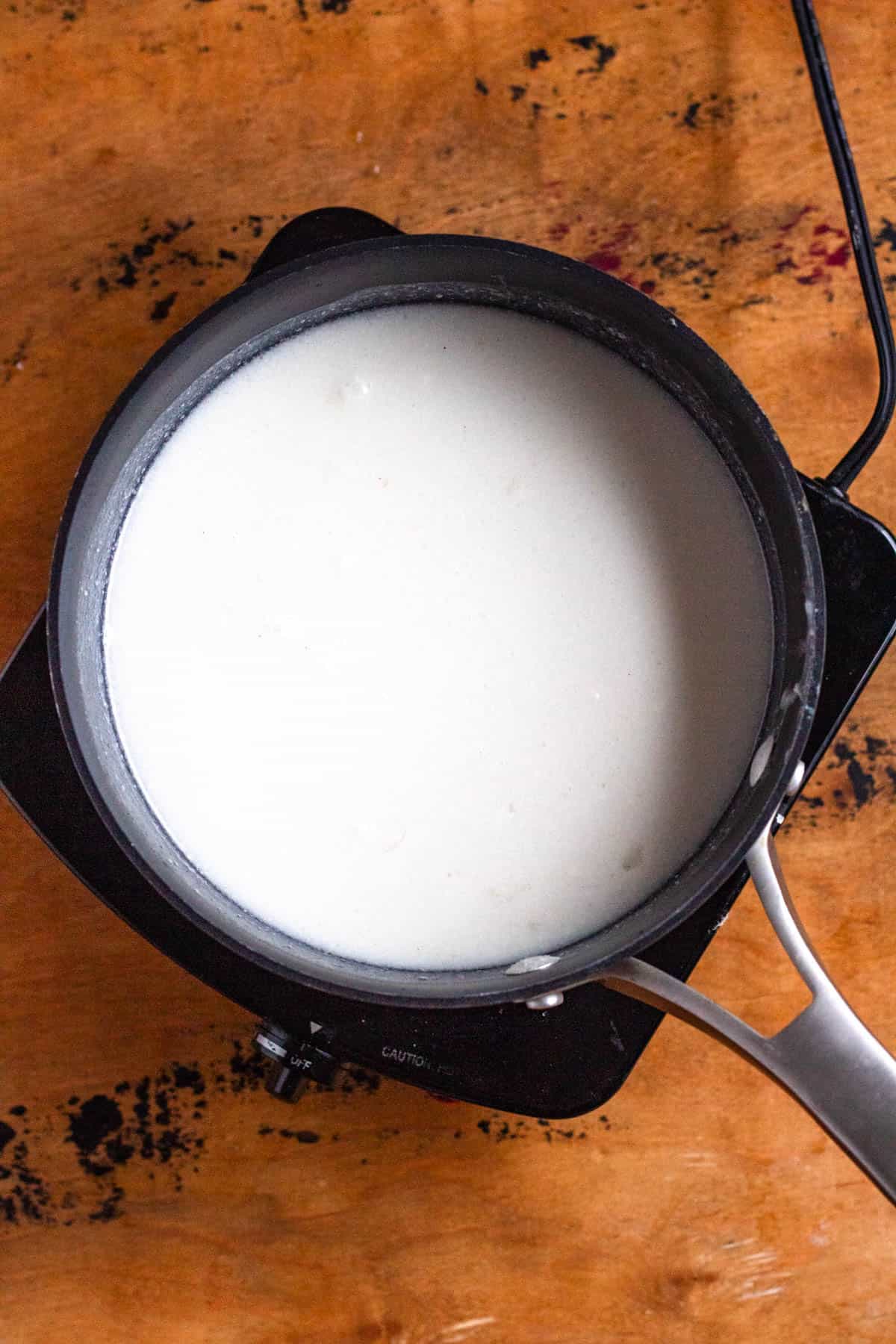
Step One: Put the rice in a pot along with the water, coconut milk, and salt.
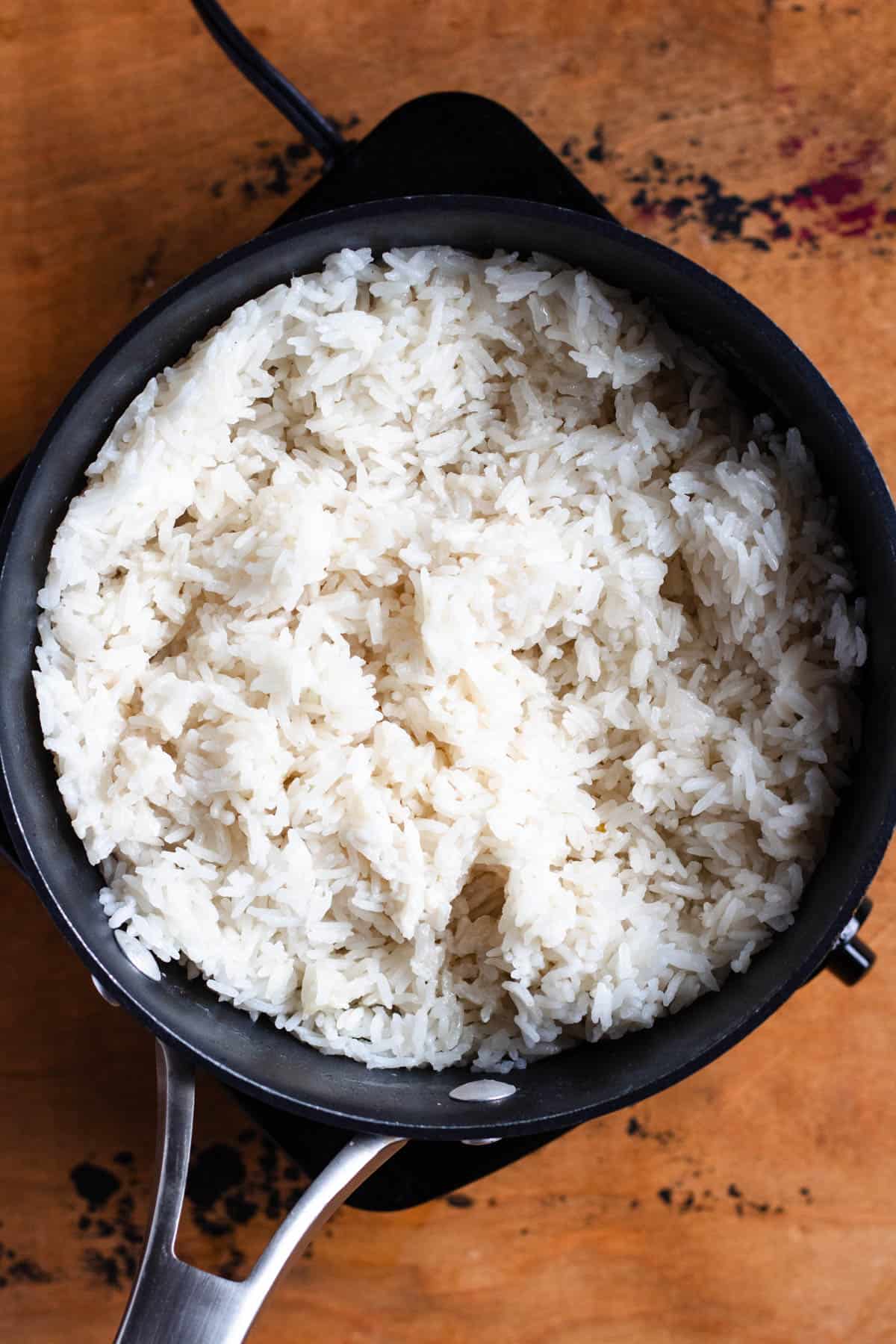
Step Two: Bring the rice to a simmer, uncovered. Once simmering, cover the rice and allow it to cook until all of the liquid is absorbed.
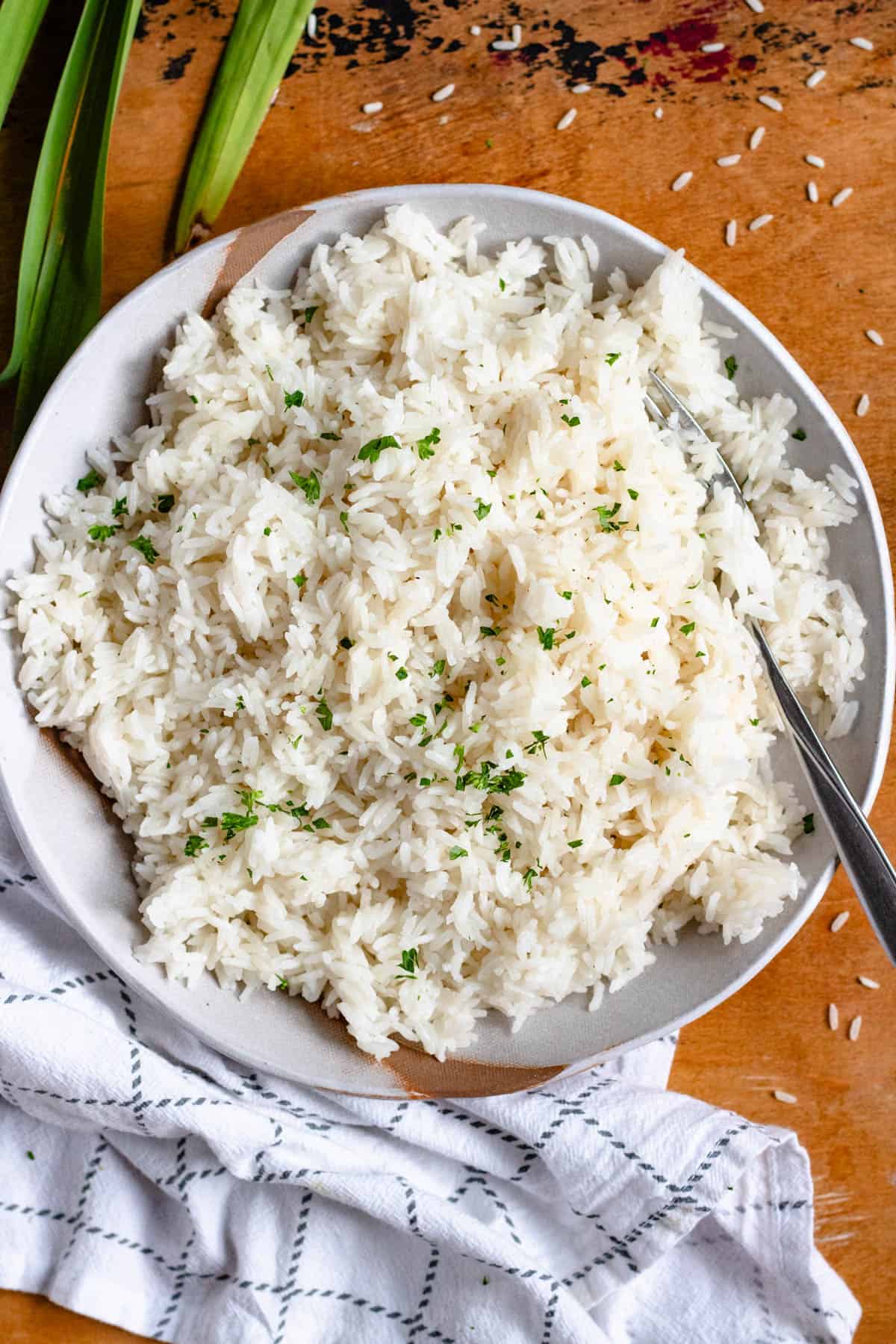
Step Three: Use a fork to fluff the rice and serve!
Expert Tips
- If you want a Malaysian version of coconut rice for Nasi Lemak, you can also add: 1 Pandan Leaf (tied in a knot so it’s easier to remove), 3 inches Lemongrass (hit with a meat mallet to crush it slightly), and 1 inch ginger, peeled and sliced, to your pot. Remove them once the rice is done steaming.
- Rinse your rice. This removes extra starch which can make your rice very sticky. If you don’t rinse your rice before cooking, add an extra ¼ cup of water to your recipe.
- You can tell that your rice is done cooking by tilting the pot to see if any water pools around the edges
- If you have a very fatty can of coconut milk, you may notice some coconut oil settle on top of the rice when it is done cooking. This is shiny and thick and perfectly OK. It does not mean that you need to keep cooking your rice.
Recipe FAQs
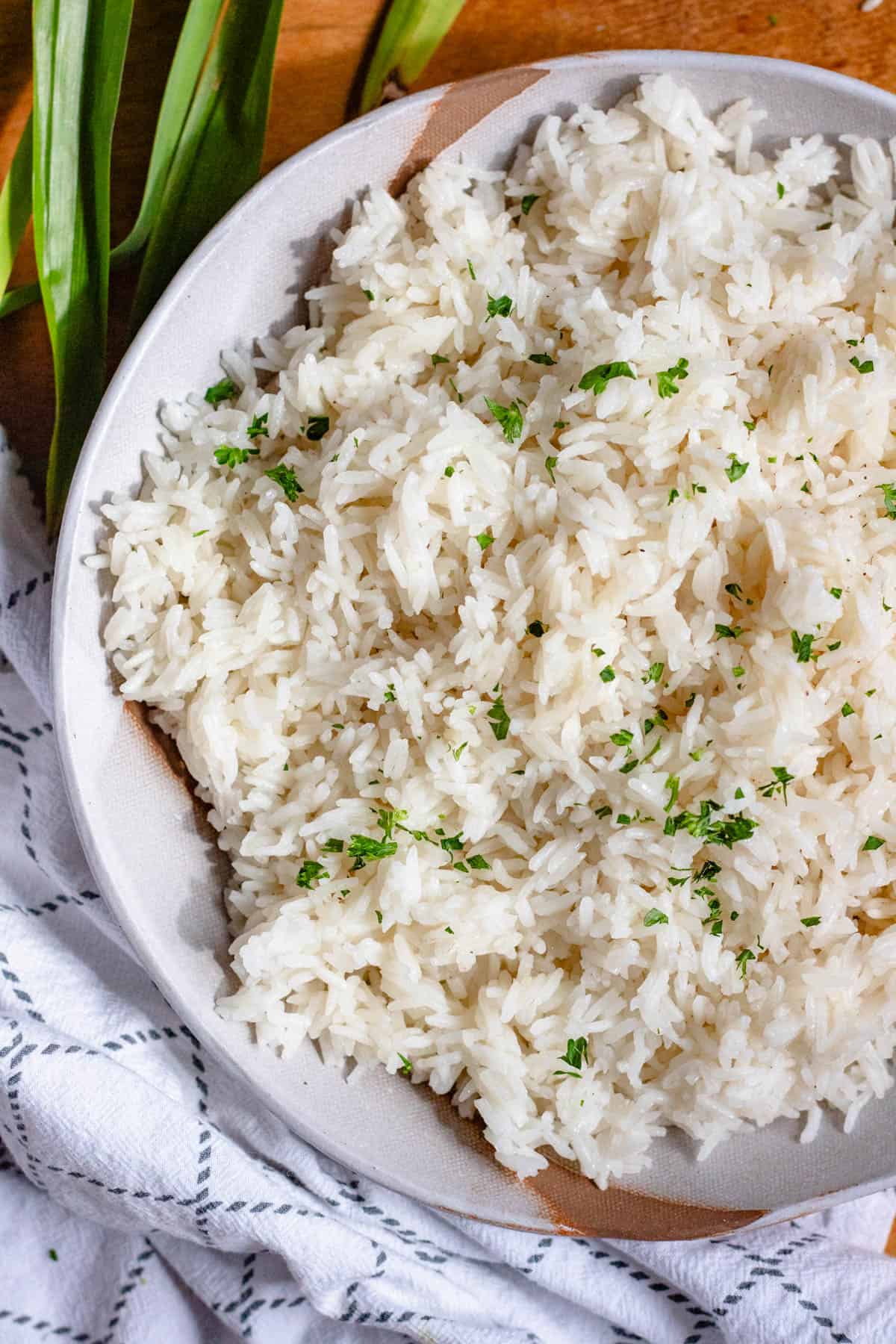
Long-grain varieties like jasmine or basmati rice are ideal because they stay fluffy and separate. Short-grain rice can be used too, but it will give you a stickier texture.
If your rice turns out mushy, you probably added too much liquid and possibly overcooked it as well. Next time, try adding ¼ cup less liquid.
It’s also important to rinse your rice. Too much starch can make your rice sticky and mushy.
You can absolutely make your coconut rice ahead of time. It stores nicely in an airtight container in the refrigerator for up to three days. To best reheat rice in the microwave, I add a small ice cube into the center of the bowl and then cover the bowl with parchment paper and microwave until warmed. The ice shouldn’t melt entirely, but will add moisture back into your rice!
Did you enjoy this recipe? If so, check out these other recipes I’ve selected just for you:
- Red Beans and Coconut Rice from Belize
- Fat Rice
- Belizean Rice and Beans
- Instant Pot Wild Rice Recipe
If you tried this Coconut Rice Recipe or any other recipe on my website, please leave a 🌟 star rating and let me know how it went in the 📝 comments below!
Coconut Rice
Ingredients
- 2 cups Thai jasmine rice, rinsed until the water runs clear and strained
- 1 ¼ cup coconut milk
- 1 cup water
- ½ tsp salt
Instructions
- Put 2 cups Thai jasmine rice in a medium pot along with 1 cup water, 1 ¼ cup coconut milk, and ½ tsp salt.
- Bring the rice to a simmer, uncovered. Once simmering, cover the rice and allow it to cook for about 12 minutes or until all of the liquid is absorbed.
- Remove the pot from the heat, but keep the lid on for an extra 10 minutes.
- Once the rice is done steaming, remove the lid, and use a fork to fluff the rice. Set aside.
Notes
- Thai Jasmine Rice: You can use any kind of rice you want but with most Asian dishes, Jasmine rice is your best bet.
- Coconut Milk: You can definitely use a lighter coconut milk if you want to cut out some fat. You will have a creamier and more flavorful rice using full fat but using light coconut milk will still elevate your rice!
- Salt: The salt in this recipe is really necessary to counter the sweetness of the coconut milk. If you add aromatics in this recipe (like ginger, pandan leaves, etc) it also enhances those flavors.
- If you want a Malaysian version of coconut rice for Nasi Lemak, you can also add: 1 Pandan Leaf (tied in a knot so it’s easier to remove), 3 inches Lemongrass (hit with a meat mallet to crush it slightly), and 1 inch ginger, peeled and sliced, to your pot. Remove them once the rice is done steaming.
- Rinse your rice. This removes extra starch which can make your rice very sticky. If you don’t rinse your rice before cooking, add an extra ¼ cup of water to your recipe.
- You can tell that your rice is done cooking by tilting the pot to see if any water pools around the edges
- If you have a very fatty can of coconut milk, you may notice some coconut oil settle on top of the rice when it is done cooking. This is shiny and thick and perfectly OK. It does not mean that you need to keep cooking your rice.



Leave a Reply