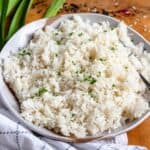
Coconut Rice
Coconut Rice is fragrant, creamy, fluffy and the perfect side to balance out a savory meat dish. It’s also easy to make and instantly elevates the whole meal! This article will teach you how to make it perfectly on the stovetop.
Servings 6
Calories 318kcal
Ingredients
- 2 cups Thai jasmine rice rinsed until the water runs clear and strained
- 1 ¼ cup coconut milk
- 1 cup water
- ½ tsp salt
Instructions
- Put 2 cups Thai jasmine rice in a medium pot along with 1 cup water, 1 ¼ cup coconut milk, and ½ tsp salt.
- Bring the rice to a simmer, uncovered. Once simmering, cover the rice and allow it to cook for about 12 minutes or until all of the liquid is absorbed.
- Remove the pot from the heat, but keep the lid on for an extra 10 minutes.
- Once the rice is done steaming, remove the lid, and use a fork to fluff the rice. Set aside.
Notes
Recipe copyright The Foreign Fork. For educational and personal use only.
- Thai Jasmine Rice: You can use any kind of rice you want but with most Asian dishes, Jasmine rice is your best bet.
- Coconut Milk: You can definitely use a lighter coconut milk if you want to cut out some fat. You will have a creamier and more flavorful rice using full fat but using light coconut milk will still elevate your rice!
- Salt: The salt in this recipe is really necessary to counter the sweetness of the coconut milk. If you add aromatics in this recipe (like ginger, pandan leaves, etc) it also enhances those flavors.
- If you want a Malaysian version of coconut rice for Nasi Lemak, you can also add: 1 Pandan Leaf (tied in a knot so it’s easier to remove), 3 inches Lemongrass (hit with a meat mallet to crush it slightly), and 1 inch ginger, peeled and sliced, to your pot. Remove them once the rice is done steaming.
- Rinse your rice. This removes extra starch which can make your rice very sticky. If you don’t rinse your rice before cooking, add an extra ¼ cup of water to your recipe.
- You can tell that your rice is done cooking by tilting the pot to see if any water pools around the edges
- If you have a very fatty can of coconut milk, you may notice some coconut oil settle on top of the rice when it is done cooking. This is shiny and thick and perfectly OK. It does not mean that you need to keep cooking your rice.
Nutrition
Serving: 1serving | Calories: 318kcal | Carbohydrates: 51g | Protein: 5g | Fat: 10g | Saturated Fat: 9g | Polyunsaturated Fat: 0.2g | Monounsaturated Fat: 1g | Sodium: 205mg | Potassium: 175mg | Fiber: 1g | Sugar: 0.1g | Vitamin C: 0.5mg | Calcium: 27mg | Iron: 2mg