

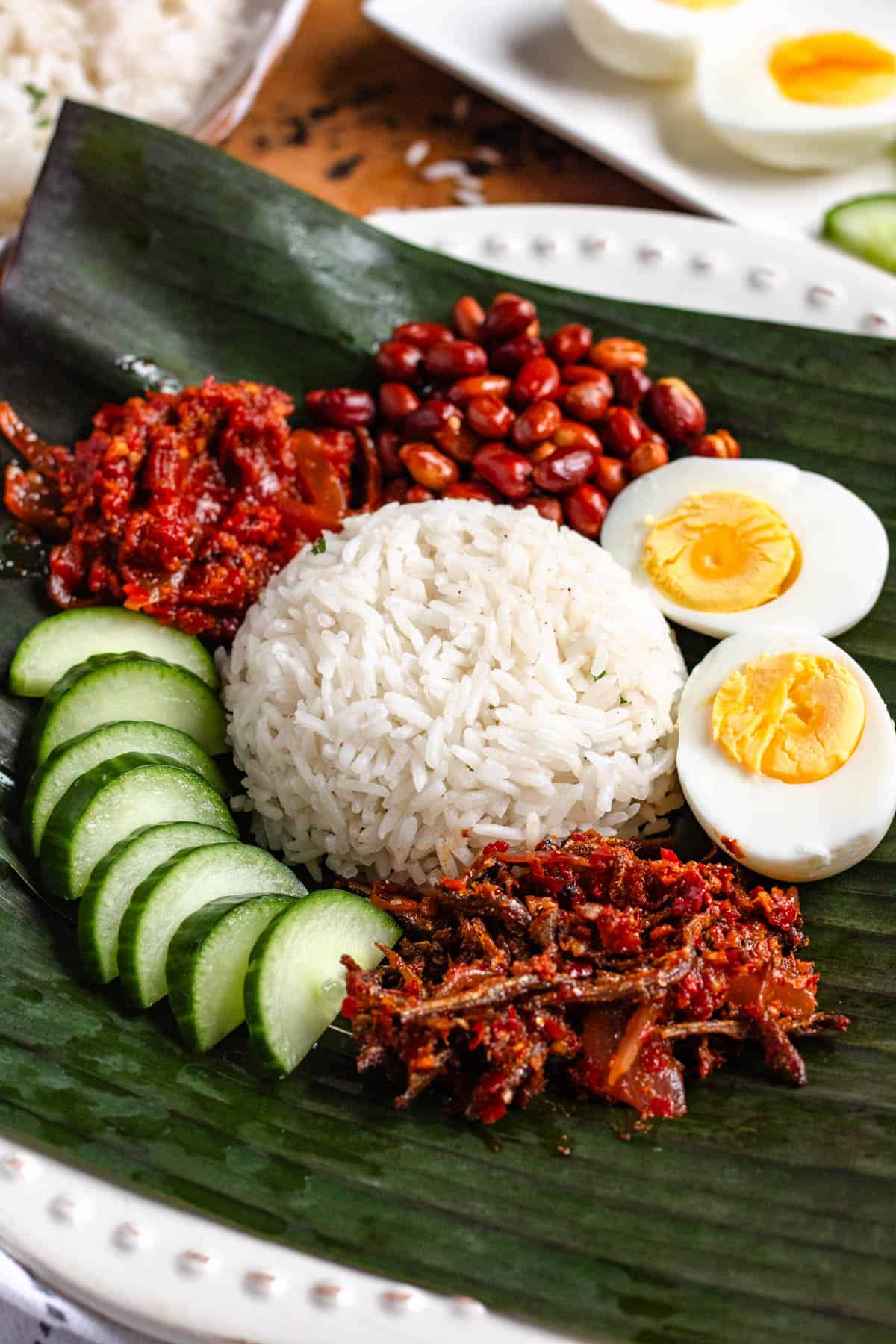
Nasi Lemak is a classic Malaysian dish layered with flavor. It’s spicy, sweet, and the perfect representation of Malaysian culture and cuisine!
Hello Reader! I try my hardest to research recipes as best as I can before posting to ensure I am representing each culture correctly. If this recipe is from your country and I have made a mistake or you have suggestions for how to make it more authentic, I would love to hear! Please leave a comment below letting me know what should be different, and I will rework the recipe. It is always my intention to pay homage and respect to each cultural dish that I cook. Thanks for reading!
There’s something truly special about a dish that brings together comfort, culture and history, and Nasi Lemak does exactly that. It’s filled with fragrant rice, spicy sambal, crispy anchovies, and is paired with bites of cool cucumber and hard-boiled egg.
It’s a dish that has always been a popular street food, served near the water to busy workers as they rush off for the day, but it has become a local favorite, perfect for entertaining as all of the components are easy to prepare and can be assembled to anyone’s preference.
While the ingredient list for this dish is long and each component is prepared separately, the result is worth the effort. The preparation is not complicated, and the flavor is explosive, with the perfect balance of sweet, spicy, cool, and satisfying.
My Thoughts on Nasi Lemak
After testing my Nasi Lemak from Malaysia, I sat down to record some quick thoughts on what went well, what my biggest challenges were, and anything I could think of to help you enjoy this recipe as well! Watch the video below.

Recipe Origins
Nasi Lemak, which translates to “fatty rice” or “creamy rice” in Malay, is one of Malaysia’s most beloved and widely eaten dishes. It began as a simple, home-cooked meal that was easy to cook up and wrap in banana leaves to go. Today it remains a go-to packed lunch, but it’s also a favorite for celebrations like weddings and festivals. Today the recipe has been modernized to include crispy fried anchovies, peanuts, and eggs. It may also be served with a side of fried chicken or Beef Rendang.
Its popularity has also spread throughout Southeast Asia in places like Singapore, Brunei, and Southern Thailand, where it’s enjoyed not just for breakfast, but for any meal of the day. Wrapped in banana leaves for easy transport, this recipe is Malaysia’s answer to the classic packed lunch.
Matt and I ordered a version of this dish during our honeymoon in Indonesia. While some of the specifics of the dish were different, the main elements, including the coconut rice, sambal, onions, and cucumber, made an appearance, as did the unique banana leaf plate!
We felt so adventurous trying this dish together, and I had been wondering the name of it ever since. It wasn’t until researching Nasi Lemak that I realized we had eaten it before! This meal stood out in our memory for years before ever getting to eat it a second time, and I hope it does the same for you.
Why Make This Recipe
- Complete Meal: Nasi Lemak isn’t just one thing. It’s a beautifully balanced platter that combines protein, carbs, and vegetables in one satisfying meal.
- Incredible Aroma and Flavor: The aroma of pandan leaves and coconut rice, paired with the spice of sambal and crispy sides will transform your kitchen. It’s a combination that’s unforgettable in both taste and texture.
- Customizable: This dish is a combination of rice, spice and accompaniments. It’s easy to leave off any accompaniments that you’re not a fan of or even add more protein like fried chicken, tofu or beef.
Key Ingredients for Nasi Lemak
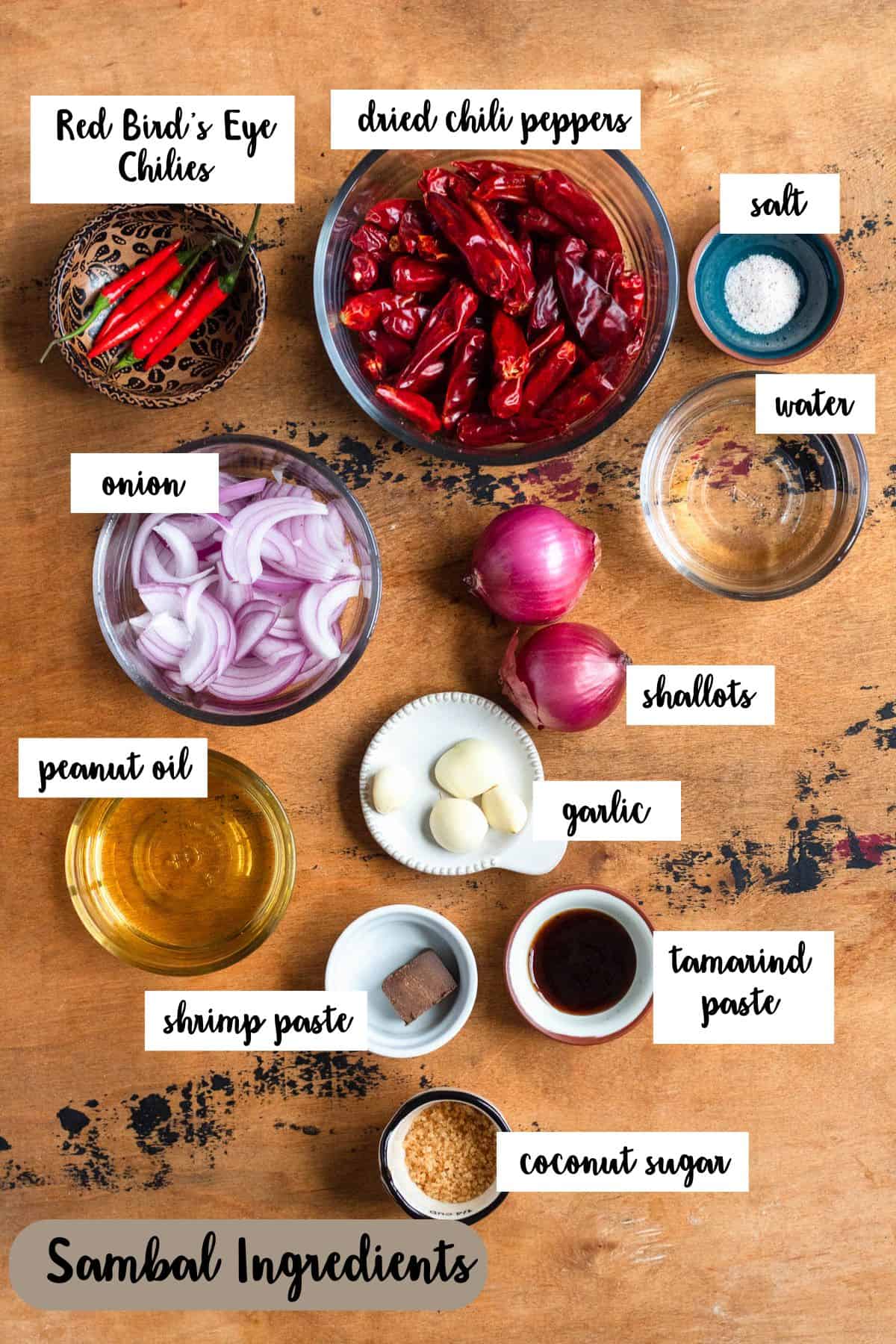
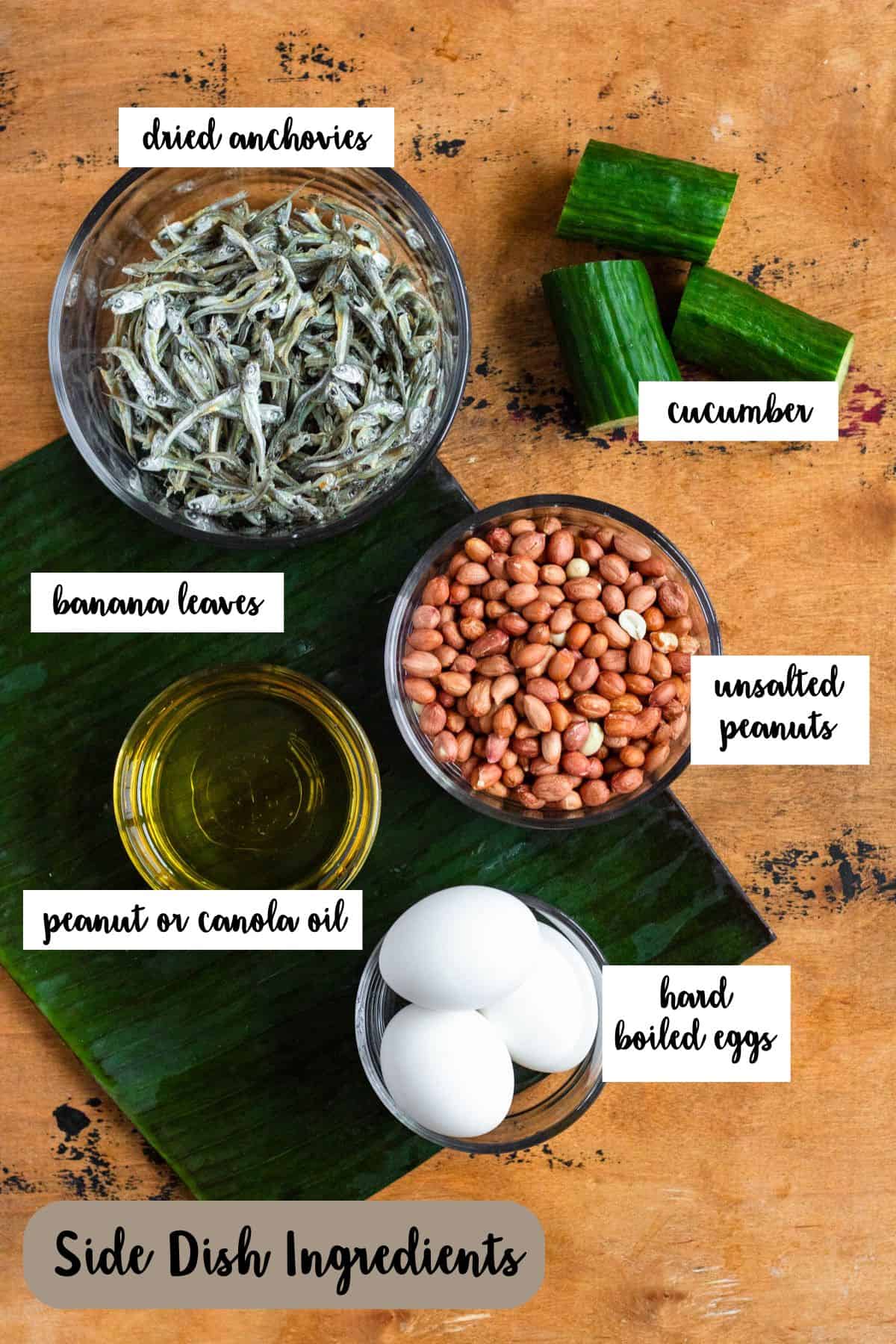
Here is a visual overview of the ingredients in the recipe. Scroll down to the recipe at the bottom for quantities.
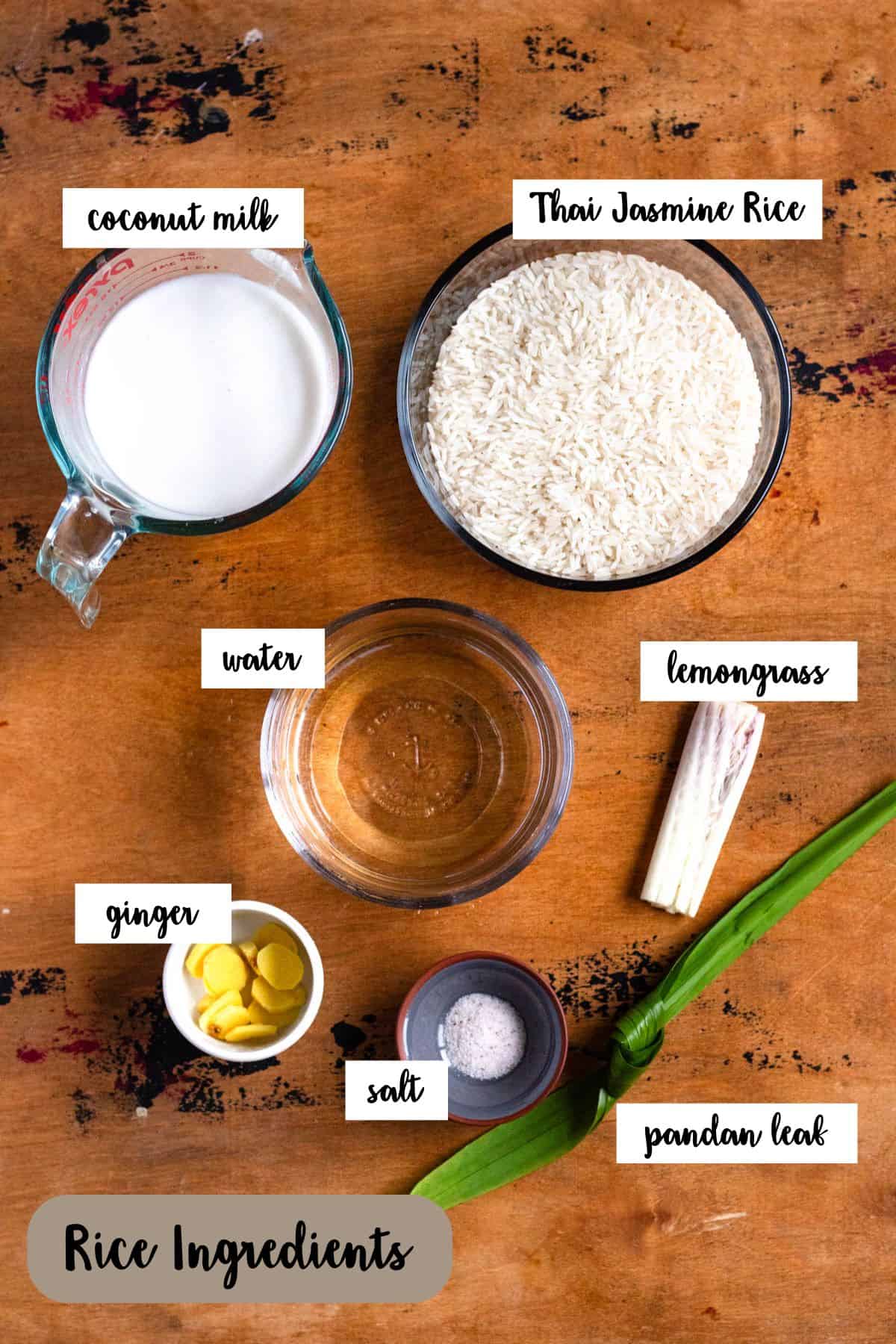
- Coconut Milk: Coconut milk makes the rice sweet and creamy. Some recipes call for a greater ratio of coconut milk, or for cooking the rice just with water and then pouring the coconut milk over after. I prefer this method, which leads to a creamy rice with coconut flavor that isn’t wet or sticky.
- Thai Jasmine Rice: Long grain jasmine or basmati rice works best for this dish. You want a rice that can absorb the coconut milk without becoming sticky.
- Pandan Leaf: The pandan leaf is akin to a vanilla bean in western culture, adding a sweet flavor to the rice via soaking. Traditionally it is tied in a knot so it’s easier to remove after cooking.
- Lemongrass: The lemongrass also adds a bright citrus flavor. Hit with a meat mallet to crush it slightly to release even more flavor. You can find lemongrass in the produce aisles of your local asian market.
- Ginger: Ginger adds an earthly, slightly spicy flavor to the rice. Some recipes omit the ginger (the lemongrass adds a bit of ginger taste), so feel free to do this if desired.
- Dried Chili Peppers: Dried chilis will produce a stronger flavor. Any Asian variety will do.
- Red Bird’s Eye Chilies: These chilies are spicy so feel free to add more or less depending on your spiciness preference. These will come chilled in the refrigerator aisle. I usually freeze my leftover chilies so they last a while. You can use extras to make Nasi Goreng!
- Belacan Shrimp Paste: Belacan is a specific form of shrimp paste from Malaysia that comes in a block form and is very salty. I purchased my Belacan online. This variety tends to be more pungent than a liquid shrimp paste, so if you are substituting liquid shrimp paste, use a bit extra.
- Coconut sugar: Coconut sugar helps balance some of the flavors of the sambal. You could use regular granulated sugar or brown sugar if necessary. Coconut sugar is slightly less sweet than brown sugar, so use a bit less if you are substituting.
- Tamarind paste: Tamarind has a unique, fruity flavor that harmonizes beautifully with the other ingredients. You can use pulp or paste. If you use tamarind pulp you will need to add a bit of water and strain it.
- Peanut or canola oil: Peanut and canola oil are the best for frying because they can reach high temperatures without burning. We like to use a neutral oil for this recipe so that it doesn’t compete with the flavor of the sambal!
- Dried anchovies: Dried anchovies are fried to provide a crispy, salty addition to the meal. Ikan Bilis is the Malaysian name for dried anchovies. They are dried, salted, and fermented. Some recipes call for washing the anchovies and some specifically tell you not to. Make your own decision based on your comfort level with washing them or not. Keep in mind that if you rinse your fish, you should dry them completely before adding it to hot oil for frying.
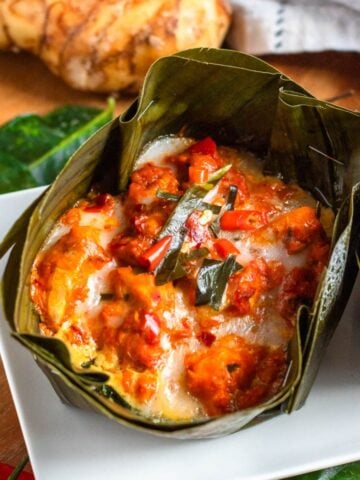
- Banana leaves: This meal is traditionally wrapped in banana leaves to make it portable but it can also be served on top of banana leaves for a beautiful presentation. While the banana leaf is authentic, it does not contribute to the taste of the dish and therefore can be omitted if desired.
How to Make this Recipe
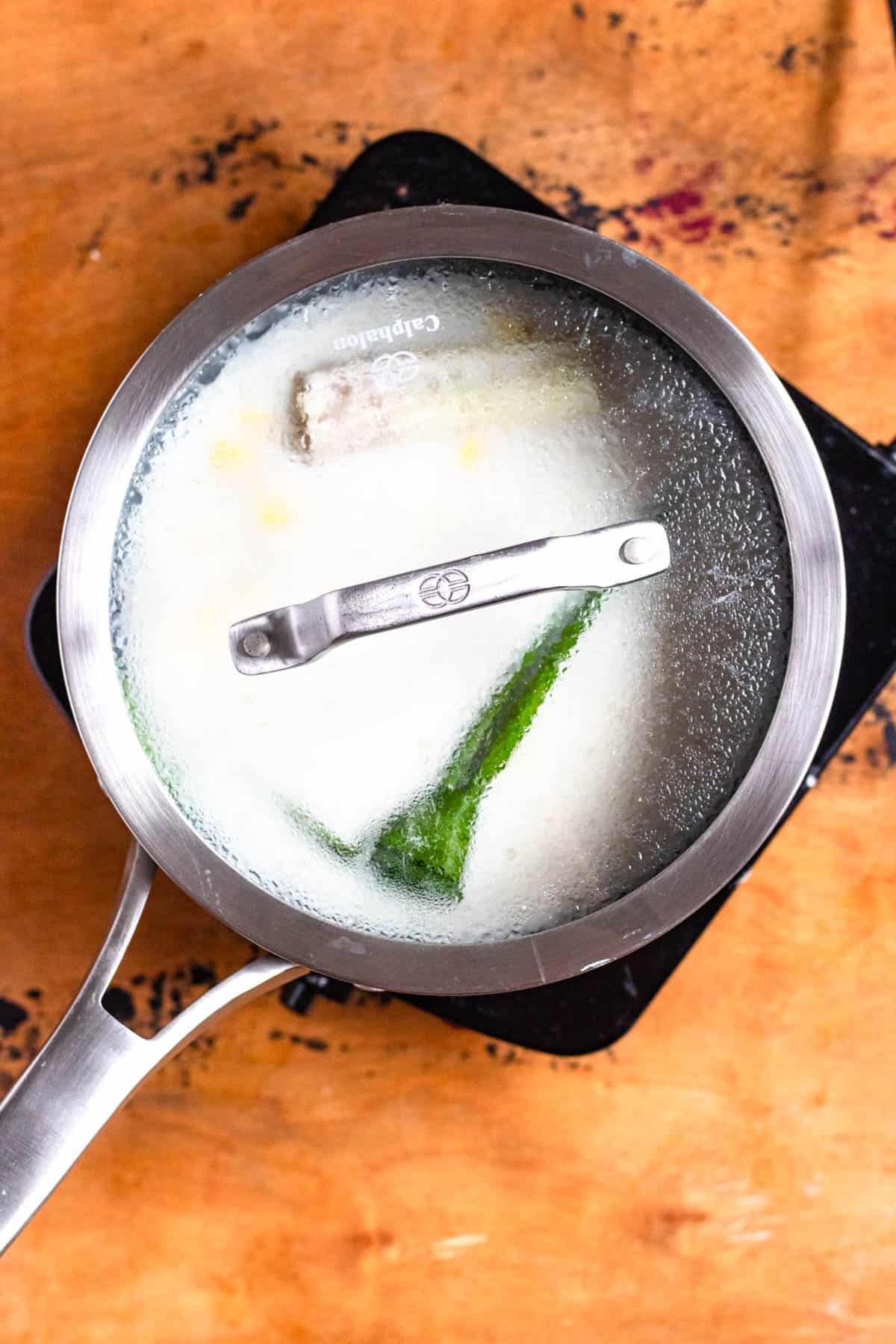
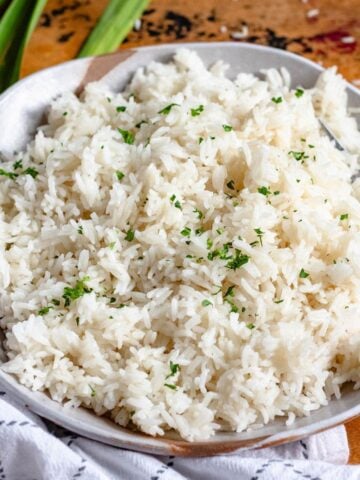
Step One: Put the rice in a medium pot along with the water, coconut milk, pandan leaf, lemongrass, and salt. Bring the water to a simmer, then cover the rice and allow it to cook for about 12 minutes.
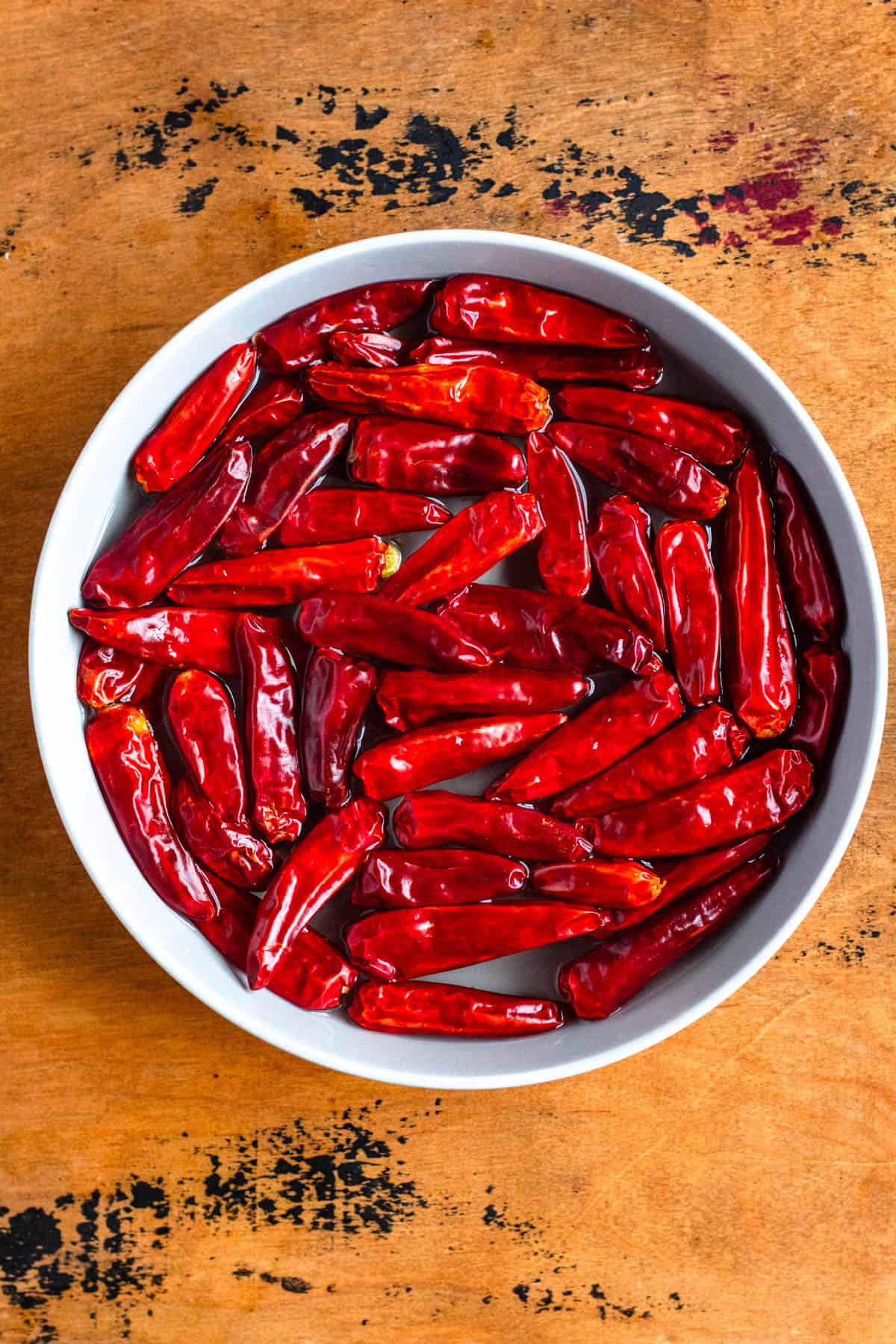
Step Two: Soak the red chili peppers in boiling water for 5-10 minutes until rehydrated.
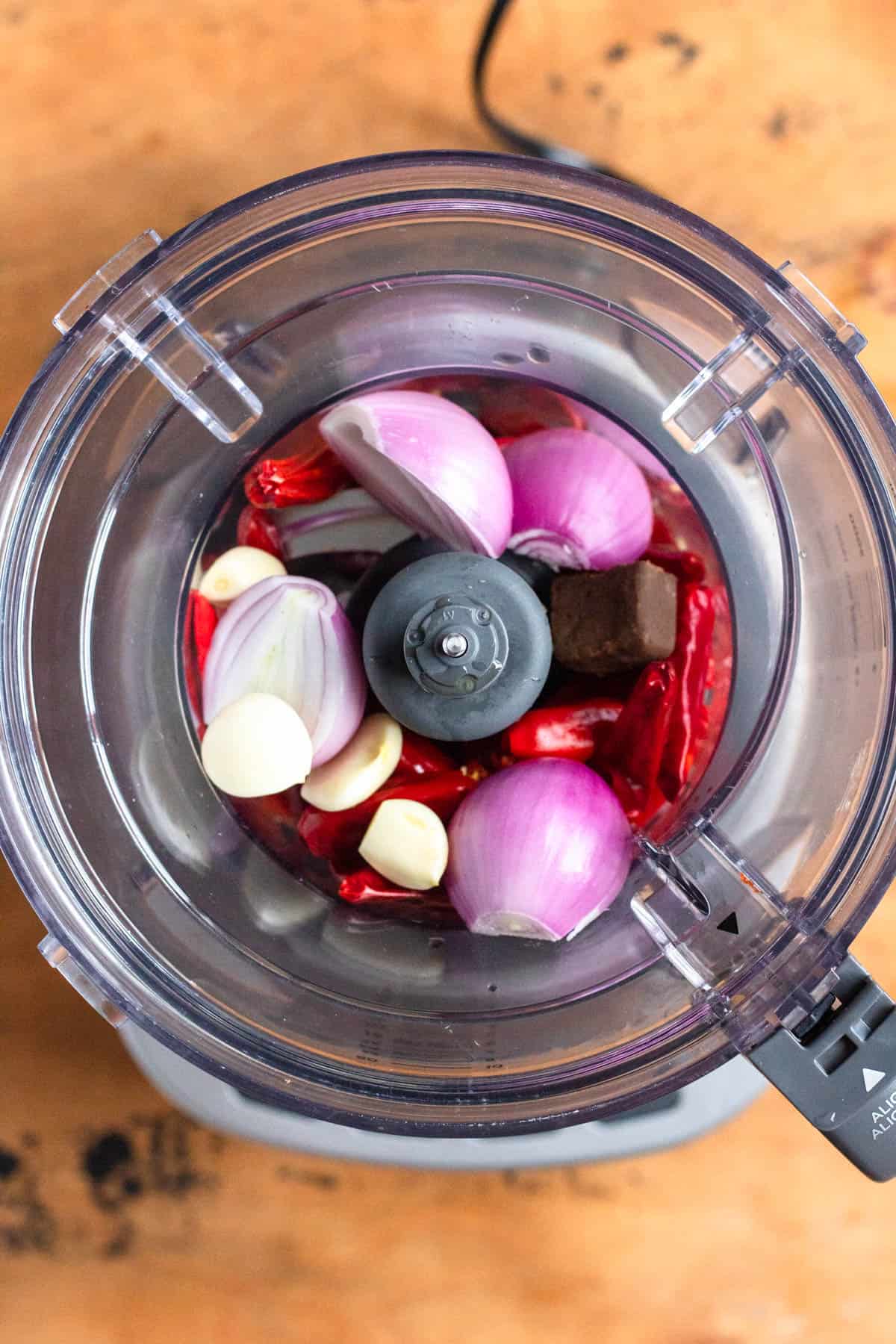
Step Three: Add the rehydrated chilies, Thai/Bird’s Eye Chilies, Belacan shrimp paste, shallots, garlic cloves, and water into a food processor and blend until smooth.
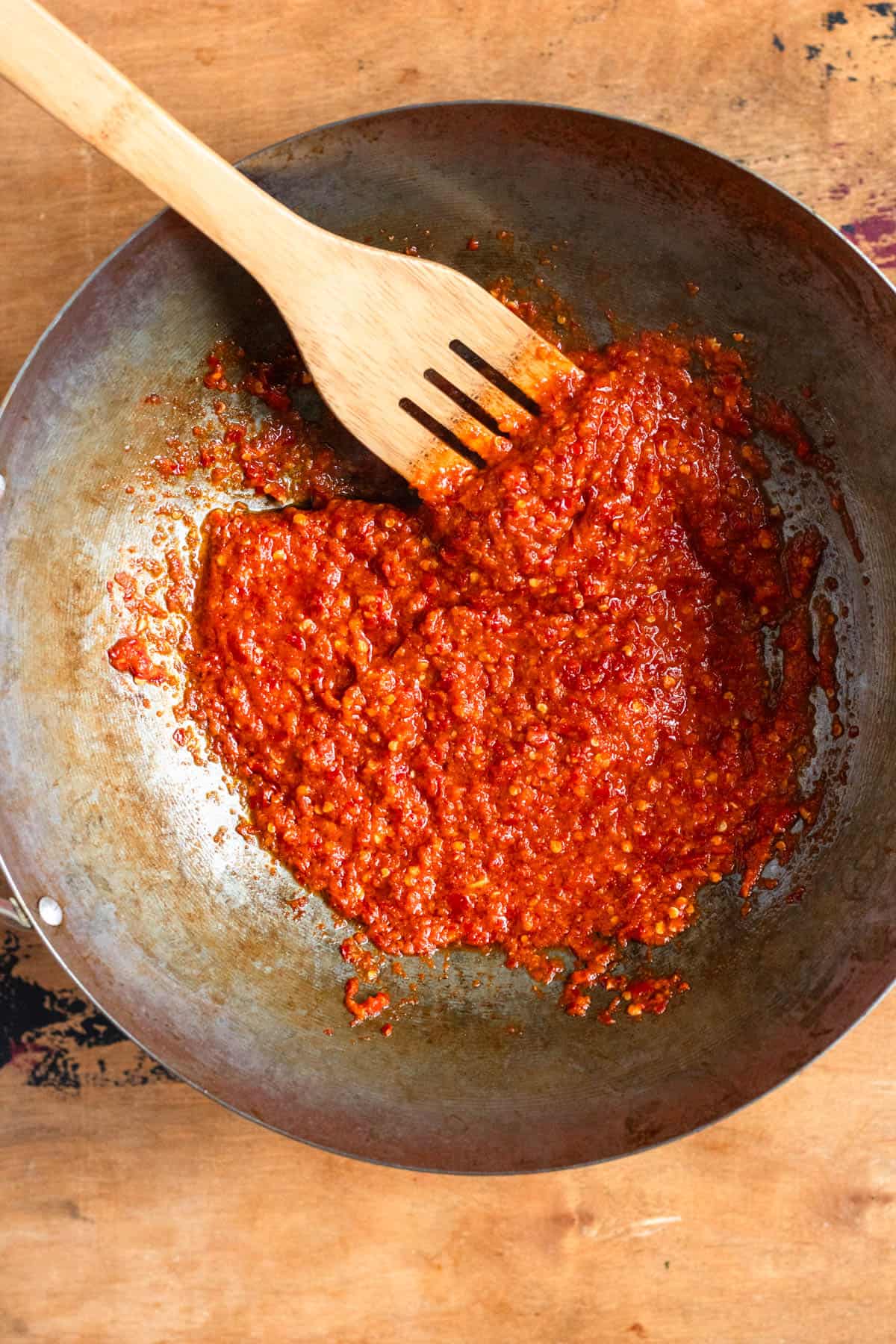
Step Four: Pour the sambal paste into the hot oil and fry for 2 minutes, then continue to cook until the oil starts to separate out.
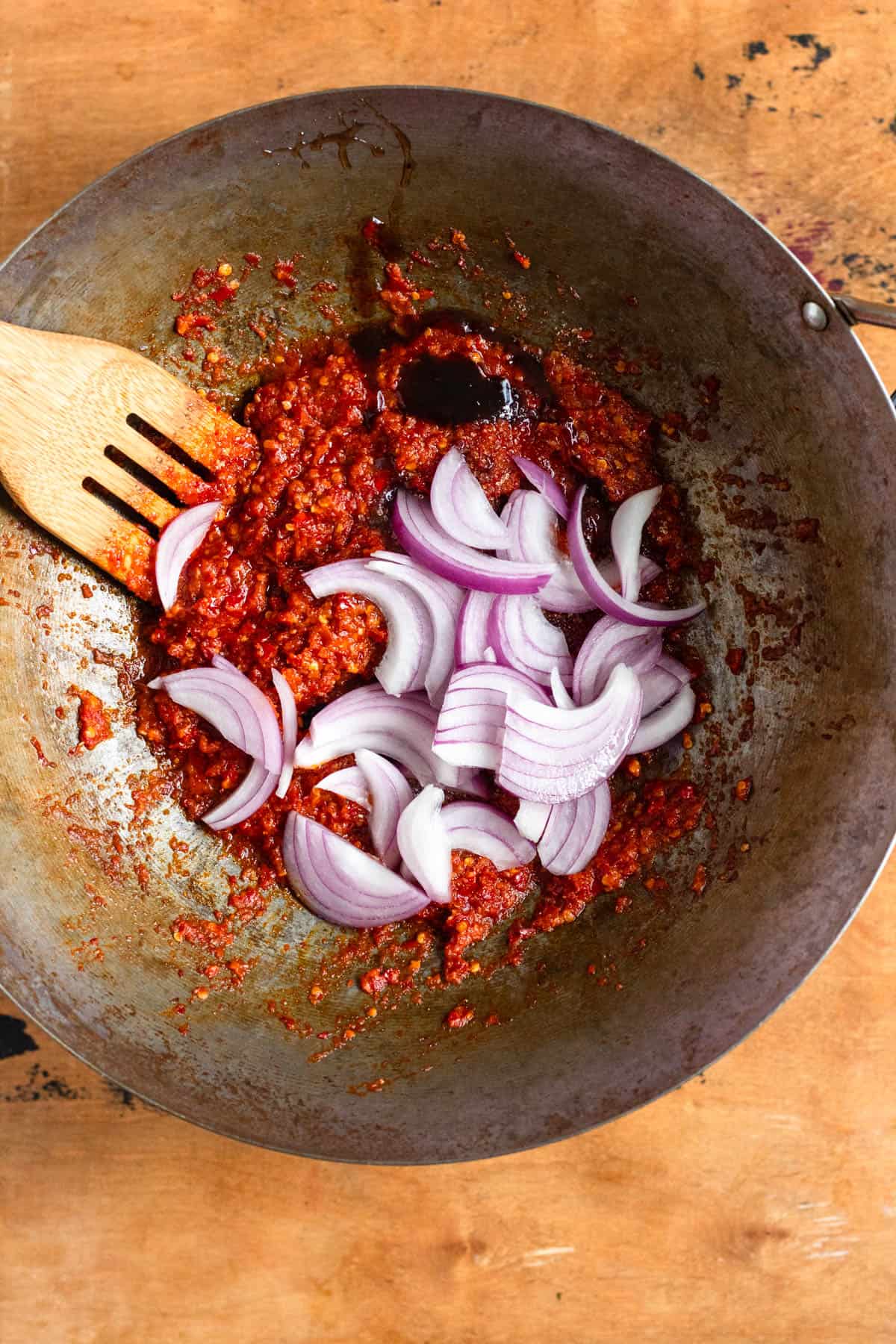
Step Five: Add the tamarind paste, coconut sugar, salt, and sliced red onion.
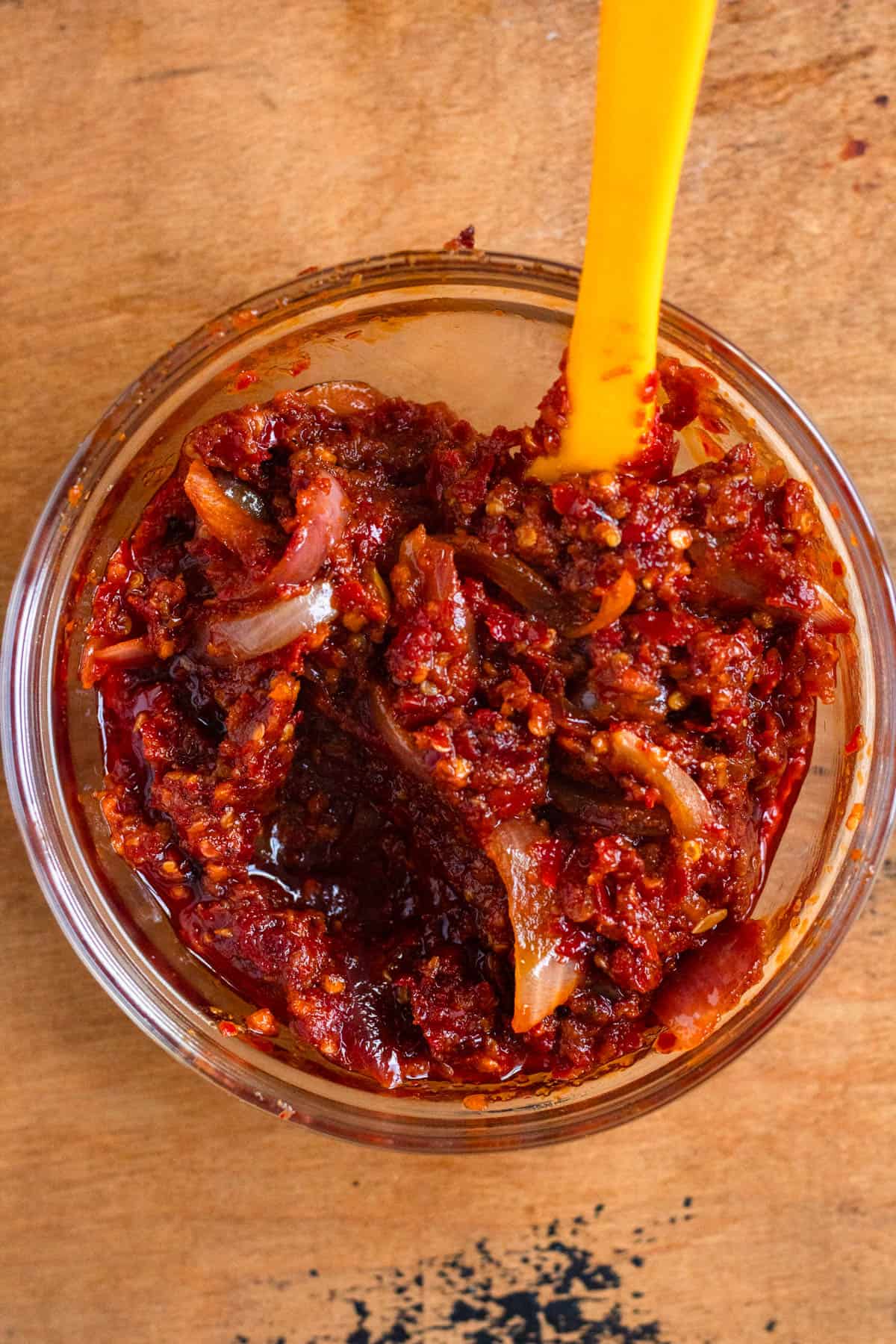
Step Six: Cook until the onion softens, then remove from the heat.
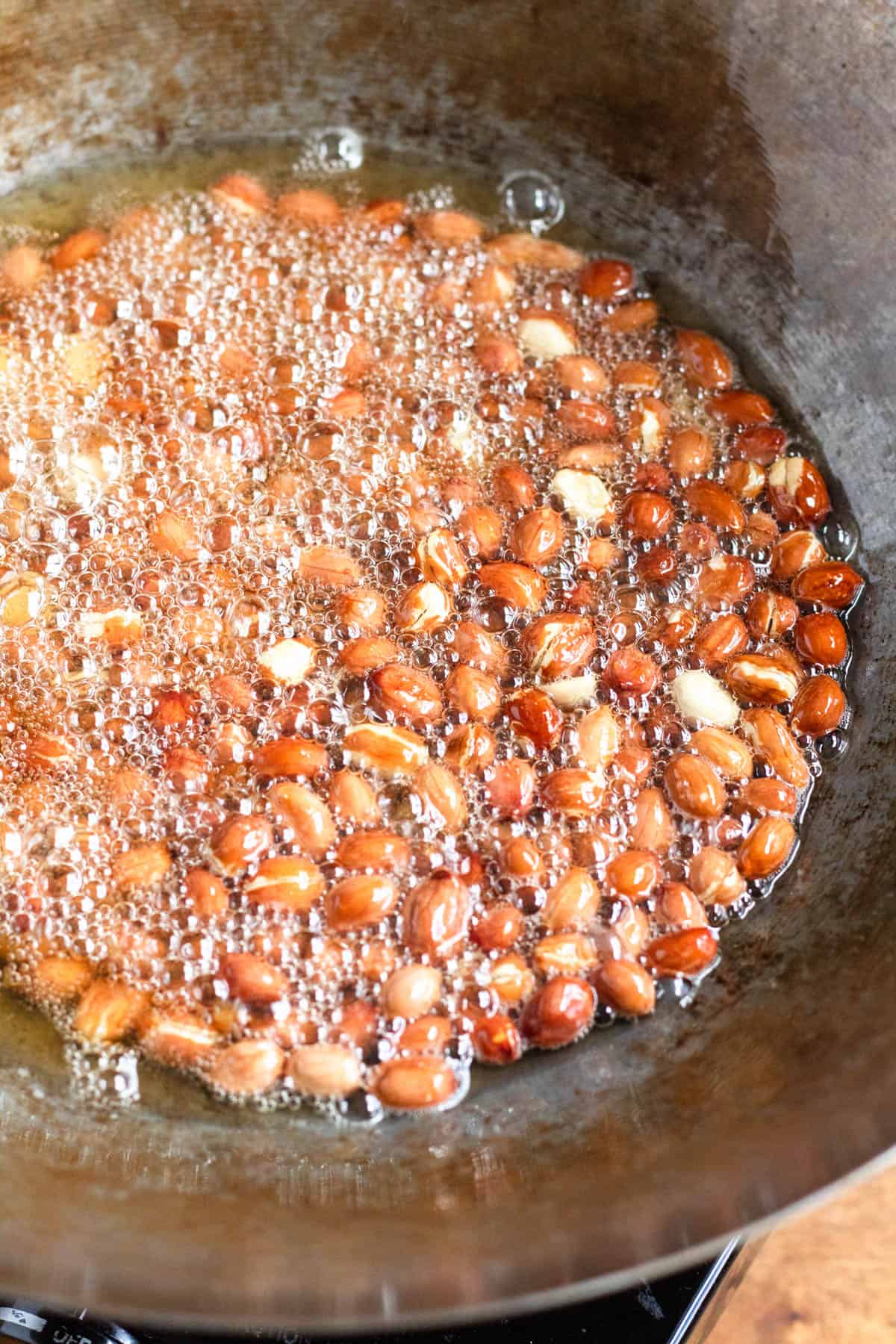
Step Seven: Fry the peanuts until they turn darker and set aside.
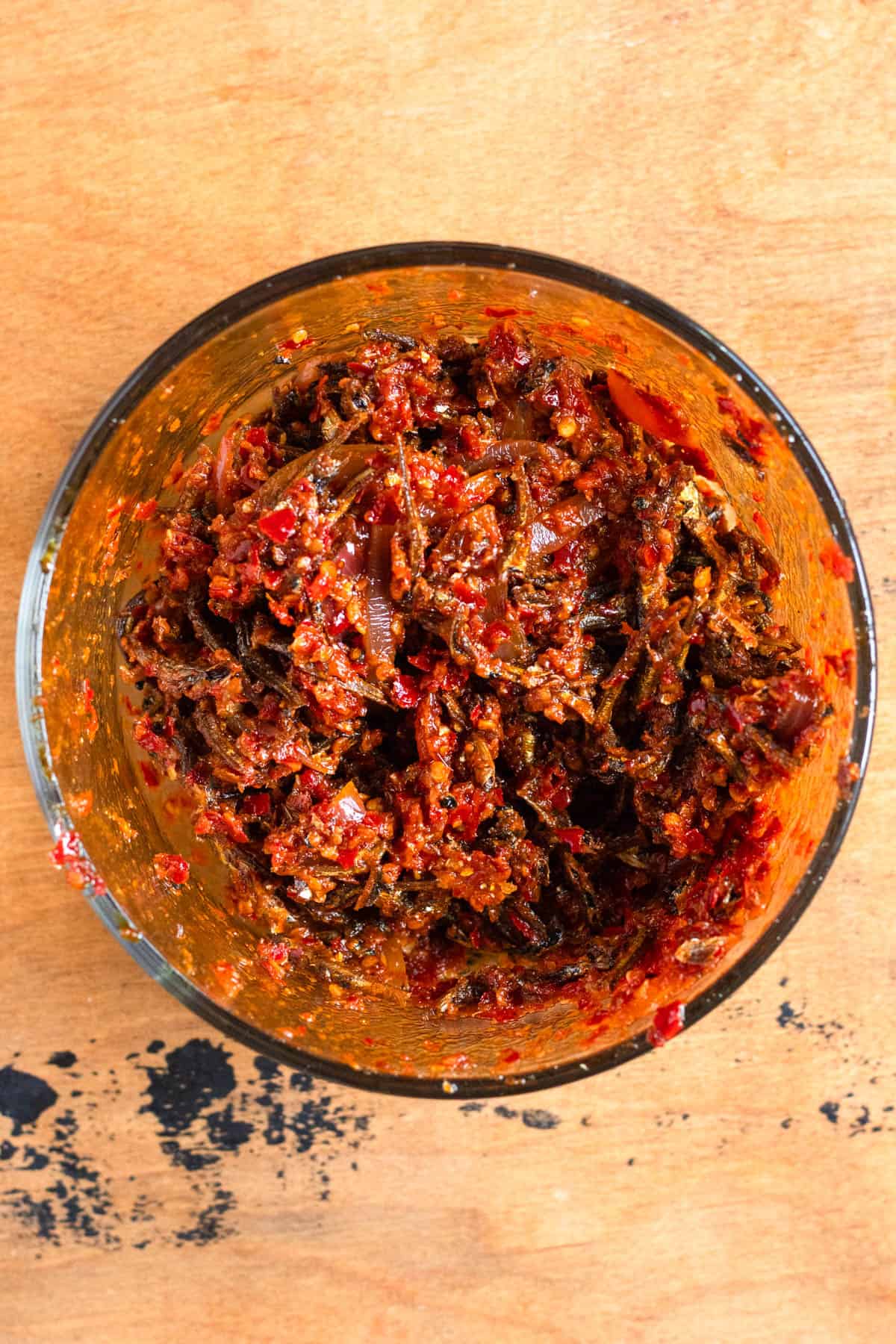
Step Eight: Fry the anchovies until they are crispy. Drain the anchovies, then mix with some of the sambal belacan.
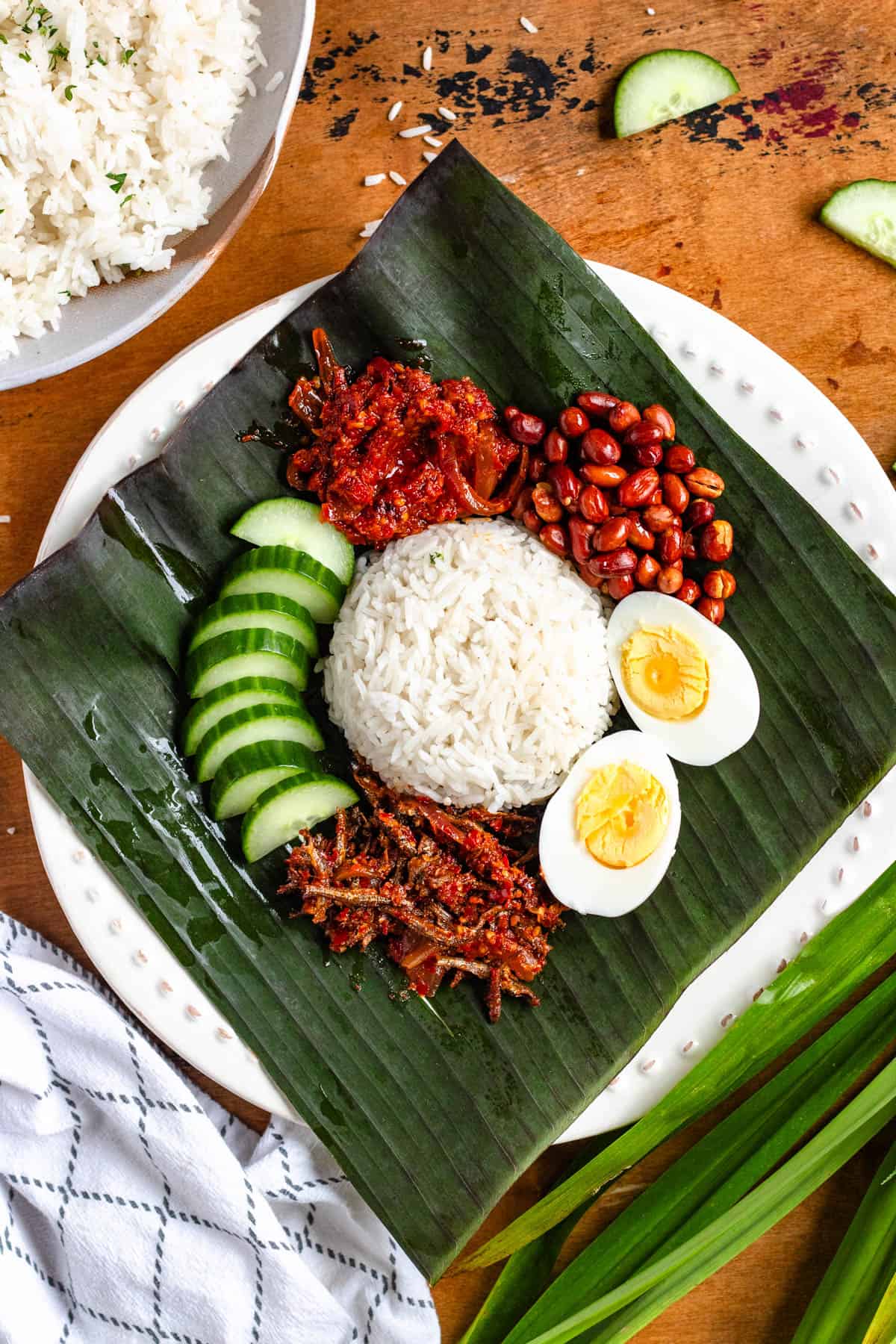
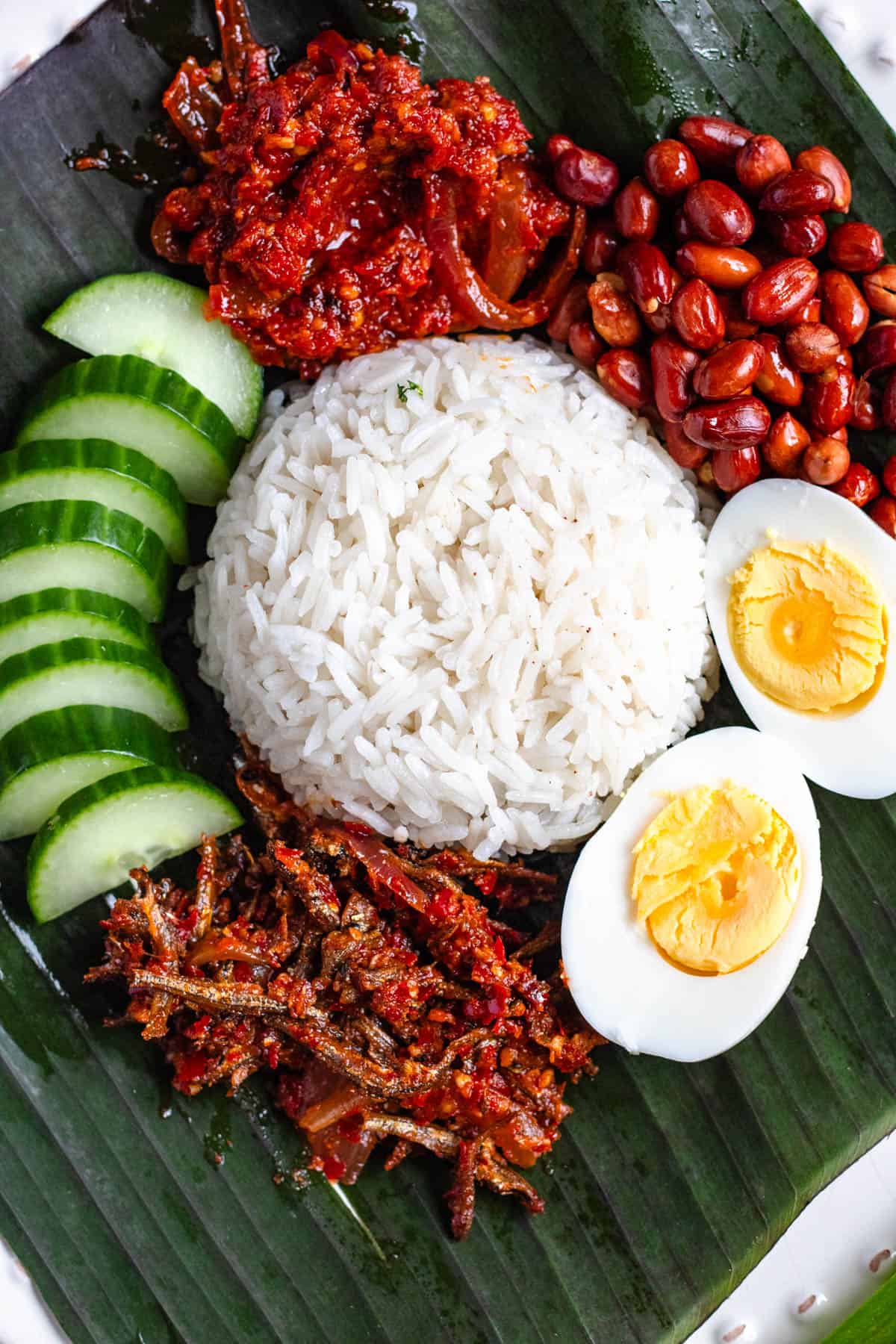
Step Nine: Plate the meal by placing your side dishes on a banana-leaf covered plate surrounding the mound of rice. Enjoy!
Expert Tips
- I had to go to my local asian market to get most of these ingredients, particularly the Asian produce like lemongrass and pandan leaves. I could not find a good substitute at my usual grocery store. Some of the shelf-stable Asian ingredients like belacan and coconut sugar can be purchased online if necessary.
- Some recipes for Nasi Lemak call for extra anchovies to be blended into the sambal. This is up to your preference. I did not include anchovies in my sambal. If you want to, you will need more anchovies than what this recipe calls for.
- A plate of Nasi Lemak is often served with 8 slices of cucumbers because 8 is a lucky number for Malaysian and Chinese people. The number 8 is associated with prosperity.
- Frying your sambal belacan in a wok is preferable because the oil does tend to splatter. The higher edges of a wok will offer some protection.
- This recipe is a meal all on its own but many times you’ll see it served with a curry or fried chicken.
- This recipe for sambal sauce makes just enough to coat the anchovies and then put a little dollop on four plates. If you love sambal sauce, I recommend doubling the recipe.
- Traditionally you use your hands to eat this dish.
- Do not eat the banana leaves as they taste bitter!
Recipes FAQs
If you’ve made my Nasi Goreng recipe before, you’ll notice that this dish varies from it in many ways, but one of the biggest is that Nasi Goreng is fried and every flavor is mixed into the rice. The rice in this Nasi Lemak dish is steamed and served alongside other side dishes.
Store any leftovers in an airtight container in the refrigerator and keep them for about 3-5 days. You can make this meal ahead of time, but I would wait until just before serving to fry the anchovies so they are crispy and fresh. You can also freeze the sambal separately for up to three months.
Watch for little pockets of red liquid (oil) to start sitting on top of your fried sambal. Eventually, the sambal will cook down and more red liquid will be released, bubbling on the surface.
Did you enjoy this recipe for Nasi Lemak? If so, check out these other recipes I’ve selected for you:
If you tried this Nasi Lemak Recipe or any other recipe on my website, please leave a 🌟 star rating and let me know how it went in the 📝 comments below!
Nasi Lemak
Ingredients
Rice Ingredients
- 2 cups Thai jasmine rice, rinsed twice and strained
- 1 ¼ cup water
- 1 ¼ cup coconut milk
- 1 pandan leaf, tied in a knot so it’s easier to remove
- 3 inches lemongrass, hit with a meat mallet to crush it slightly
- 1 inch ginger, peeled and sliced
- ½ tsp salt
Sambal Ingredients
- 1 ¾ cup dried chili peppers,, about 1.8 oz
- 1-5 red bird’s eye chilies, depending on spiciness preference
- 1 Tbsp Belacan shrimp paste
- 2 shallots, peeled and halved
- 4 garlic cloves
- ½ cup water
- ¼ cup peanut oil
- 1 tbsp coconut sugar
- 1 Tbsp tamarind paste
- ½ tsp salt
- ½ medium red onion, sliced
Side Dish Ingredients
- ¾ cup peanut or canola oil
- 2 cups unroasted peanuts, unsalted peanuts
- 2 cups dried anchovies
- 6 eggs, hard boiled & peeled
- 1 English cucumber, cut into half moons
- banana leaves, optional for serving
Instructions
Rice Instructions
- Put 2 cups Thai jasmine rice in a medium pot along with the 1 ¼ cup water, 1 ¼ cup coconut milk, 1 pandan leaf, 3 inches lemongrass, 1 inch ginger, ¼ cup peanut oil, and ½ tsp salt.
- Bring the rice to a simmer, uncovered. Once simmering, cover the rice and allow it to cook for about 12 minutes or until all of the liquid is absorbed.
- Remove the pot from the heat, but keep the lid on for an extra 10 minutes.
- Once the rice is done steaming, remove the lid, then remove the aromatics (pandan leaf, lemongrass, ginger). Set aside.
Sambal Belacan Instructions
- Soak 1 ¾ cup dried chili peppers, in boiling water for 5-10 minutes until rehydrated. Then drain.
- In a food processor, add 1 ¾ cup dried chili peppers, 1-5 red bird’s eye chilies, 1 Tbsp Belacan shrimp paste, 2 shallots, 4 garlic cloves, and ½ cup water. Blend until smooth.
- In a large pan or wok, heat ¼ cup peanut oil. Pour the sambal paste into the hot oil and fry for 2 minutes.
- Then reduce the heat and cook for 10 to 15 minutes, until the oil starts to separate out.
- Then add 1 Tbsp tamarind paste, 1 tbsp coconut sugar, ½ tsp salt, and ½ medium red onion
- Continue cooking on low until the red onions soften, about 10 minutes .
- Remove from the heat and set aside.
Side Dish Instructions
- Heat ¾ cup peanut or canola oil over medium-high heat in the wok until it reaches about 325 degrees Fahrenheit
- Add 2 cups unroasted peanuts into the oil, and fry until they turn darker. Then remove the peanuts from the oil using a slotted spoon and drain on a paper towel lined plate.
- While the oil is still hot, add 2 cups dried anchovies, frying until they are crispy, about 5 minutes. Use a slotted spoon to remove the anchovies from the oil and drain them on a paper towel lined plate.
- Once drained, place the fried anchovies in a small bowl along with about ¾ cup of the Sambal Belacan. Stir until the anchovies are fully coated.
Serving Instructions
- Line a plate with a banana leaf.
- Plate the rice by putting it in a shallow bowl and then turning it out onto your banana leaf so that it stays formed in a dome shape.
- Around the rice, place the rest of the side dishes, including the roasted peanuts, the Sambal Belacan, the fried anchovies in sauce, the hard boiled egg (cut in half), and the English cucumber slices.
- Serve and enjoy!
Video
Notes
- Thai Jasmine Rice: Long grain jasmine or basmati rice works best for this dish.
- Ginger: Ginger adds an earthly, slightly spicy flavor to the rice. Some recipes omit the ginger (the lemongrass adds a bit of ginger taste), so feel free to do this if desired.
- Dried Chili Peppers: Any Asian variety will do.
- Red Bird’s Eye Chilies: These chilies are spicy so feel free to add more or less depending on your spiciness preference.
- Belacan Shrimp Paste: This variety tends to be more pungent than a liquid shrimp paste, so if you are substituting liquid shrimp paste, use a bit extra.
- Coconut sugar: You could use regular granulated sugar or brown sugar if necessary. Coconut sugar is slightly less sweet than brown sugar, so use a bit less if you are substituting.
- Tamarind paste: You can use pulp or paste. If you use tamarind pulp you will need to add a bit of water and strain it.
- Peanut or canola oil: Peanut and canola oil are the best for frying because they can reach high temperatures without burning. We like to use a neutral oil for this recipe so that it doesn’t compete with the flavor of the sambal!
- Banana leaves: While the banana leaf is authentic, it does not contribute to the taste of the dish and therefore can be omitted if desired.
- I had to go to my local asian market to get most of these ingredients, particularly the Asian produce like lemongrass and pandan leaves. I could not find a good substitute at my usual grocery store. Some of the shelf-stable Asian ingredients like belacan and coconut sugar can be purchased online if necessary.
- Some recipes for Nasi Lemak call for extra anchovies to be blended into the sambal. This is up to your preference. I did not include anchovies in my sambal. If you want to, you will need more anchovies than what this recipe calls for.
- A plate of Nasi Lemak is often served with 8 slices of cucumbers because 8 is a lucky number for Malaysian and Chinese people. The number 8 is associated with prosperity.
- Frying your sambal belacan in a wok is preferable because the oil does tend to splatter. The higher edges of a wok will offer some protection.
- This recipe is a meal all on its own but many times you’ll see it served with a curry or fried chicken.
- This recipe for sambal sauce makes just enough to coat the anchovies and then put a little dollop on four plates. If you love sambal sauce, I recommend doubling the recipe.
- Traditionally you use your hands to eat this dish.
- Do not eat the banana leaves as they taste bitter!



Leave a Reply