

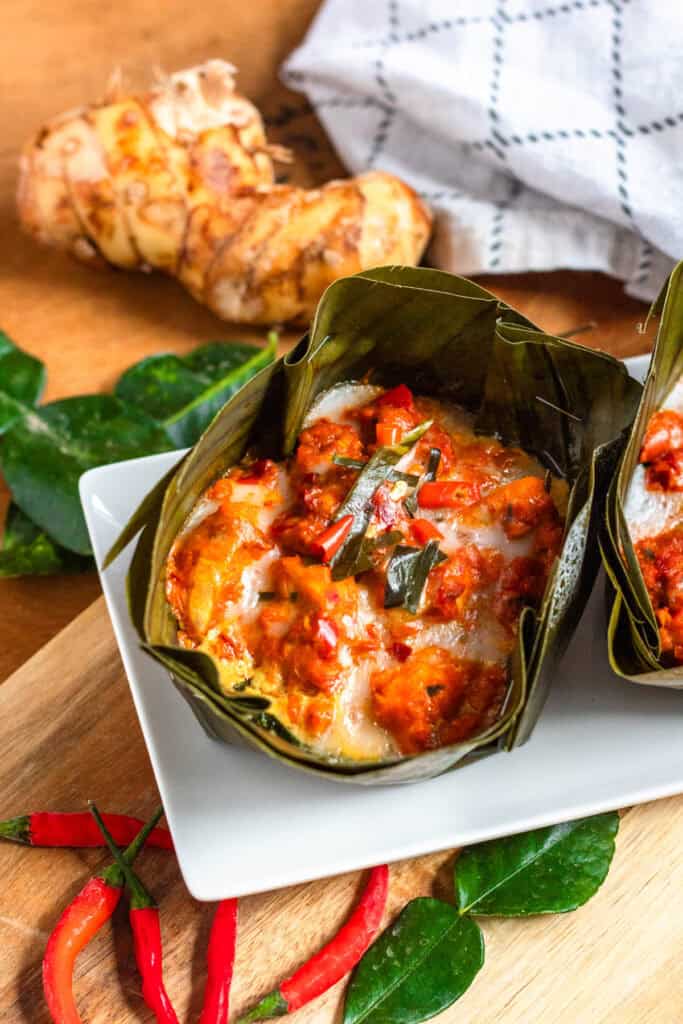
This Amok Curry isn’t a shortcut version or a watered-down weeknight riff. It’s a deeply researched, traditionally inspired take on Cambodia’s national dish, made with the right fish, authentic aromatics, and the banana-leaf steaming method that gives Amok its signature custardy texture. Learn how to make this recipe with all of the tips and tricks necessary!
Hello Reader! I try my hardest to research recipes as best as I can before posting to ensure I am representing each culture correctly. If this recipe is from your country and I have made a mistake or you have suggestions for how to make it more authentic, I would love to hear! Please leave a comment below letting me know what should be different, and I will rework the recipe. It is always my intention to pay homage and respect to each cultural dish that I cook. Thanks for reading!
This Amok Curry is everything I wanted when I dreamed of cooking from every country in the world. New-to-me ingredients (Chinese broccoli and catfish filets), a unique cooking method (banana leaf bowls), and flavors that truly transport the eater across the world.
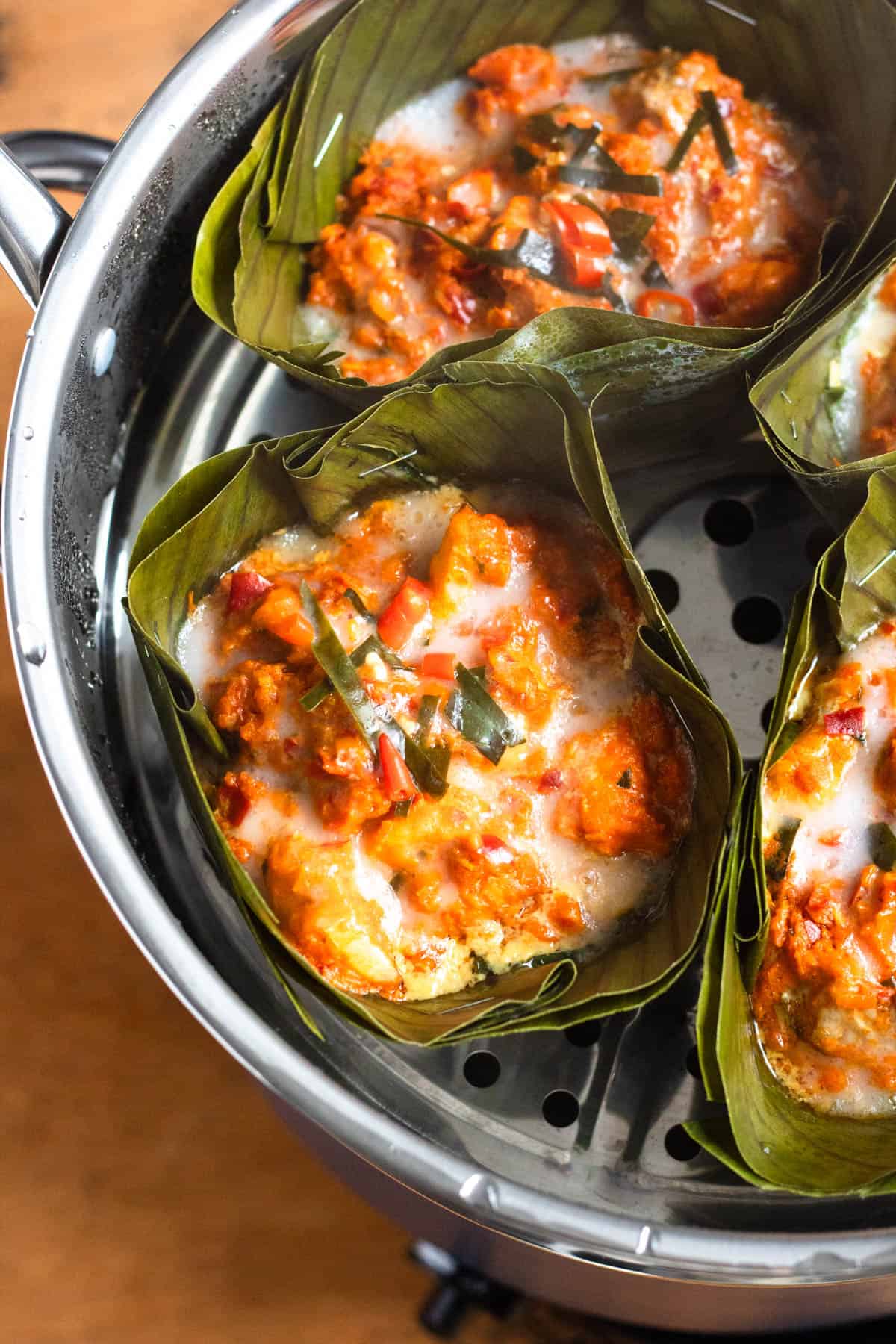
Amok, also known as Amok Trey, is the national dish of Cambodia. It is a fish curry recipe made of fish fillets–usually catfish– cooked in an aromatic sauce and served alongside Chinese broccoli leaves and a coconut milk topping. Typically, Amok is steamed in banana leaf bowls, which allow the dish to cook into a custard-like texture that is delicious over rice!
This dish perfectly blends the best flavors that Asia has to offer. Garlic, ginger, lemongrass, kaffir lime leaves, and galangal root form a base that sings to your senses. Fermented shrimp paste adds a touch of umami. Coconut milk contributes sweetness and creaminess. California chili pods and bird’s eye chilies bring spiciness. These flavors all work together to coat a flaky fish in a sauce that is worthy of eating with a spoon.
Keep reading for everything you need to know about how to make an authentic Amok Curry recipe that would impress ANY Cambodian! Try serving it with Loc Lac (Steak Stir Fry Recipe) or Shrimp Stir Fry with Noodles for a full Cambodian feast!
Key Ingredient for Amok Curry
Here is a visual overview of the ingredients in the recipe. Scroll down to the recipe at the bottom for quantities.
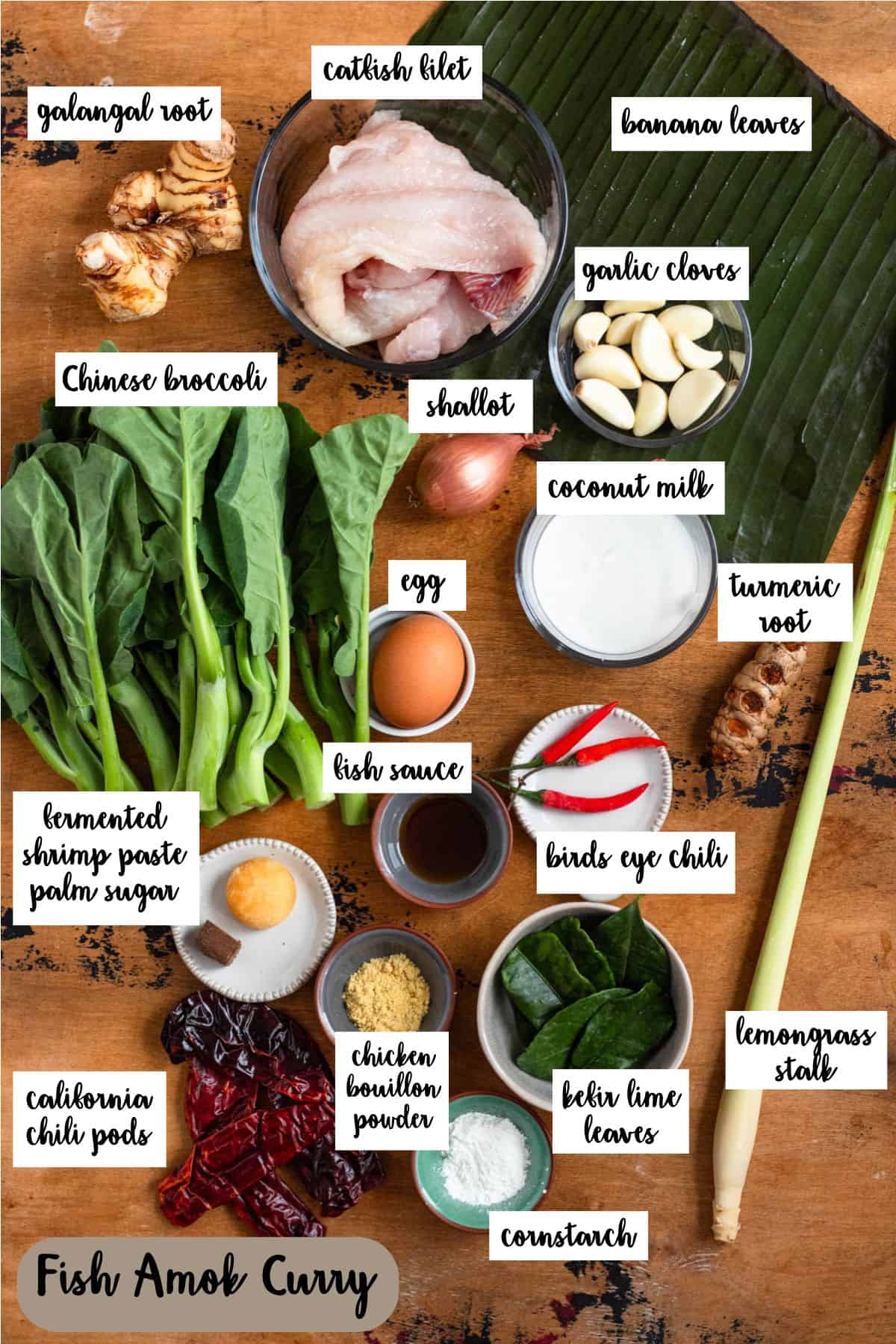
- Lemongrass: Lemongrass is a pretty tough plant. Cut the end root off of it, and then use a knife to cut the stalk into very thin/fine rounds. You will eventually need to pound the lemongrass in a mortar and pestle, so the thinner the slices, the easier that will be.
- Kaffir (Makrut) Lime Leaves: Use a knife to slice the stems out from the center of the leaves. Then cut the remaining leaf into very thin slices.
- Galangal Root: You can typically find this at an Asian grocery store. It is very tough, so, again, it’s easiest to cut this into small slices so that it will break down easier when pounded. You can substitute ginger in a pinch, but the flavors are different.
- Turmeric Root: Use gloves when working with this ingredient! If your cooking utensils get stained in the process, leave them out in the sun for a few hours and the stain will go away. If you can’t find turmeric root, about ½ tsp of ground turmeric will also work.
- California Chili Pods: I purchased these off of Amazon. The more seeds you remove, the less spicy your dish will be. They need to soak for at least 20 minutes before being ready to use.
- Fermented Shrimp Paste: I had some Belacan left over from my Nasi Lemak recipe, so I used that and it worked great! This has a strong smell, but don’t be turned off! It adds a great umami flavor to the sauce.
- Palm Sugar: This can be hard to find. If so, you can substitute brown sugar.
- Chicken Bouillon Powder: This is an ingredient that is only sometimes used in this recipe. I like the flavor it adds, but it can also be omitted.
- Catfish Filet: Catfish is the traditional fish used in this recipe, which is perfect because it is a fish that absorbs flavor very well. I got my catfish filet at my local Asian market and had them debone it for me. If you can’t find catfish, striped bass is also a good substitute.
- Banana Leaves: Banana leaves are used as the cooking vessel for this recipe. Make sure to use them shiny side up when cooking with them. If you cannot find banana leaves, you can cook this dish in ramekins!
- Chinese Broccoli (Gai Lan): Pick the leaves off of the stems, then use your hands to rip the leaves up into smaller pieces. If you can’t find Chinese Broccoli, you can instead use mustard greens or spinach
- Bird’s Eye Chili: These are small, meant for decoration on top! The more you add, the spicier your Amok will be. Use your leftovers to make this easy lunch, Kelaguen!
How to Make this Recipe
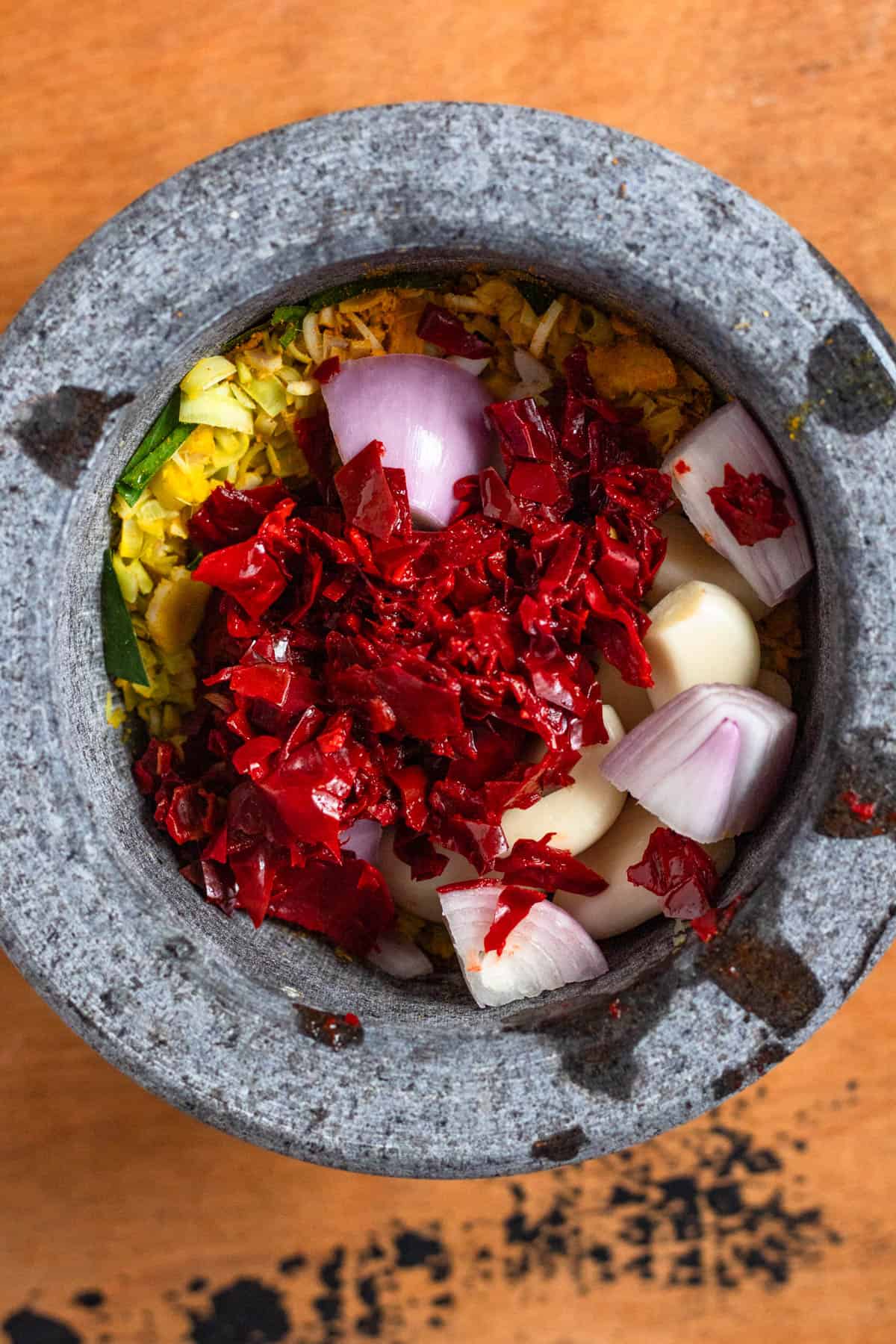
Step 1: Use a mortar and pestle (or blender) to grind up lemongrass, lime leaves, galangal, and turmeric. Then add the garlic, shallot, and California chilies, and pound again.
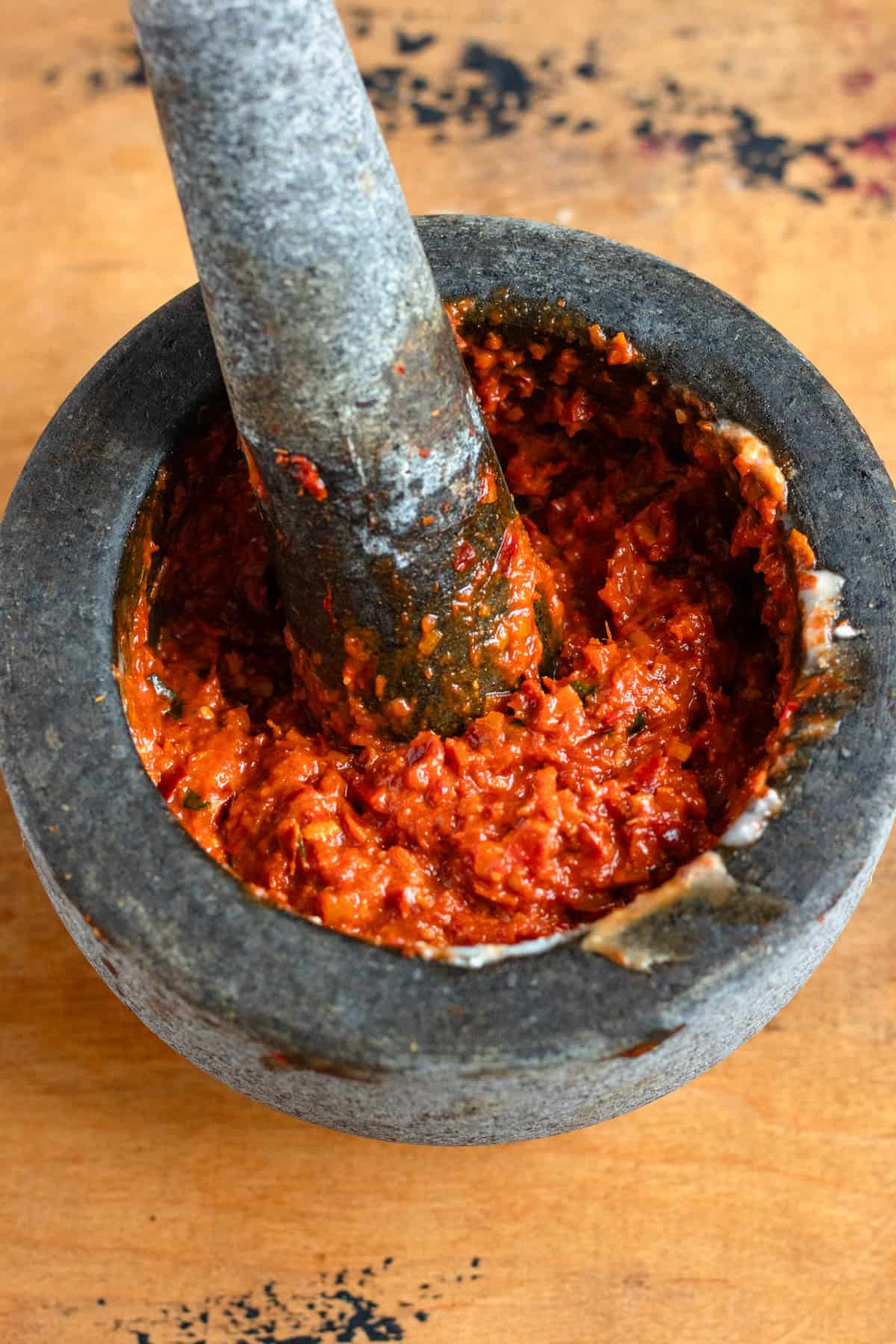
Step 2: Finish the curry paste by adding shrimp paste, palm sugar, bouillon powder, fish sauce, and coconut milk until a sauce forms.
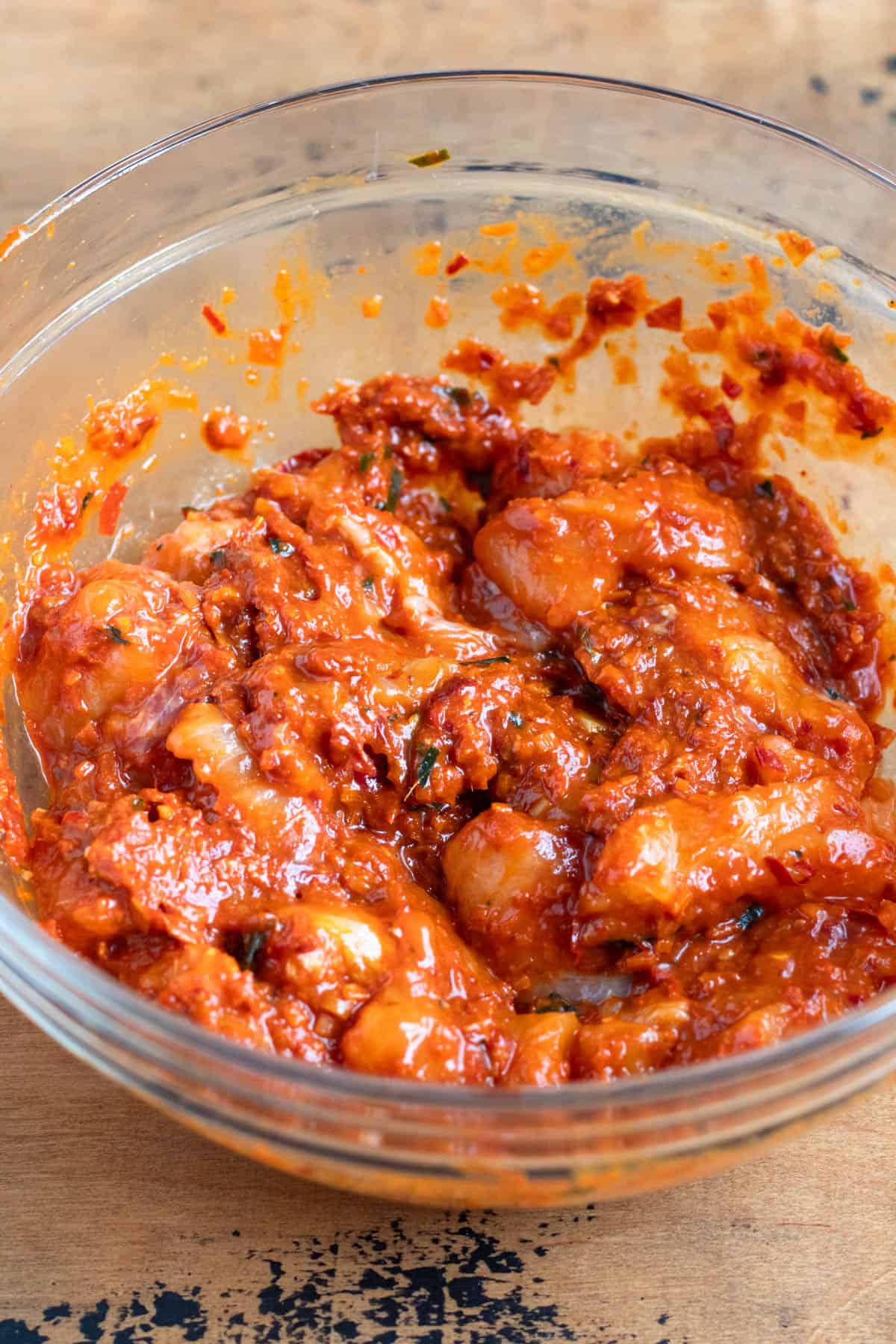
Step 3: Mix the catfish with the egg and curry paste until the catfish is fully coated.
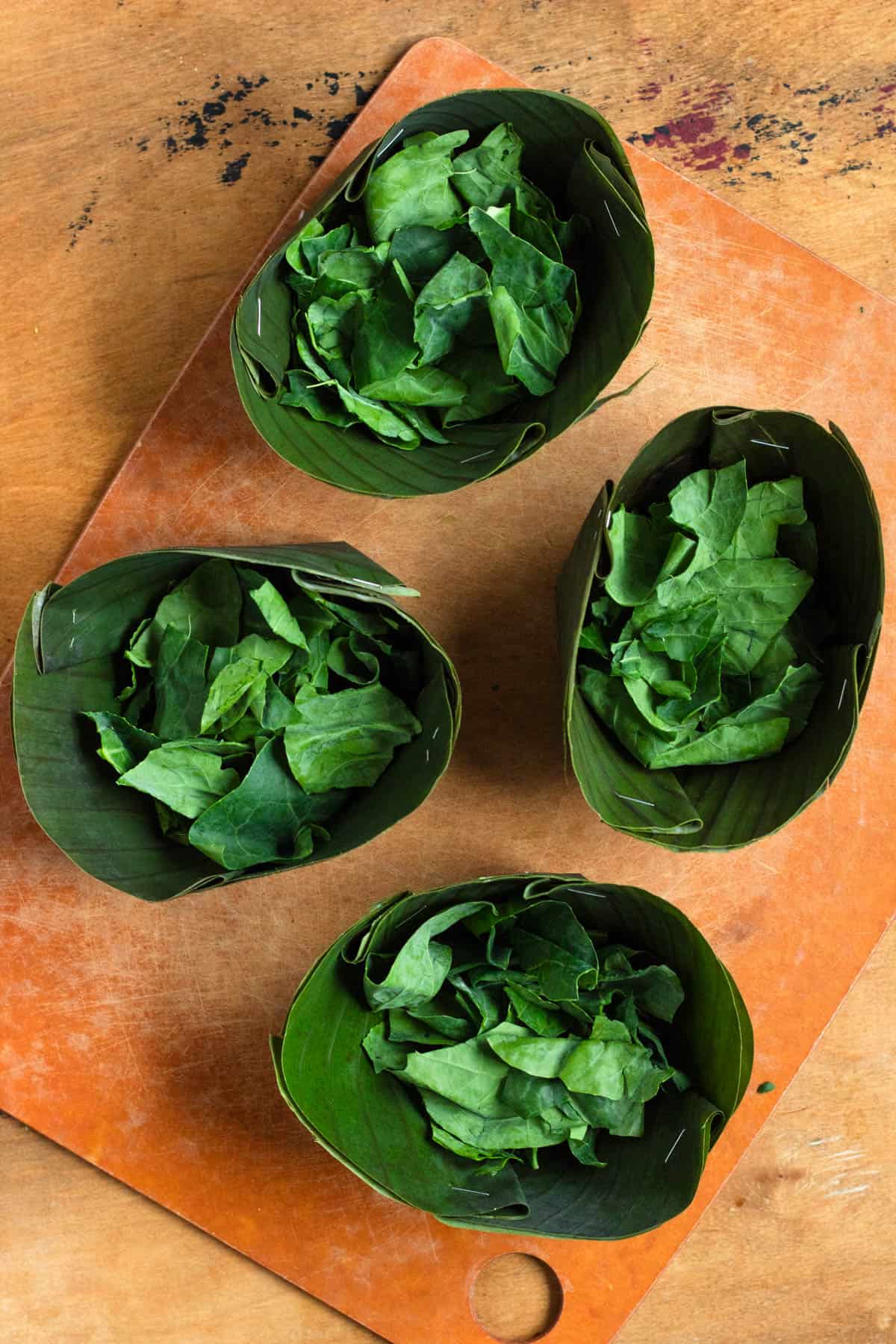
Step 4: Fill your banana leaf bowls or ramekins with Chinese broccoli leaves.
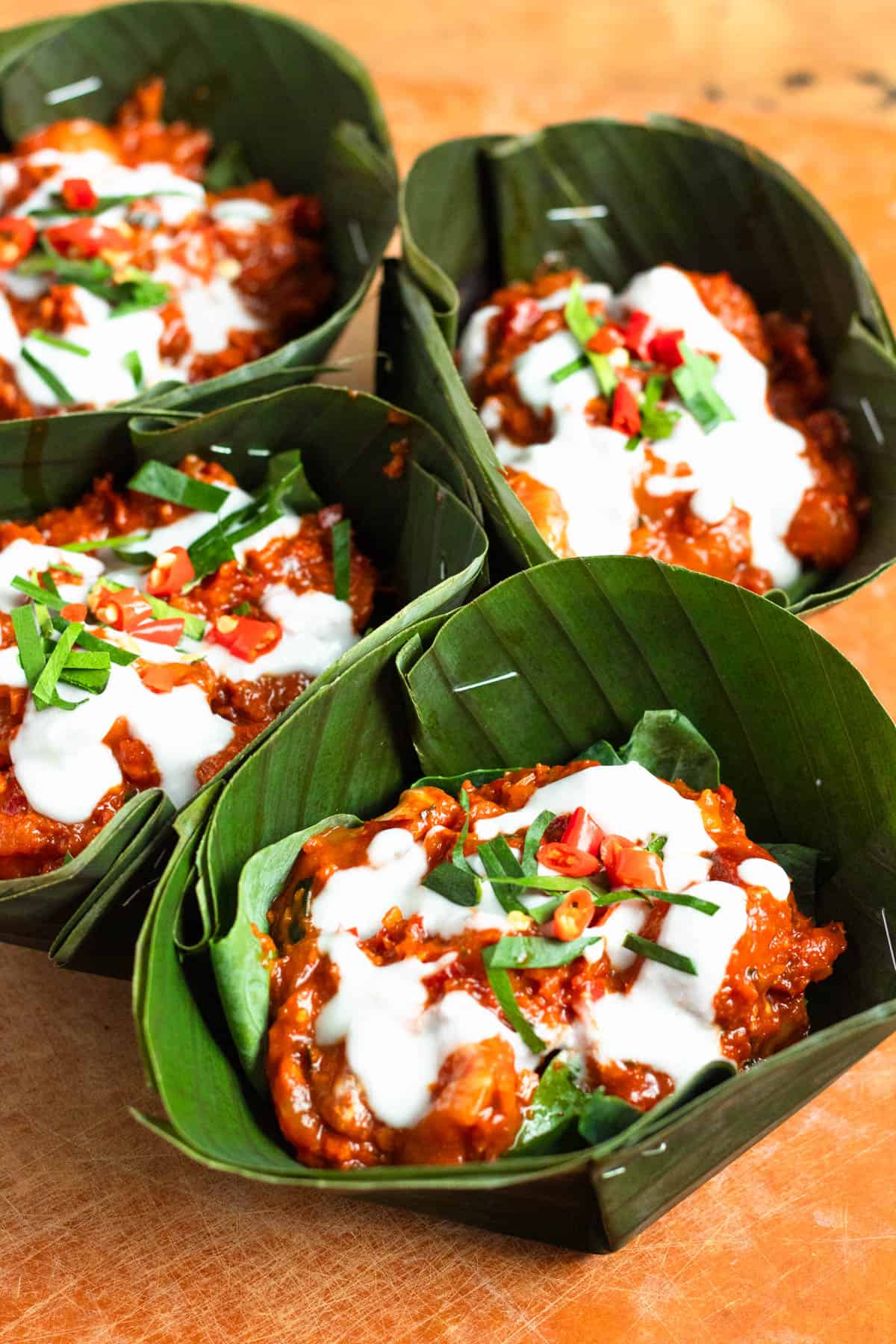
Step 5: Add your seasoned fish then top with coconut milk, more lime leaves, and chili peppers.
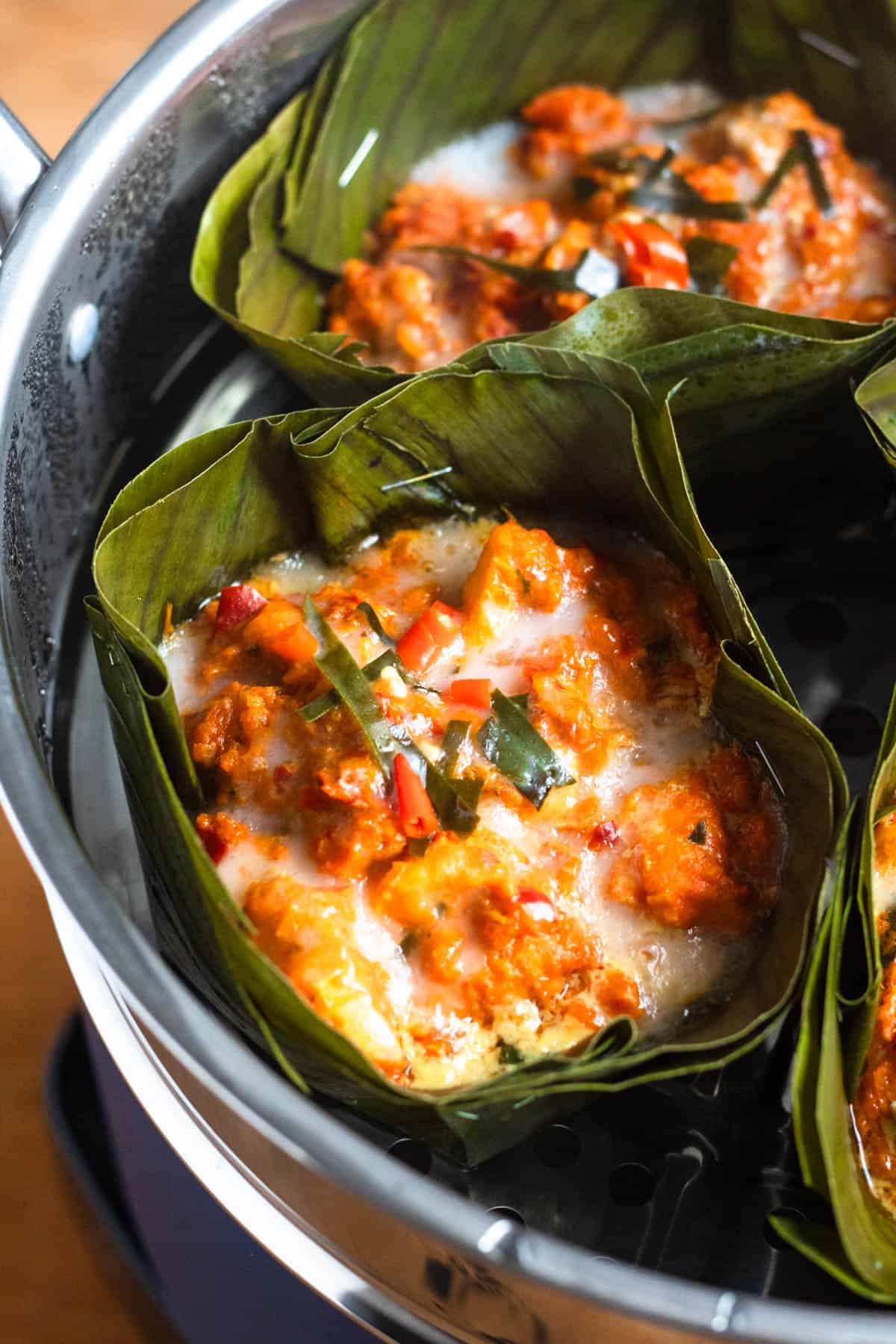
Step 6: Place in the steamer and steam for about 30 minutes, adding more coconut milk + cornstarch at the end. Cook until a custard texture forms. Enjoy!
How to Form a Banana Leaf Bowl

Forming a banana leaf bowl was the most intimidating part of this recipe for me, but it was actually much easier than expected! Follow these simple instructions to get the best bowls:
- Clean your banana leaves.
- Lay two banana leaves (or two halves of one large banana leaf) on top of each other.
- Use a knife to cut out two circles that are 8 inches in diameter. I had a bowl that was the perfect size, so I traced the bowl with my knife.
- Turn the two circles so that they are back to back in a double layer, with the shiny side out in both directions. Pass them briefly over a stove flame or run them under hot water to make them pliable.
- Hold the edge in two hands, and fold one edge behind another. Use a stapler or toothpicks to secure the fold in place.
- Turn the banana leaf circles ¼ of the way around and do the same. Repeat until there are four folds, making a secure bowl!
- Your bowl will be about 4” in diameter. You will need 4 of them for this recipe.
If you do not want to make a banana leaf bowl, you can also line a large bowl with a large piece of banana leaf on the bottom and add all of the amok at once. You can also line four smaller ramekins with banana leaves and that will work as well!
Expert Tips
- A mortar and pestle is the traditional tool to use when making the curry paste, and crushing the ingredients really brings out the aromatic flavors. However, if you would prefer to save some time, using a blender also works.
- Some cooks use scrambled egg instead of coconut milk and cornstarch topping. I have also seen people use bell peppers on top instead of bird’s eye chilies. Any works but the coconut milk and chili peppers are the most authentic.
- I used a steamer basket that sits on top of my pot (instead of a collapsible vegetable steamer that goes inside the pot) because it seemed the most sturdy. This certainly made cooking a lot easier.
- Mix your cornstarch evenly to avoid lumps.
- Slice the aromatics thinner than you think to make the mortar and pestle process that much easier.
- Amok isn’t meant to be so spicy that it burns your mouth. The other flavors should shine through with just a bit of heat if you want it.
Recipe FAQs
You can certainly make the curry paste ahead of time, as well as the banana leaf bowls! Keep the curry paste in the fridge for up to 3 days. I would not recommend combining the curry paste with the fish until you are ready to cook. Cook right before serving.
I placed my banana leaf bowls filled with Amok directly into a deep, airtight container. You can reheat right in those bowls as long as you didn’t use staples to secure them! If you used staples, remove the fish from the banana leaf bowl before microwaving.
Serve amok with steamed rice. This is a great addition because the rice can mix with the sauce and make that beautiful flavor go even further!
Did you enjoy this Amok Curry Recipe from Cambodia? If so, make sure to check out these other recipes I picked out just for you:
- Iced Coffee Recipe from Southeast Asia
- Fish Broth Recipe (Garudhiya) from the Maldives
- Fish Ceviche Recipe from Fiji
If you tried this Amok Curry Recipe from Cambodia or any other recipe on my website, please leave a 🌟 star rating and let me know how it went in the 📝 comments below!

Fish Amok Curry Recipe
Equipment
- Saucepan
Ingredients
- 1 stalk lemongrass, thinly sliced into rounds
- 6 kaffir lime leaves, stem removed and thinly sliced
- ½ inch galangal root, peeled and sliced
- ½ inch turmeric root, peeled and sliced
- 10 garlic cloves
- 1 shallot
- 3 dried california chili pods, seeds removed + soaked until softened, then chopped
- 1 tsp fermented shrimp paste
- 1 tbsp palm sugar
- ½ tbsp chicken bouillon powder
- ½ tbsp fish sauce
- ½ cup coconut milk, divided
- 1 egg
- 12 oz catfish filet, or striped bass, bone removed and cut into 1” strips
- Banana leaves
- 1 bunch Chinese broccoli, stem removed and the greens ripped into small pieces
- Birds eye chili, sliced
- 2 tsp cornstarch
Instructions
- In a mortar and pestle, add 1 stalk lemongrass, 6 kaffir lime leaves, ½ inch galangal root, and ½ inch turmeric root. Pound it into a fine paste.
- Once a paste has formed, add 10 garlic cloves, 1 shallot and 3 dried california chili pods and pound again.
- Add 1 tsp fermented shrimp paste and 1 tbsp palm sugar pound again until the mixture is smooth.
- Add ½ tbsp chicken bouillon powder, ½ tbsp fish sauce, and ¼ cup of coconut milk and mix until a curry paste sauce forms.
- In a large bowl, add 1 egg and whisk until beaten.
- Add 12 oz catfish filet in with the egg, and then add the curry paste. Mix until the fish is coated.
- Line a bowl with the banana leaves or make banana leaf baskets (following the instructions above).
- Remove the stems from the Chinese Broccoli and tear the leaves up with your hands. You need about 3 cups of ripped leaves.
- Add the shredded 1 bunch Chinese broccoli to the bottom of the banana leaf baskets. Then add the fish on top of the greens, and pour 1 ½ tsp of coconut milk on top of each basket.
- Top with kaffir leaves and Birds eye chili.
- Place the banana leaf baskets in the steamer basket of a large pot, with water underneath the steamer basket. Steam for 20-30 minutes until the curry is a mousse-like consistency.
- In a small bowl, mix 2 tsp cornstarch and 2 tbsp coconut milk and mix to combine.
- Pour it over the steamed fish, cover, and cook for 5 more minutes.
- Serve with rice and enjoy!
Video
Notes
- Galangal Root: You can typically find this at an Asian grocery store. You can substitute ginger in a pinch, but the flavors are different.
- Turmeric Root: If you can’t find turmeric root, about ½ tsp of ground turmeric will also work.
- Palm Sugar: This can be hard to find. If so, you can substitute brown sugar.
- Chicken Bouillon Powder: This is an ingredient that is only sometimes used in this recipe. I like the flavor it adds, but it can also be omitted.
- Catfish Filet: Catfish is the traditional fish used in this recipe, which is perfect because it is a fish that absorbs flavor very well. If you can’t find catfish, striped bass is also a good substitute.
- Banana Leaves: If you cannot find banana leaves, you can cook this dish in ramekins!
- Chinese Broccoli (Gai Lan): If you can’t find Chinese Broccoli, you can instead use mustard greens or spinach.
- A mortar and pestle is the traditional tool to use when making the curry paste, and crushing the ingredients really brings out the aromatic flavors. However, if you would prefer to save some time, using a blender also works.
- Some cooks use scrambled egg instead of coconut milk and cornstarch topping. I have also seen people use bell peppers on top instead of bird’s eye chilies. Any works but the coconut milk and chili peppers are the most authentic.
- I used a steamer basket that sits on top of my pot (instead of a collapsible vegetable steamer that goes inside the pot) because it seemed the most sturdy. This certainly made cooking a lot easier.
- Mix your cornstarch evenly to avoid lumps.
- Slice the aromatics thinner than you think to make the mortar and pestle process that much easier.
- Amok isn’t meant to be so spicy that it burns your mouth. The other flavors should shine through with just a bit of heat if you want it.


Helga Cookson says
Absolutely lovely recipe. Although I am fan of Asian kitchen, I never tasted anything that good! Will recommend it to my Lukullian friends. Thank you very much!!!
The Foreign Fork says
Thank you Helga! I’m so glad you liked this recipe. Thanks for your comment 🙂
Liba says
Easy and really tasty!
The Foreign Fork says
So glad you liked it Liba!
Sammy says
This isn’t amok at all. It’s nice that you’re bringing exposure to Cambodian cuisine but this is consider Cambodia’s national dish and the ingredients are completely off. The only difference is not just the fact that’s it’s steamed in a banana leaf but the profile of flavors. It may be a nice interpretation of the dish to best suit you and the American palette but please do not pass this off as Cambodian or Amok. The main ingredient of Amok and many of Cambodian dishes is Kreung which is a blend of spices that includes lemongrass, galangal, among other things which are not in your ingredient.
Alexandria Drzazgowski says
Hi Sammy,
I actually completely agree with you! Which is why I made sure to include the final section of the post…. I had a really hard time finding almost ANY of the ingredients needed for amok in America, which is why the flavors and technique are different. I did mention that this recipe is not authentic, but instead “inspired”. I would absolutely love to go to Cambodia one day and try real amok, as it seems wonderful <3 for now, I will have to settle for a modified version that I can make at home while still trying my best to experience the culture of other countries 🙂