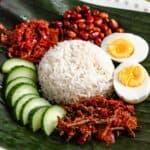
Nasi Lemak
Nasi Lemak is a classic Malaysian dish layered with flavor. It’s spicy, sweet and the perfect representation of Malaysian culture and cuisine!
Servings 4
Calories 1912kcal
Ingredients
Rice Ingredients
- 2 cups Thai jasmine rice rinsed twice and strained
- 1 ¼ cup water
- 1 ¼ cup coconut milk
- 1 pandan leaf tied in a knot so it’s easier to remove
- 3 inches lemongrass hit with a meat mallet to crush it slightly
- 1 inch ginger peeled and sliced
- ½ tsp salt
Sambal Ingredients
- 1 ¾ cup dried chili peppers, about 1.8 oz
- 1-5 red bird’s eye chilies depending on spiciness preference
- 1 Tbsp Belacan shrimp paste
- 2 shallots peeled and halved
- 4 garlic cloves
- ½ cup water
- ¼ cup peanut oil
- 1 tbsp coconut sugar
- 1 Tbsp tamarind paste
- ½ tsp salt
- ½ medium red onion sliced
Side Dish Ingredients
- ¾ cup peanut or canola oil
- 2 cups unroasted peanuts unsalted peanuts
- 2 cups dried anchovies
- 6 eggs hard boiled & peeled
- 1 English cucumber cut into half moons
- banana leaves optional for serving
Instructions
Rice Instructions
- Put 2 cups Thai jasmine rice in a medium pot along with the 1 ¼ cup water, 1 ¼ cup coconut milk, 1 pandan leaf, 3 inches lemongrass, 1 inch ginger, ¼ cup peanut oil, and ½ tsp salt.
- Bring the rice to a simmer, uncovered. Once simmering, cover the rice and allow it to cook for about 12 minutes or until all of the liquid is absorbed.
- Remove the pot from the heat, but keep the lid on for an extra 10 minutes.
- Once the rice is done steaming, remove the lid, then remove the aromatics (pandan leaf, lemongrass, ginger). Set aside.
Sambal Belacan Instructions
- Soak 1 ¾ cup dried chili peppers, in boiling water for 5-10 minutes until rehydrated. Then drain.
- In a food processor, add 1 ¾ cup dried chili peppers, 1-5 red bird’s eye chilies, 1 Tbsp Belacan shrimp paste, 2 shallots, 4 garlic cloves, and ½ cup water. Blend until smooth.
- In a large pan or wok, heat ¼ cup peanut oil. Pour the sambal paste into the hot oil and fry for 2 minutes.
- Then reduce the heat and cook for 10 to 15 minutes, until the oil starts to separate out.
- Then add 1 Tbsp tamarind paste, 1 tbsp coconut sugar, ½ tsp salt, and ½ medium red onion
- Continue cooking on low until the red onions soften, about 10 minutes .
- Remove from the heat and set aside.
Side Dish Instructions
- Heat ¾ cup peanut or canola oil over medium-high heat in the wok until it reaches about 325 degrees Fahrenheit
- Add 2 cups unroasted peanuts into the oil, and fry until they turn darker. Then remove the peanuts from the oil using a slotted spoon and drain on a paper towel lined plate.
- While the oil is still hot, add 2 cups dried anchovies, frying until they are crispy, about 5 minutes. Use a slotted spoon to remove the anchovies from the oil and drain them on a paper towel lined plate.
- Once drained, place the fried anchovies in a small bowl along with about ¾ cup of the Sambal Belacan. Stir until the anchovies are fully coated.
Serving Instructions
- Line a plate with a banana leaf.
- Plate the rice by putting it in a shallow bowl and then turning it out onto your banana leaf so that it stays formed in a dome shape.
- Around the rice, place the rest of the side dishes, including the roasted peanuts, the Sambal Belacan, the fried anchovies in sauce, the hard boiled egg (cut in half), and the English cucumber slices.
- Serve and enjoy!
Video
Notes
Recipe copyright The Foreign Fork. For educational and personal use only. Recipe researched using Huang Kitchen, Munchies, and Real Kitchen Stories.
- Thai Jasmine Rice: Long grain jasmine or basmati rice works best for this dish.
- Ginger: Ginger adds an earthly, slightly spicy flavor to the rice. Some recipes omit the ginger (the lemongrass adds a bit of ginger taste), so feel free to do this if desired.
- Dried Chili Peppers: Any Asian variety will do.
- Red Bird’s Eye Chilies: These chilies are spicy so feel free to add more or less depending on your spiciness preference.
- Belacan Shrimp Paste: This variety tends to be more pungent than a liquid shrimp paste, so if you are substituting liquid shrimp paste, use a bit extra.
- Coconut sugar: You could use regular granulated sugar or brown sugar if necessary. Coconut sugar is slightly less sweet than brown sugar, so use a bit less if you are substituting.
- Tamarind paste: You can use pulp or paste. If you use tamarind pulp you will need to add a bit of water and strain it.
- Peanut or canola oil: Peanut and canola oil are the best for frying because they can reach high temperatures without burning. We like to use a neutral oil for this recipe so that it doesn’t compete with the flavor of the sambal!
- Banana leaves: While the banana leaf is authentic, it does not contribute to the taste of the dish and therefore can be omitted if desired.
- I had to go to my local asian market to get most of these ingredients, particularly the Asian produce like lemongrass and pandan leaves. I could not find a good substitute at my usual grocery store. Some of the shelf-stable Asian ingredients like belacan and coconut sugar can be purchased online if necessary.
- Some recipes for Nasi Lemak call for extra anchovies to be blended into the sambal. This is up to your preference. I did not include anchovies in my sambal. If you want to, you will need more anchovies than what this recipe calls for.
- A plate of Nasi Lemak is often served with 8 slices of cucumbers because 8 is a lucky number for Malaysian and Chinese people. The number 8 is associated with prosperity.
- Frying your sambal belacan in a wok is preferable because the oil does tend to splatter. The higher edges of a wok will offer some protection.
- This recipe is a meal all on its own but many times you’ll see it served with a curry or fried chicken.
- This recipe for sambal sauce makes just enough to coat the anchovies and then put a little dollop on four plates. If you love sambal sauce, I recommend doubling the recipe.
- Traditionally you use your hands to eat this dish.
- Do not eat the banana leaves as they taste bitter!
Nutrition
Serving: 1serving | Calories: 1912kcal | Carbohydrates: 175g | Protein: 55g | Fat: 121g | Saturated Fat: 26g | Polyunsaturated Fat: 33g | Monounsaturated Fat: 55g | Trans Fat: 0.2g | Cholesterol: 288mg | Sodium: 3012mg | Potassium: 3111mg | Fiber: 39g | Sugar: 50g | Vitamin A: 27962IU | Vitamin C: 55mg | Calcium: 250mg | Iron: 15mg