

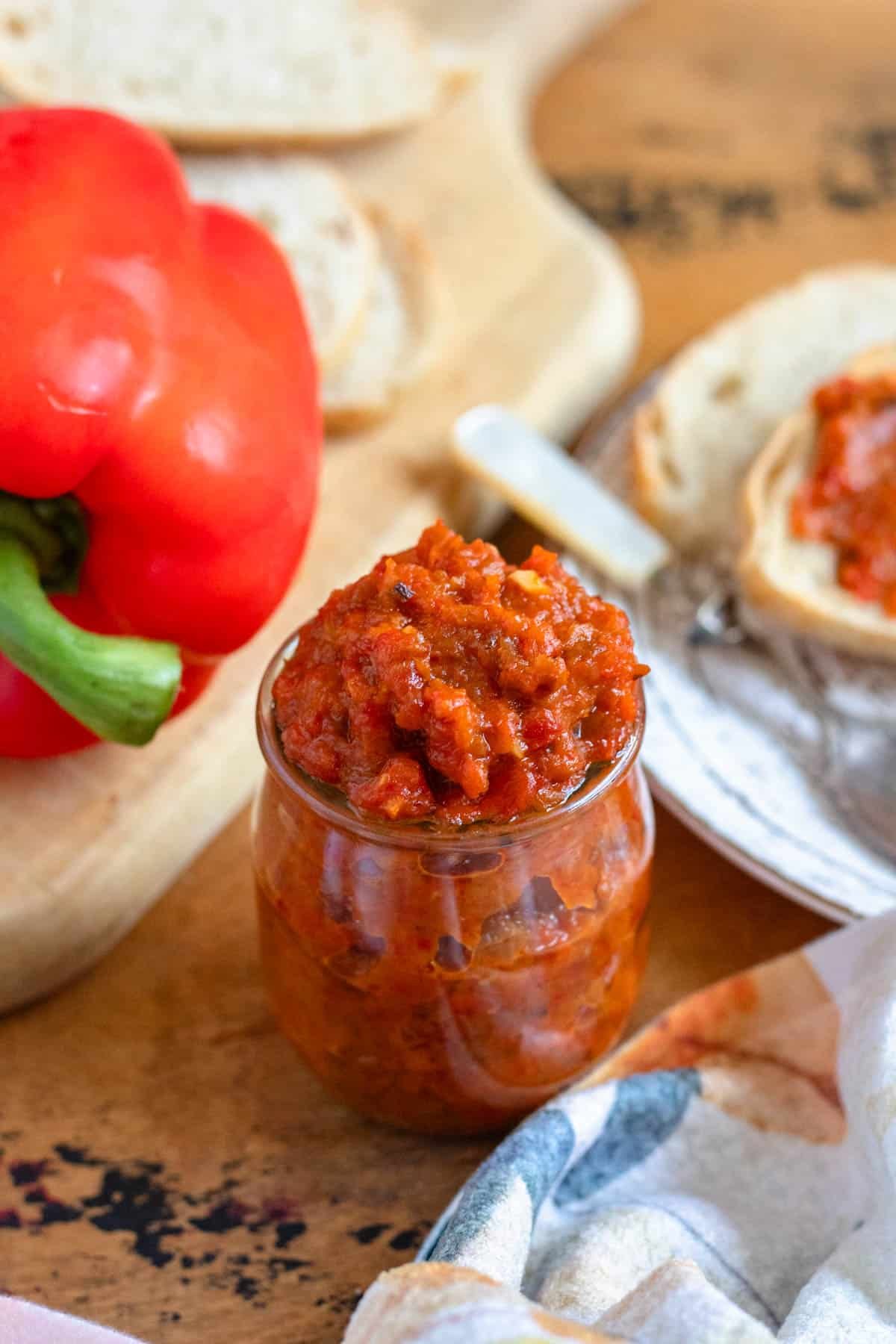
This Ajvar Recipe is a colorful red pepper relish from Serbia and North Macedonia that adds a pop of flavor to grilled meats, breads, pizza and more! It’s simple to make and tastes great on almost anything!
Hello Reader! I try my hardest to research recipes as best as I can before posting to ensure I am representing each culture correctly. If this recipe is from your country and I have made a mistake or you have suggestions for how to make it more authentic, I would love to hear! Please leave a comment below letting me know what should be different, and I will rework the recipe. It is always my intention to pay homage and respect to each cultural dish that I cook. Thanks for reading!
I love simple, versatile recipes that add an unexpected burst of flavor. Like Easy Tzatziki or Toum (Garlic sauce) prove, a little bit of sauce can go a long way. A good sauce can add a delicious twist that will leave you salivating.
Ajvar is one of those recipes. It’s an amazing sauce that is a staple in Balkan cuisine. With just a handful of ingredients like roasted red peppers, eggplant, and garlic, Ajvar delivers a sweet, smoky, and savory punch. It’s incredibly versatile and a must-have for dipping, spreading, or drizzling over your favorite meals!
When I first started The Foreign Fork, I had a local in my community reach out and ask me to promote his brand new Ajvar brand. I still remember going out to dinner with him, and being a little skeptical when he pulled out his jar of red pepper paste. I had never tried this dish before!
He spread his ajvar on a piece of restaurant bread and handed it to me for a bite. I was hooked! I have been looking forward to making this dish on the blog ever since, so I am SO excited that it’s finally time! I know you’re going to love it as much as I did.
My Thoughts on Ajvar
After testing my Ajvar from Macedonia, I sat down to record some quick thoughts on what went well, what my biggest challenges were, and anything I could think of to help you enjoy this recipe as well! Watch the video below.

Recipe Origins
Ajvar is a traditional Balkan relish made primarily from roasted red peppers and eggplant, with roots tracing back to the former Yugoslavia, particularly Serbia and Macedonia. Its name is derived from the Turkish word havyar, meaning caviar, hinting at its luxurious status in regional cuisine.
Originally, ajvar was made primarily with eggplant, but over time, sweet red peppers became the star ingredient. Today, some recipes skip the eggplant all together, but I could never lead you in that direction… The eggplant is one of my favorite parts!
This Ajvar Recipe has since become a staple in many Balkan households, especially during the autumn harvest, when families gather to roast and preserve peppers for winter.
Why Make This Recipe
- Simple Ingredients: There’s nothing too fancy in this sauce but simple ingredients give it a fresh, luxurious flavor.
- Bold Flavor: Ajvar has layers of flavor from smoky to sweet and tangy.
- Balkan Favorite: This ajvar recipe is very popular in Macedonia, Serbia and Croatia. It’s used to add flavor to a wide variety of dishes!
Ingredients to make this Ajvar Recipe
Here is a visual overview of the ingredients in the recipe. Scroll down to the recipe at the bottom for quantities.
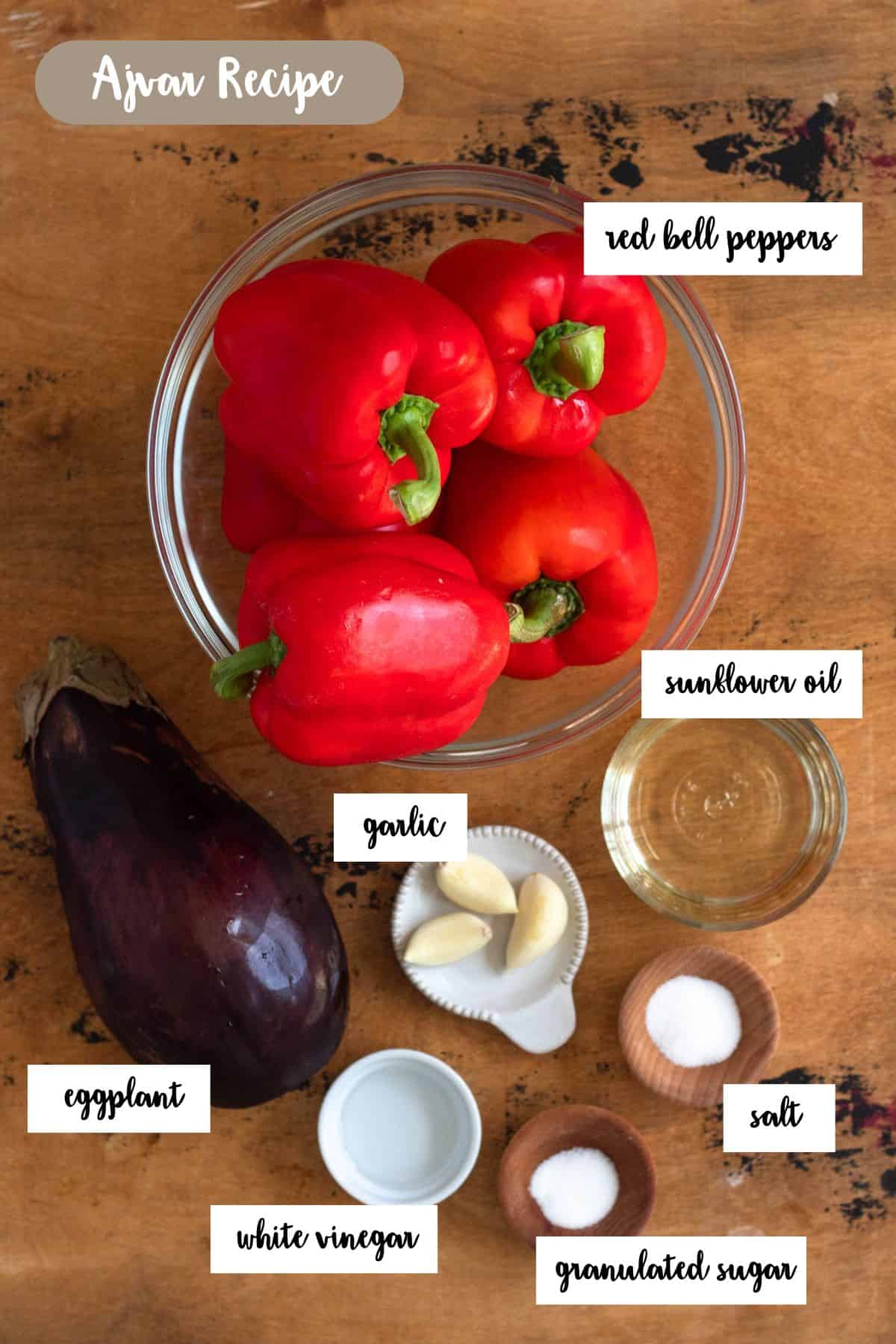
- Red bell peppers: Red peppers are the star of the show. Be sure to choose some that are fresh and deep red in color. Red peppers are used because they offer a great combination of sweetness with the classic Ajvar color. In Serbia and Macedonia, it is common to use kapia or roga peppers, though in the USA, bell peppers will be far easier to find.
- Eggplant: Eggplant adds a subtle nuttiness to the sauce. If you’re not a fan of eggplant you could leave it out and substitute with more red peppers.
- White vinegar: Vinegar adds just a hint of tang. It also helps preserve the ajvar’s color for longer.
- Granulated sugar: Sugar enhances the natural sweetness of the peppers and is vital for jarring leftovers (though I am not a canner so this recipe will not give you specific instructions for that).
Recipe Variations
Ajvar is filled with sweet and tangy flavor but if you wanted to add even more flavor you could try adding a few different ingredients.
- Spice: Some Macedonian recipes add a few hot peppers to give the sauce a kick of spice. You could add a hot pepper, a sprinkle of cayenne or some flecks of red chili flakes.
- Herbs: A little bit of parsley will add some fresh flavor to your ajvar recipe.
Tools
- Roasting pan
- Colander
- Food processor: You can also use a blender or simply dice and then mash your vegetables by hand.
How to Make this Recipe
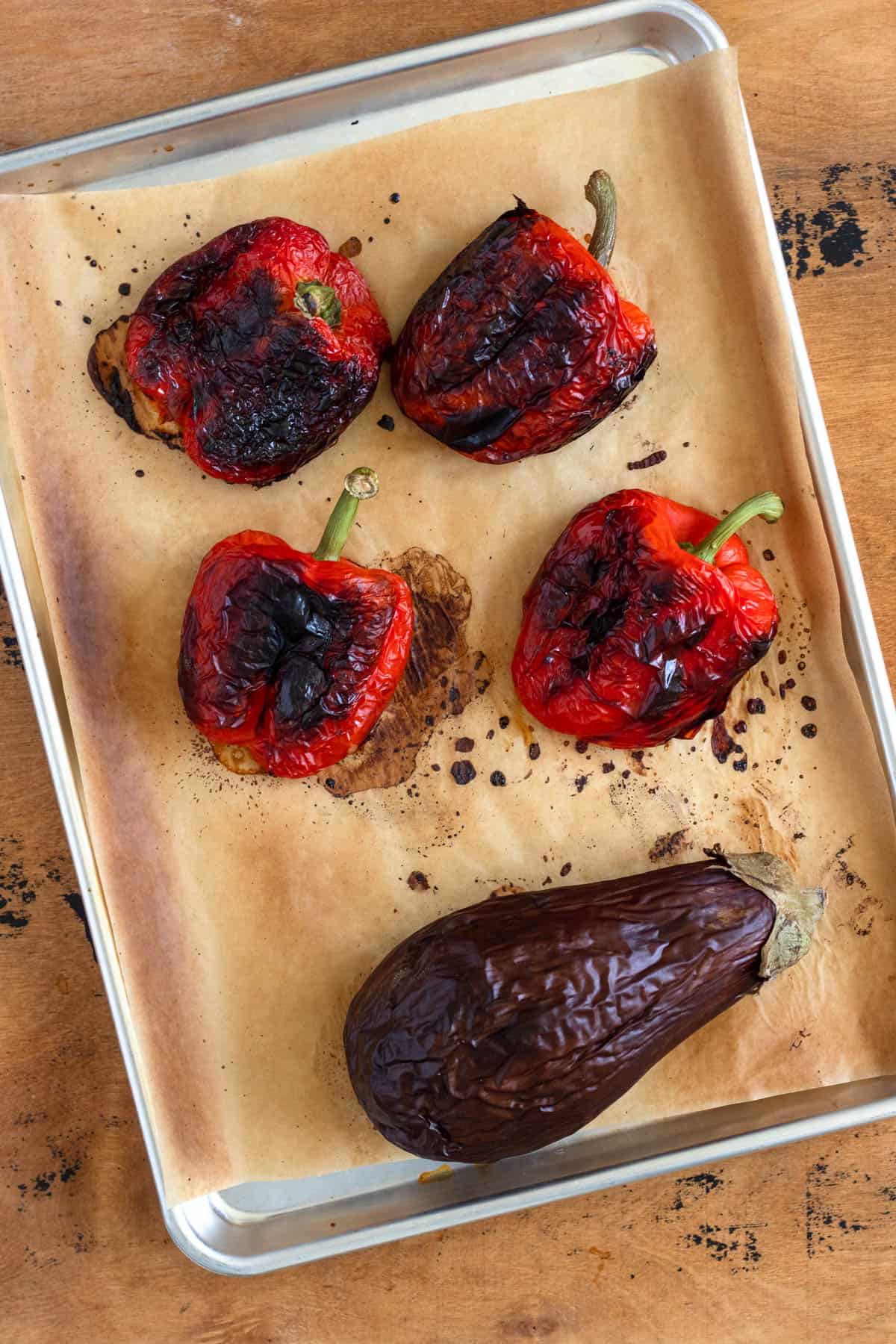
Step One: Roast your red bell peppers and eggplant until charred.
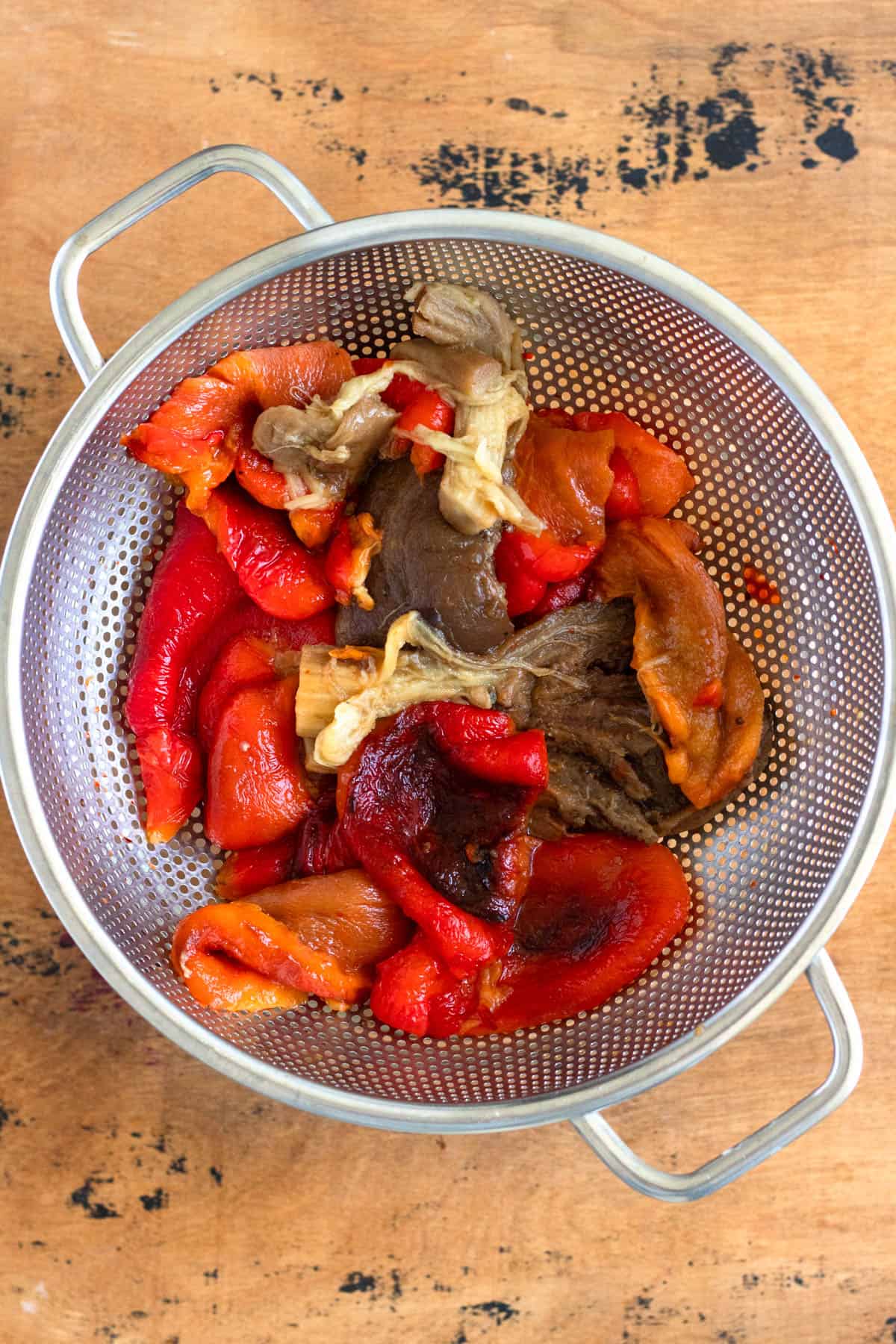
Step Two: Peel the vegetables and place them in a colander to drain for at least two hours or overnight.
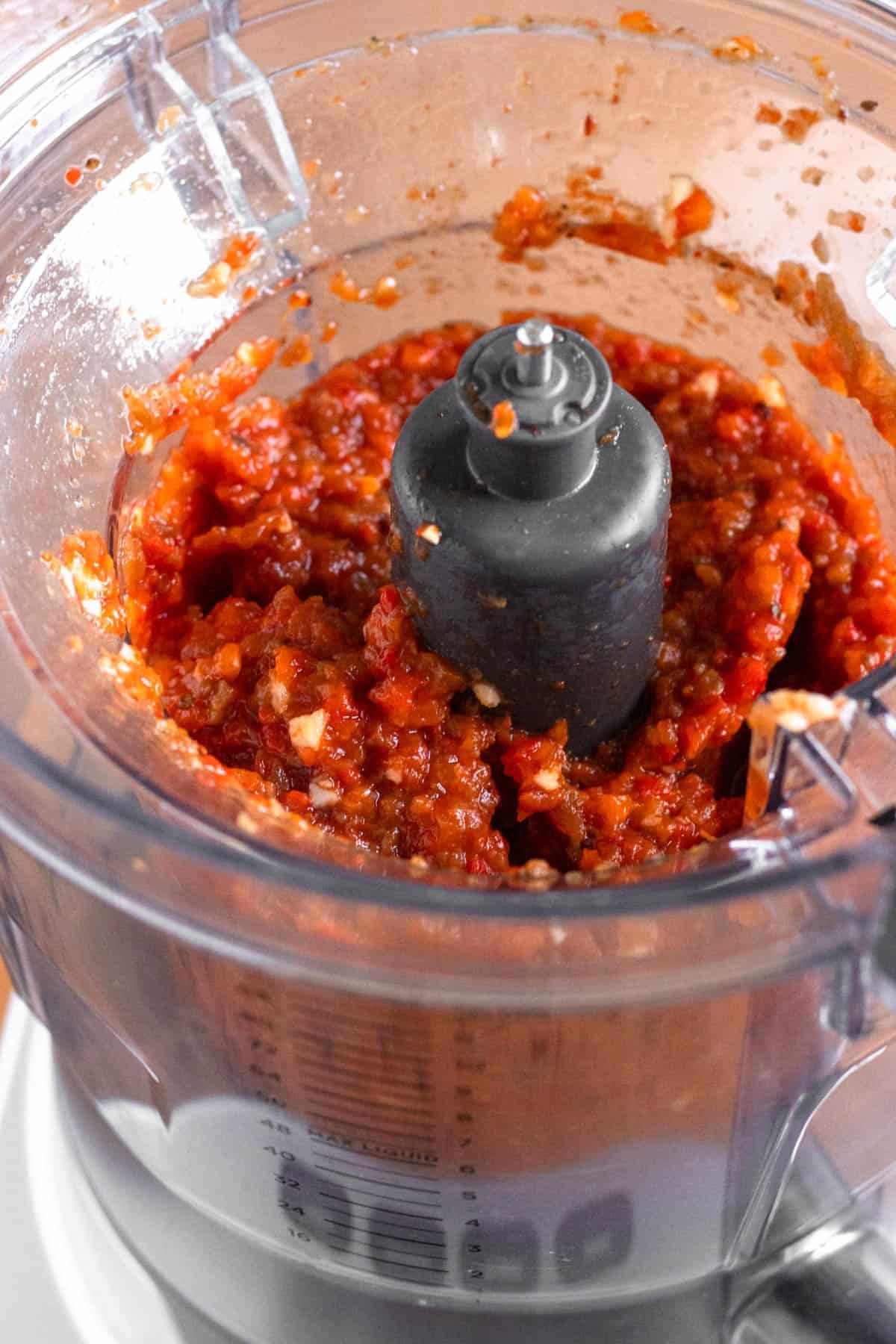
Step Three: Blend the peppers and eggplant in a food processor until mostly smooth.
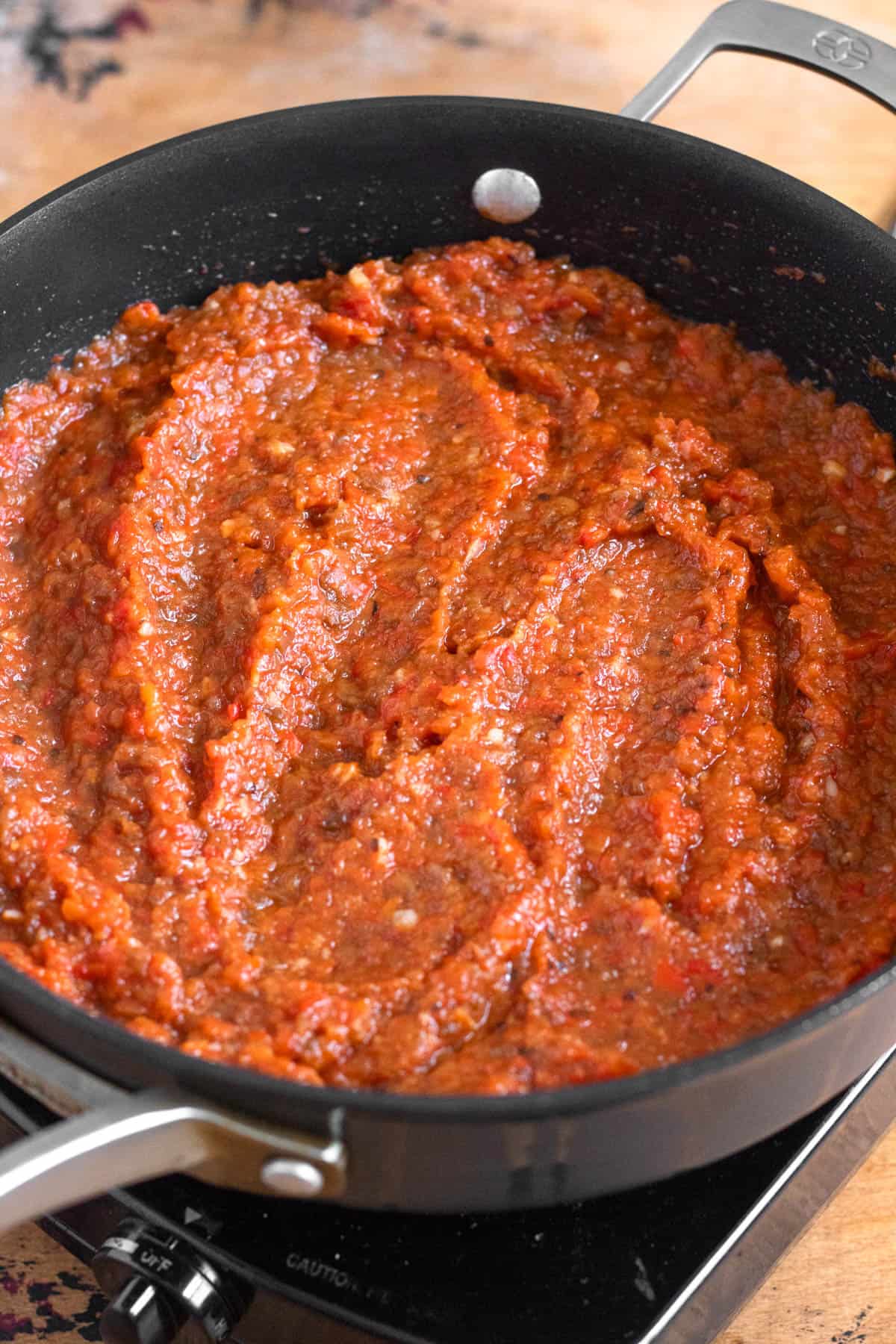
Step Four: Cook your puree in sunflower oil until it thickens, then add vinegar and salt and cook 3 minutes more.
Expert Tips
- Roast your vegetables until they are charred, not just soft… Letting the peppers and eggplant blister deeply adds a delicious smoky depth, so don’t rush this part.
- Do not add cold oil to your puree. Warm it up first to prevent sticking.
- Be sure and stir slowly the entire time your vegetables are simmering to prevent burning on the bottom
- Steaming your vegetables by covering them as soon as they come out of the oven makes it easier to peel them and also helps them release a bit more liquid.
- You can grill your vegetables over a flame for a deeper, smokier flavor.
Ways to Use Ajvar
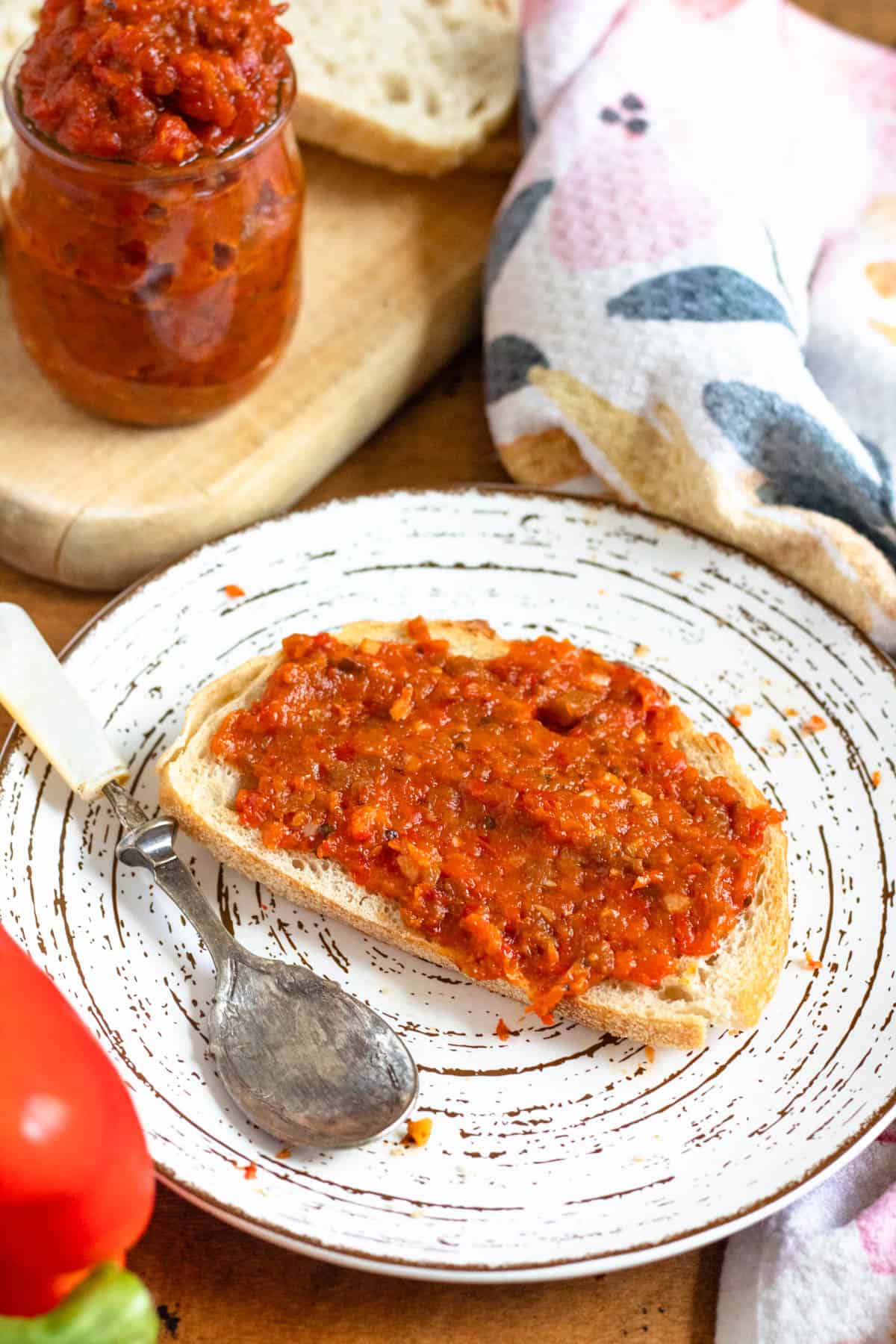
I’ve seen ajvar described as a sauce, condiment, relish and spread, and truly it can be any of those things.
- Topping: Ajvar tastes great over grilled meat (like jerk chicken) or roasted vegetables. Add it as a topping on eggs or your shakshuka.
- Spread: It’s also great as a spread on sandwiches, crackers, or crusty bread with a sprinkle of crumbly cheese.
- Sauce: It also makes a great sauce for pizza or flatbread.
Try it on anything and let me know what you think!
Recipe FAQs
Ajvar is not traditionally spicy. Its flavor comes mostly from sweet red bell peppers. It is possible to add some spice with some red pepper flakes.
Store leftover ajvar in an airtight jar in the refrigerator for up to ten days. Ajvar has traditionally been canned to preserve it to enjoy year round but fresh ajvar is best to use within a week.
Yes, you can freeze ajvar for up to two months. I recommend freezing it in small portions to make it easier to enjoy a bit at a time. Thaw in the refrigerator overnight before serving.
Did you enjoy this recipe for Ajvar? If so, try these other recipes I’ve chosen just for you:
If you tried this Ajvar Recipe or any other recipe on my website, please leave a 🌟 star rating and let me know how it went in the 📝 comments below!
Ajvar Recipe
Equipment
- Roasting Pan
- Colander
- Food Processor
Ingredients
- 2 ½ lb red bell peppers, 6.6 lb
- ¾ lb eggplant, 2 lb
- 3 garlic cloves
- ¼ cup sunflower oil
- 1 Tbsp white vinegar
- 1 tsp salt
- ½ tsp granulated sugar
Instructions
- Place 2 ½ lb red bell peppers and ¾ lb eggplant on a parchment paper lined baking sheet. Place this sheet in the oven and broil the vegetables until the outside is charred and the vegetables are soft.
- Place the vegetables in a large bowl and cover the bowl with plastic wrap to give the skin time to sweat. Allow the vegetables to rest for at least 30 minutes to make it as easy as possible to remove the skin.
- When ready, peel the peppers and eggplants and remove the seeds. This will keep the color of the ajvar that bright red color.
- Place the peeled vegetables in a colander and allow them to drain for at least two hours, but preferably overnight. Stir occasionally to allow the liquid to drain.
- Run the peppers, eggplant and 3 garlic cloves through a food processor and blend until the blend is mostly smooth with some chunks.
- Add ¼ cup sunflower oil into a pot or pan and allow it to warm. Then add the pepper and eggplant puree and cook it until the mixture thickens. You will know it is ready when you can drag a spoon through it and it leaves a mark behind. This took about 10 minutes for me, but can take up to 45 minutes.
- Add 1 Tbsp white vinegar, 1 tsp salt, and ½ tsp granulated sugar, and mix until combined. Cook for another 3-4 minutes.
- Allow the ajvar to cool to room temperature, then serve and enjoy!
Video
Notes
- Red bell peppers: In Serbia and Macedonia, it is common to use kapia or roga peppers, though in the USA, bell peppers will be far easier to find.
- Eggplant: If you’re not a fan of eggplant you could leave it out and substitute with more red peppers.
- Roast your vegetables until they are charred, not just soft… Letting the peppers and eggplant blister deeply adds a delicious smoky depth, so don’t rush this part.
- Do not add cold oil to your puree. Warm it up first to prevent sticking.
- Be sure and stir slowly the entire time your vegetables are simmering to prevent burning on the bottom
- Steaming your vegetables by covering them as soon as they come out of the oven makes it easier to peel them and also helps them release a bit more liquid.
- You can grill your vegetables over a flame for a deeper, smokier flavor.

Erika says
I use ajvar instead of tomato to which I’m allergic but add some beetroot powder to make it taste even more like tomato. My daughter took home some leftover dish with it and her husband who is Italian didn’t realize it is not tomato.
Alexandria Drzazgowski says
Aw I’m so glad that you enjoyed the recipe! Thank you so much for letting me know 🙂