

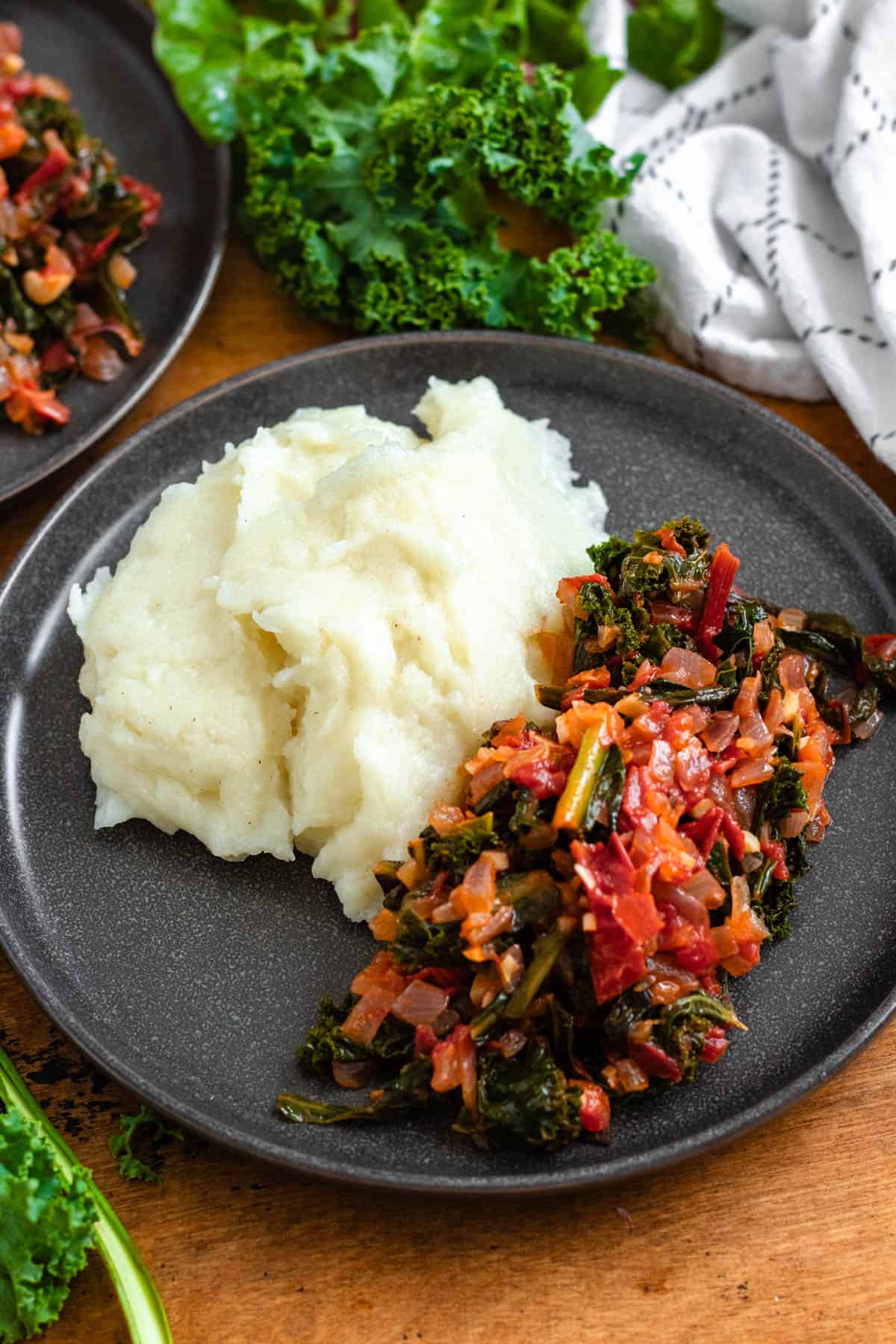
Nsima is a thick porridge made from white cornmeal that is a staple meal in Malawi. Paired with ndiwo, a flavorful vegetable relish, this combination is made with accessible ingredients and is simple to make! This article will teach you how to make the entire authentic recipe at home!
Hello Reader! I try my hardest to research recipes as best as I can before posting to ensure I am representing each culture correctly. If this recipe is from your country and I have made a mistake or you have suggestions for how to make it more authentic, I would love to hear! Please leave a comment below letting me know what should be different, and I will rework the recipe. It is always my intention to pay homage and respect to each cultural dish that I cook. Thanks for reading!
Nsima is a staple in Malawi cuisine. It’s made with just two ingredients, maize flour (or cornmeal) and water. But while the ingredients are simple, it’s the technique that takes some practice.
This simple porridge cooks gradually, transforming flour and water into a thick paste that is beaten and whipped until it’s smooth and steamy.
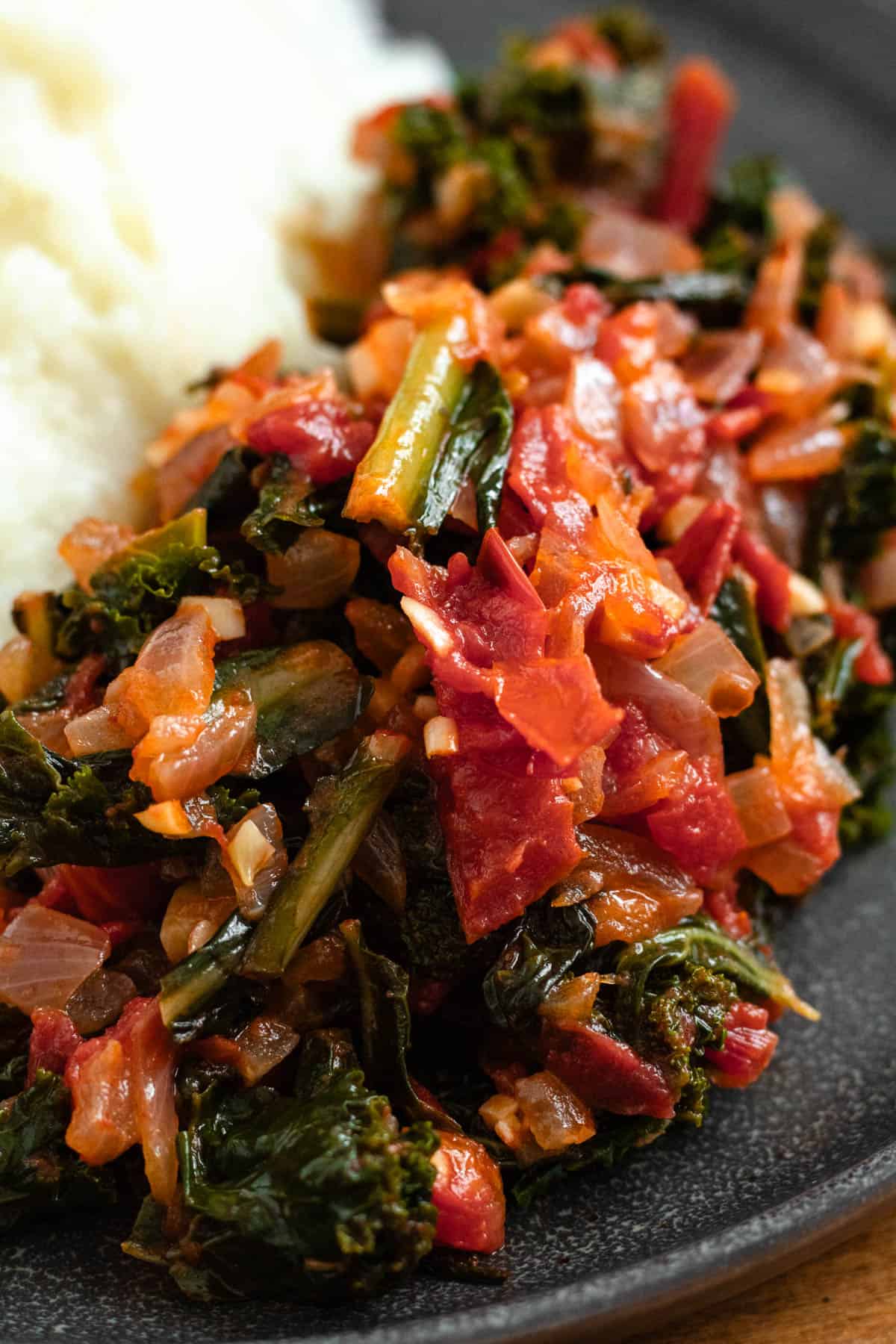
This is a meal enjoyed by Malawians often, even daily, and gives enough sustenance to work a long full day in the sun. Each bite of nsima wouldn’t be complete without a dip in ndiwo, a flavorful relish made with tomatoes and onions.
When I learned that Malwaians usually gather around one plate of nsima and ndiwo to share, I instantly knew that this was a dish I wanted to recreate. I love a recipe that highlights how food can be enjoyed amongst a community!
I watched a few YouTube videos to figure out how to get my technique perfect for this recipe, and now I’m excited to bring the results to your kitchen!
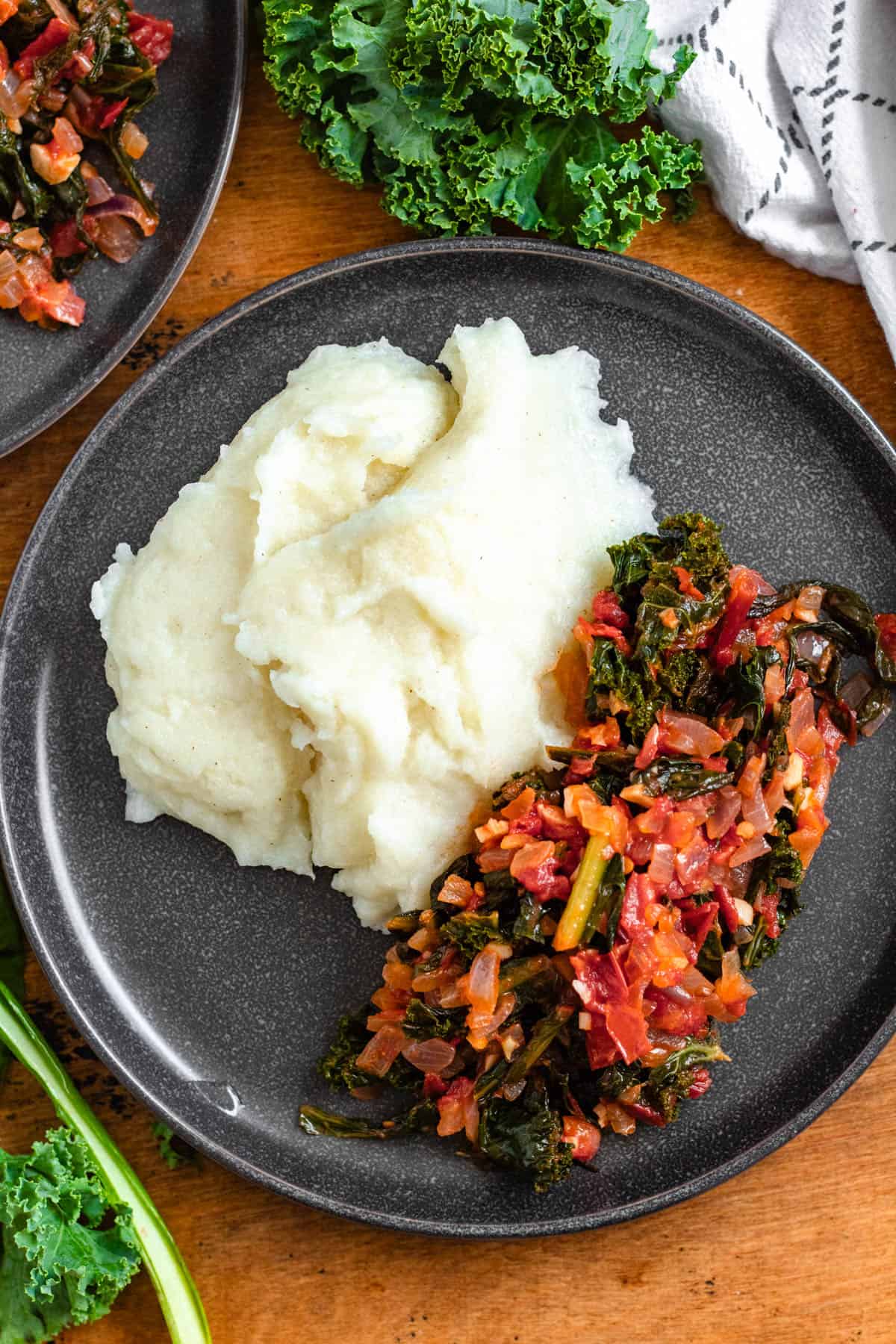
At first I thought it would be strange to eat a base of just cornmeal and flour combined, but the texture of the Nsima really was perfect for picking up the vegetables. It reminded me a lot of mashed potatoes at first, and the longer it sat the more sticky it became! It was a perfect, albeit plain-in-taste, base… the best part about it is certainly the flavor that comes from its pairings! Don’t worry, we are going to learn how to make both of them perfectly right now.
Why Make This Recipe
- Versatile: Nsima provides a filling base, and ndiwo can be made with any variety of vegetables, beans, or fish you have on hand! The flexibility of the relish means you can adapt the dish to what’s fresh or seasonal. This greens and tomato combination is just one option.
- Simple: With just maize flour, water, and a few vegetables, nsima and ndiwo come together easily. Their simplicity highlights natural flavors while delivering a hearty, comforting dish that can be enjoyed any time of day.
- A “Taste” of Malawi: If you’ve always wanted to visit Malawi, this dish is a good place to start! This recipe has been enjoyed in Malawian communities for generations and making and enjoying it is a great way to get introduced to Malawian traditions.
Ingredients for Nsima & Ndiwo
Here is a visual overview of the ingredients in the recipe. Scroll down to the recipe at the bottom for quantities.
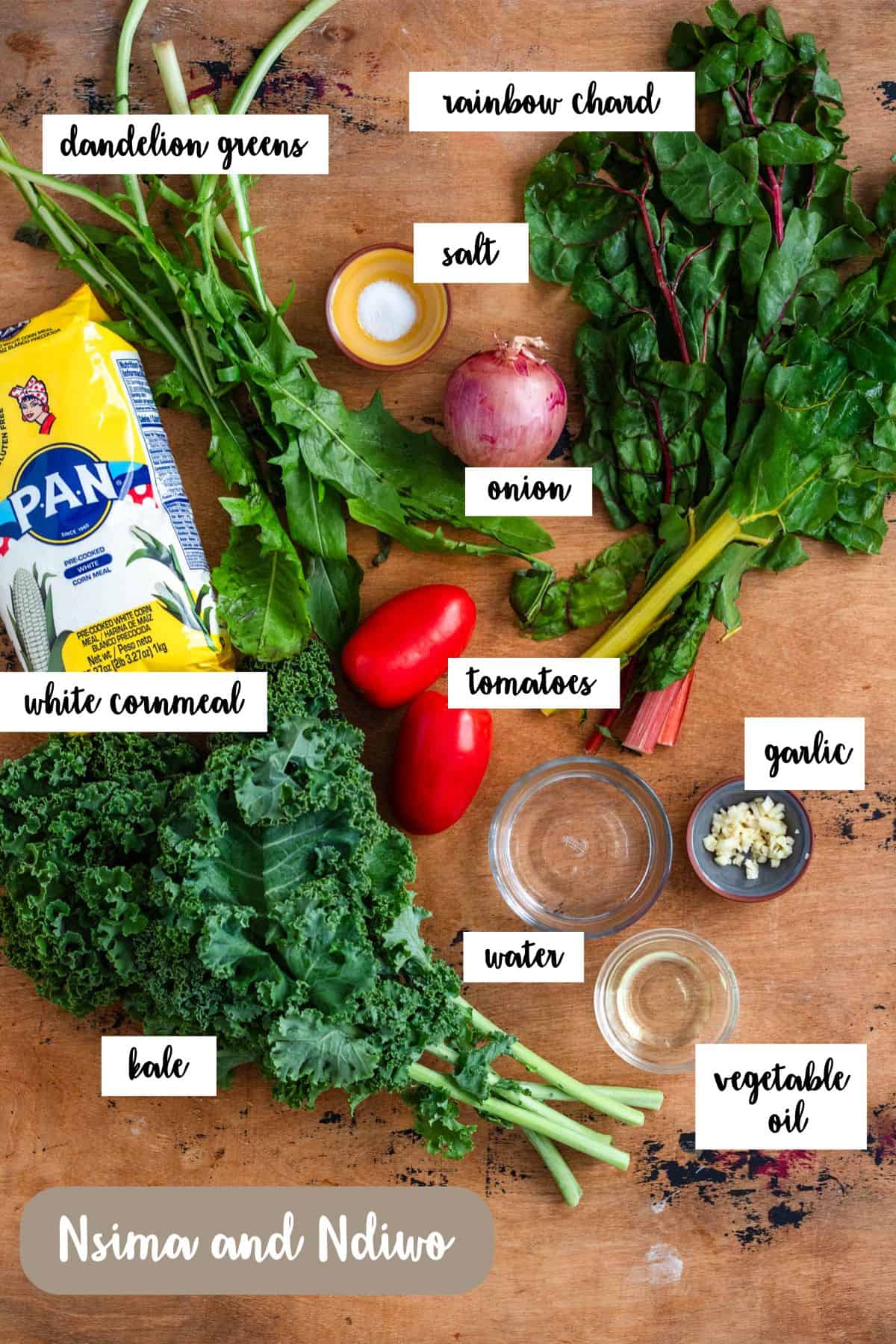
- White cornmeal: Search for a fine white cornmeal. I used Pan brand! Just make sure that you’re using cornmeal and not a cornbread mixture.
- Onion: I used a red onion for a sweeter, more mild taste, but you can use white or yellow onions if you want a stronger onion flavor.
- Roma tomatoes: This is what I used because it has a good balance of flesh to juice. If you are using a larger tomato, you may need to remove some of the seeds.
- Greens: I used a blend of kale, rainbow chard, and dandelion greens. You can use all or just choose one! Or feel free to use any other greens you have on hand or want to experiment with.
Variations
The ingredients to Nsima are fairly consistent from region to region although some families prefer a more coarse porridge while others use a flour that is super fine. Ndiwo, however, can vary widely. It’s made with indigenous vegetables and sometimes includes beans or fish. Most of the time, Ndiwo is eaten with meat in Malawi, though this is a vegetarian version of it!
How to Make this Recipe
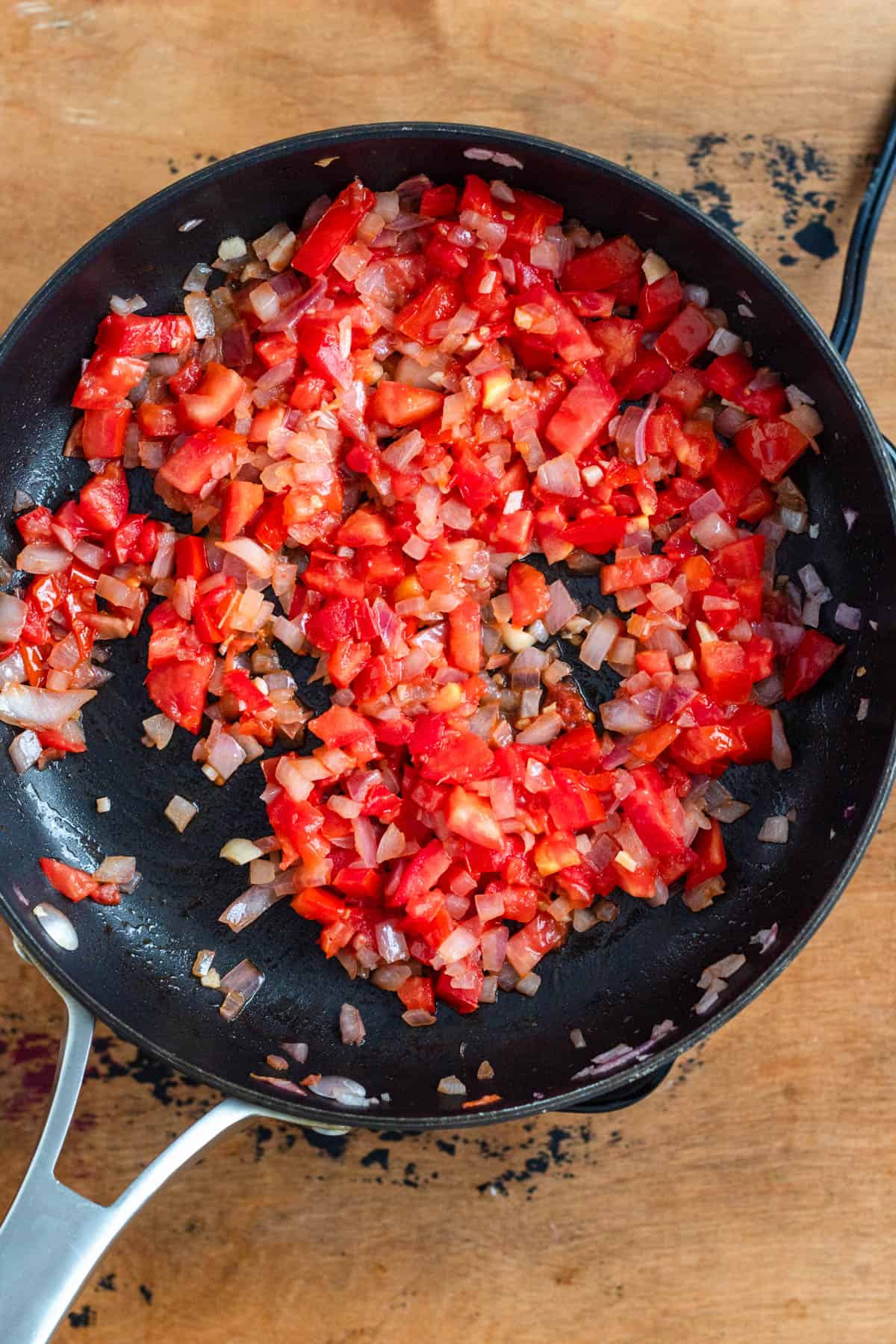
Step One: Saute your onions until translucent, then add the garlic and tomatoes.
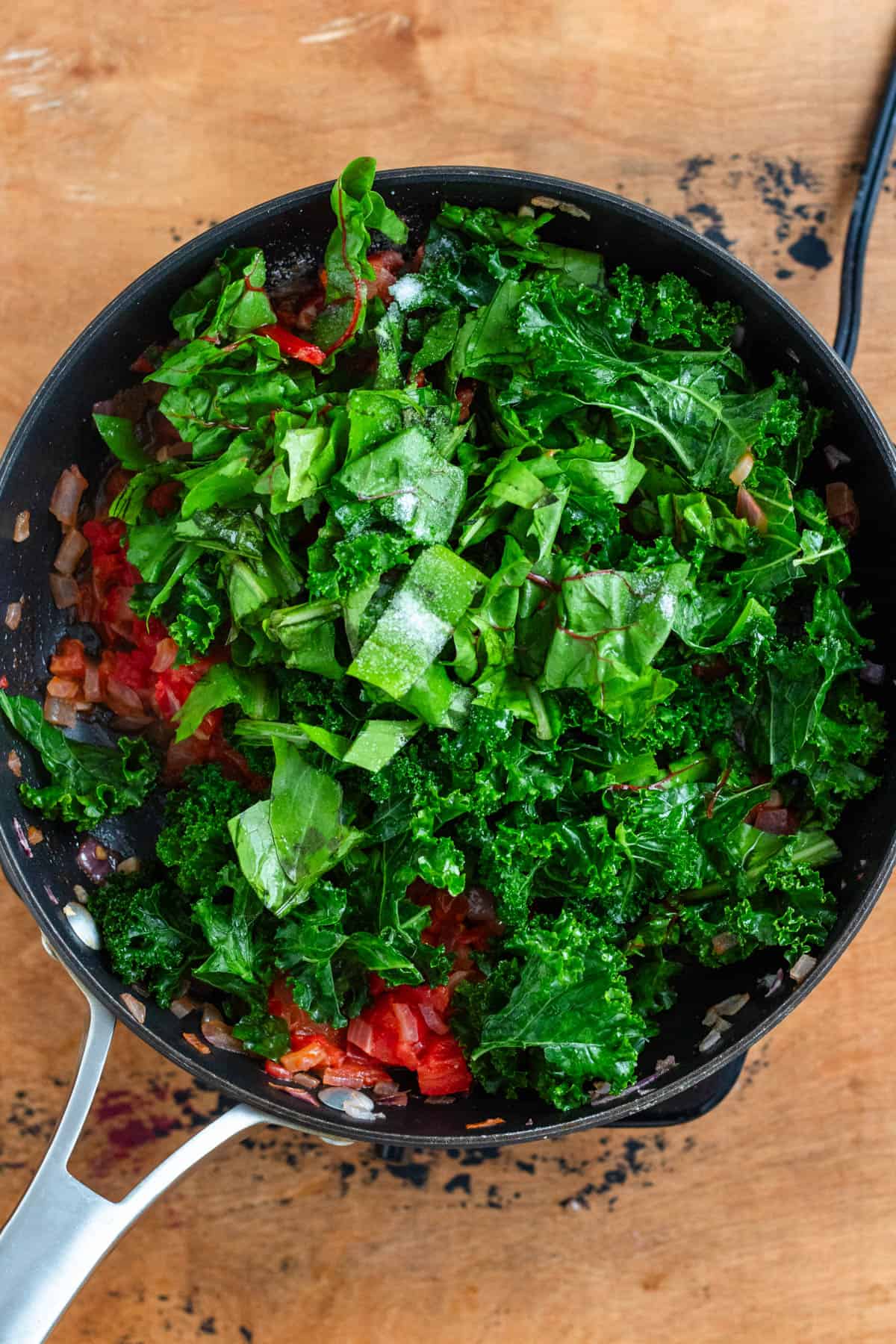
Step Two: Add the greens, stir to coat and then sprinkle with salt.
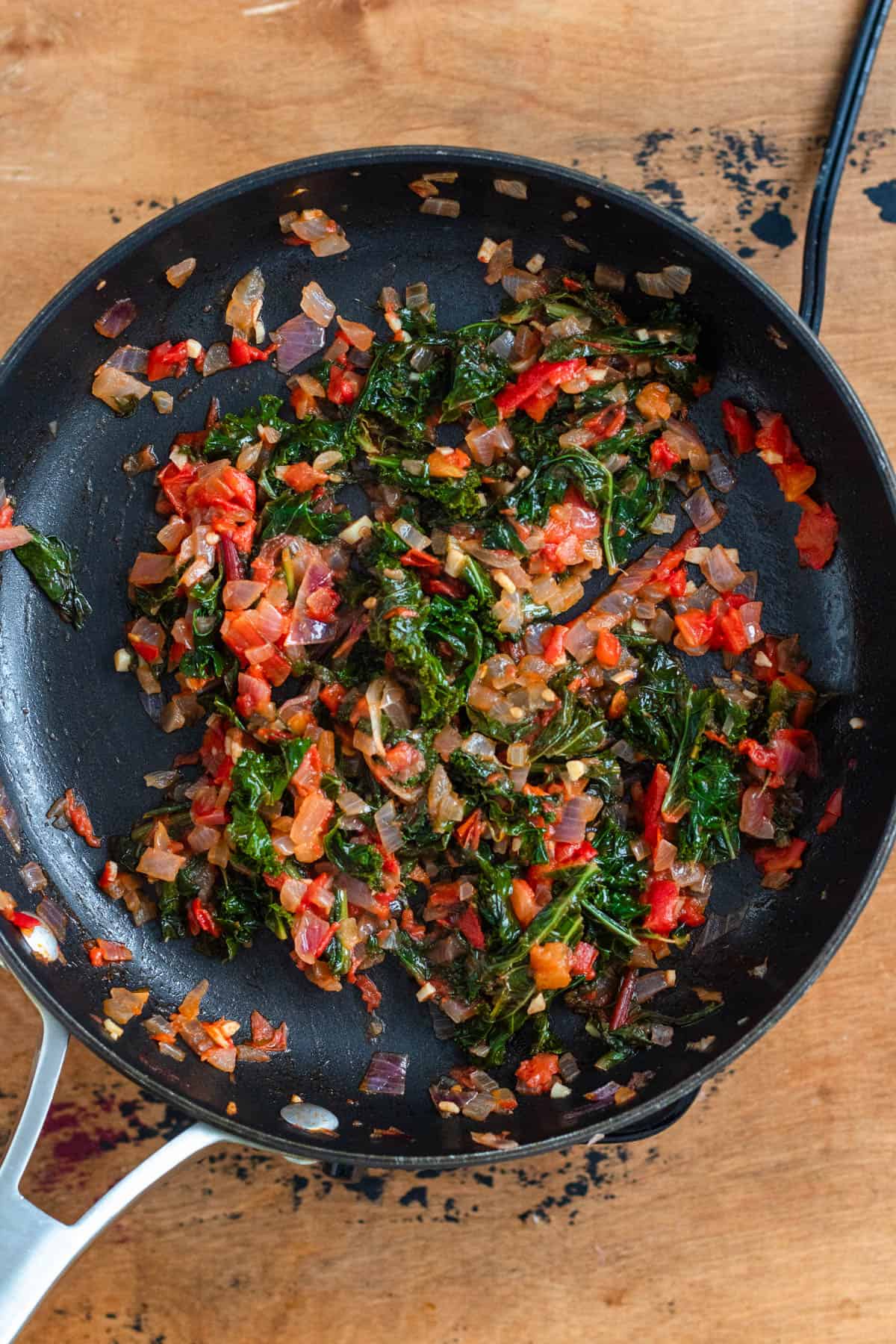
Step Three: Add water to the pan and cover and cook until the greens cook down and become tender.
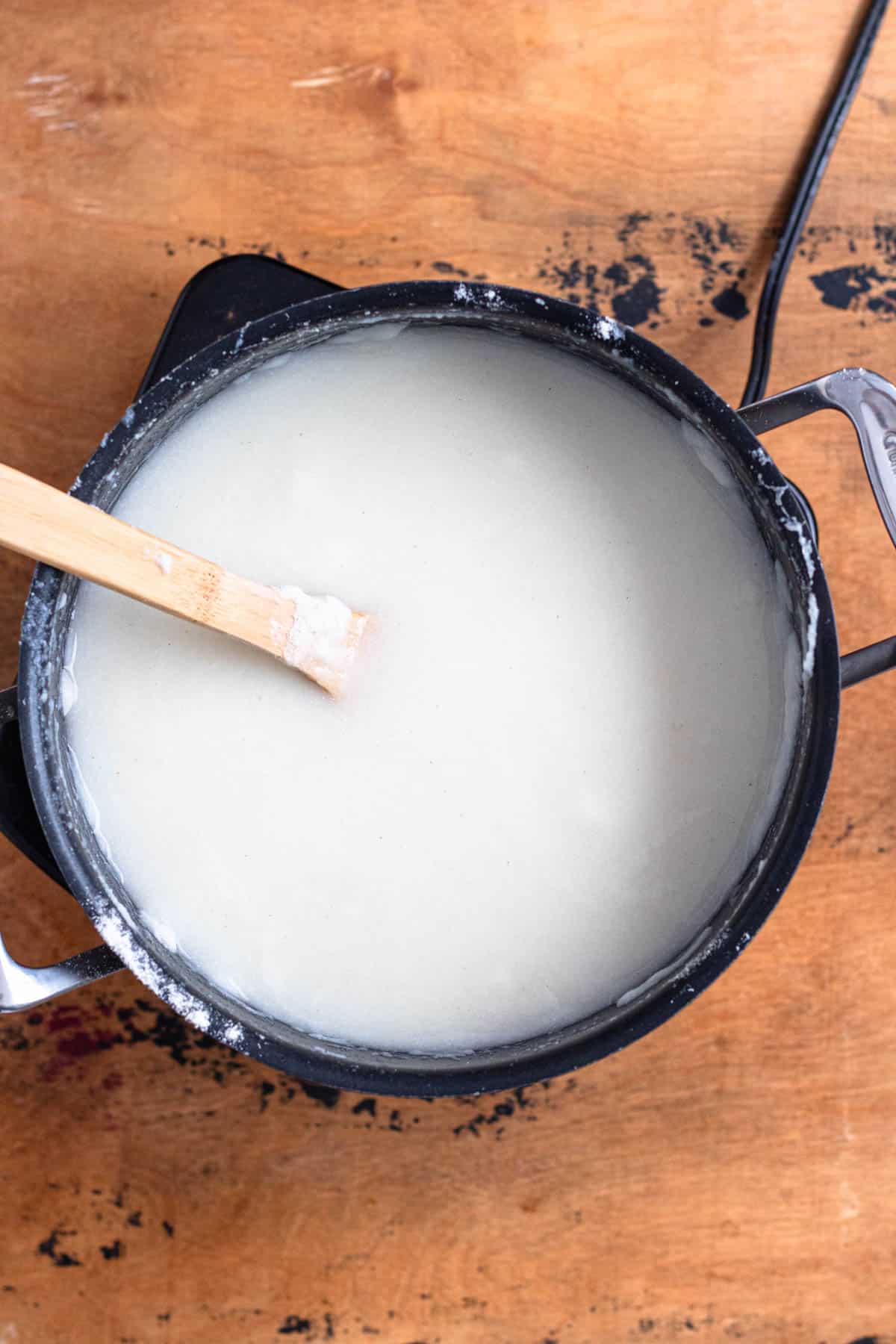
Step Four: Heat your water until almost boiling, then turn down to medium and add half the cornmeal into the water. Stir with a wooden spoon until the mixture begins to bubble.
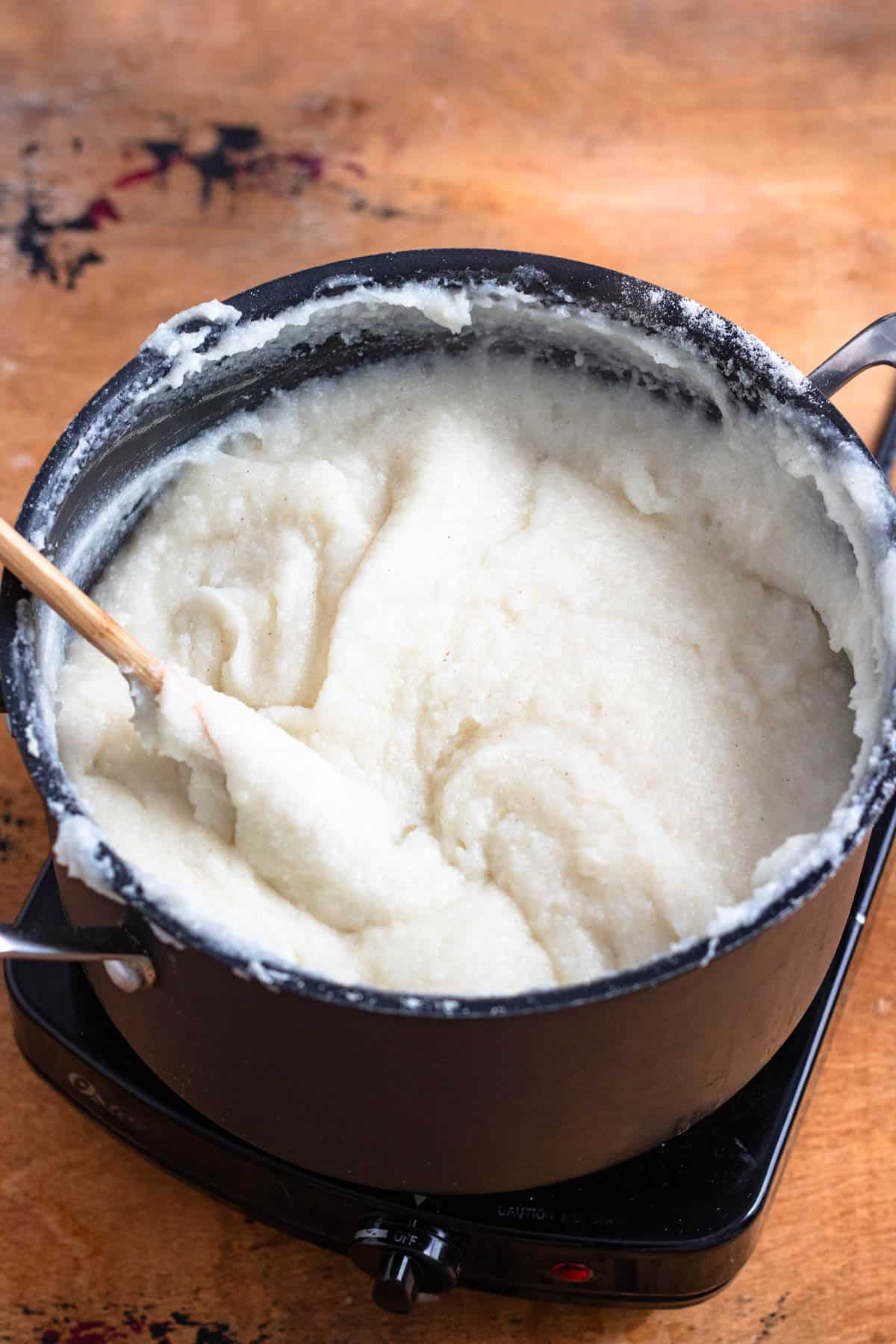
Step Five: Continue to add cornmeal until the mixture is thick and difficult to stir. Remove from the heat, cover and allow to sit for approximately 10 minutes.
Nsima Technique
While the directions to make this recipe seem straightforward, the actual technique does take some practice. This porridge does not call for gentle stirring; it requires vigorous mixing to make sure there are no lumps as you mix in each spoonful of cornmeal. By the time you are done, the mixture should be thick enough to scoop in your fingers like a dough.
It’s helpful to watch a video of someone making nsima (I have a video in the recipe card) to see how it is mixed. You want to use your spoon to press the mixture against the edge of the pot as you mix to crush any lumps so the final product is smooth.
How to Serve and Eat
To serve Nsima, dip a wooden spoon in water and scoop the porridge into smaller portions. The water keeps the porridge from sticking to the spoon.
Traditionally nsima is eaten by pinching off a portion of the porridge and smoothing it between your fingers or against the edge of a plate, then dipping it into the ndiwo to eat together.
I felt strange doing this at first because the Nsima looks so much like mashed potatoes that I thought it would have the same texture as well and would leave a sticky mess on my fingers. But it actually was such a clean experience, and I enjoyed not having to dirty a fork or spoon 😉
Expert Tips
- It’s easy for lumps to form whenever you add flour to boiling water. To prevent this, it’s important to add the first half of the cornmeal to warm water and whisk until it bubbles.
- Be prepared to stir continuously! Nsima thickens quickly and if not stirred constantly it can clump or burn.
- Your mixture should be thick. If your nsima looks more like porridge, just sprinkle in a little more flour and stir until it firms up.
- The mixture is ready when it pulls away from the sides of the pot and feels stretchy when stirred. Don’t rush it!
- If you are not eating your nsima right away, be sure and cover it so it does not dry out.
Recipe FAQs
You want to find finely ground white maize (corn) flour. Regular cornmeal from the grocery store can work, but if it’s too coarse, the nsima may end up grainy instead of smooth.
Don’t worry, it happens! Adding flour to boiling water almost always causes lumps. Be sure and stir with a wooden spoon and beat the porridge against the sides of the pot to smoosh any lumps.
While nsima is best eaten hot and steamy, it is possible to reheat it. Sprinkle a little water over it and heat it slowly over the stove. You can reheat in the microwave but the texture may become a bit tough.
Did you enjoy this recipe for Nsima from Malawi? If so, make sure to check out these other recipes I picked out just for you:
If you tried this Nsima Recipe or any other recipe on my website, please leave a 🌟 star rating and let me know how it went in the 📝 comments below!
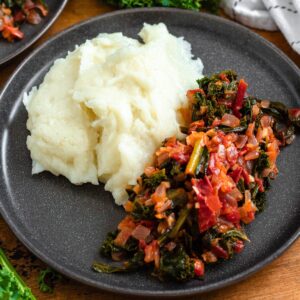
Nsima and Ndiwo
Ingredients
Nsima Ingredients
- 2 cups white cornmeal
- 5 cups water
Ndiwo Ingredients
- 2 Tbsp vegetable oil
- 2 small red onions, diced
- 4 cloves garlic, minced
- 4 small roma tomatoes, diced
- 16 cups greens, I used a blend of kale, rainbow chard, and dandelion greens
- ½ cup water
- Salt to taste
Instructions
Ndiwo Instructions
- In a small pan, heat the 2 Tbsp vegetable oil over medium heat until warm. Then add the 2 small red onions and saute for a few minutes until translucent. Add the 4 cloves garlic and saute for another minute.
- Add the 4 small roma tomatoes and saute for 2-3 minutes until the tomatoes begin to sweat.
- Add the 16 cups greens into the pot and stir to coat in the onions and tomatoes. Sprinkle with Salt to taste.
- Then add the ½ cup water to the pan, cover, and cook for 5 minutes over the heat, or until the greens are tender.
- Once the greens are tender, remove the cover and continue to simmer until all of the water evaporates from the pan.
- Salt to taste, then serve with Nsima and enjoy!
Nsima Instructions
- In a large pot, add 5 cups water for the Nsima and place it over high heat. Allow the water to heat up until warm to the touch, but NOT until boiling (yet). Then turn the heat down to medium.
- Spoonful by spoonful, add half of the cornmeal into the water, using a sturdy wooden spoon to stir/beat between each addition.
- Once half of the cornmeal has been added, continue stirring over medium-high heat until the mixture begins to bubble.
- Once the mixture has bubbles, continue adding the cornmeal spoonful by spoonful, mixing between each addition. At this point, the Nsima should be getting rather thick and kind of difficult to stir.
- Continue adding cornmeal until the cornmeal is gone, then mix until all of the liquid is gone from the pot and the mixture is smooth.
- At this point, remove the Nsima from the heat, cover, and allow it to sit for approximately ten minutes.
- To serve, dip a clean wooden spoon in water, then scoop out the Nsima, allowing the blend to roll off of the wet spoon (the water is so that it doesn’t stick).
- Serve with any sides you enjoy, such as the Ndiwo! Enjoy!
Video
Notes
- Most of the time, Ndiwo (relish) is eaten with meat in Malawi, though this is a vegetarian version of it!
- Onion: You can use white or yellow onions if you want a stronger onion flavor.
- Greens: I used a blend of kale, rainbow chard, and dandelion greens. You can use all or just choose one! Or feel free to use any other greens you have on hand or want to experiment with.
- It’s easy for lumps to form whenever you add flour to boiling water. To prevent this, it’s important to add the first half of the cornmeal to warm water and whisk until it bubbles.
- Be prepared to stir continuously! Nsima thickens quickly and if not stirred constantly it can clump or burn.
- Your mixture should be thick. If your nsima looks more like porridge, just sprinkle in a little more flour and stir until it firms up.
- The mixture is ready when it pulls away from the sides of the pot and feels stretchy when stirred. Don’t rush it!
- If you are not eating your nsima right away, be sure and cover it so it does not dry out.


Leave a Reply