

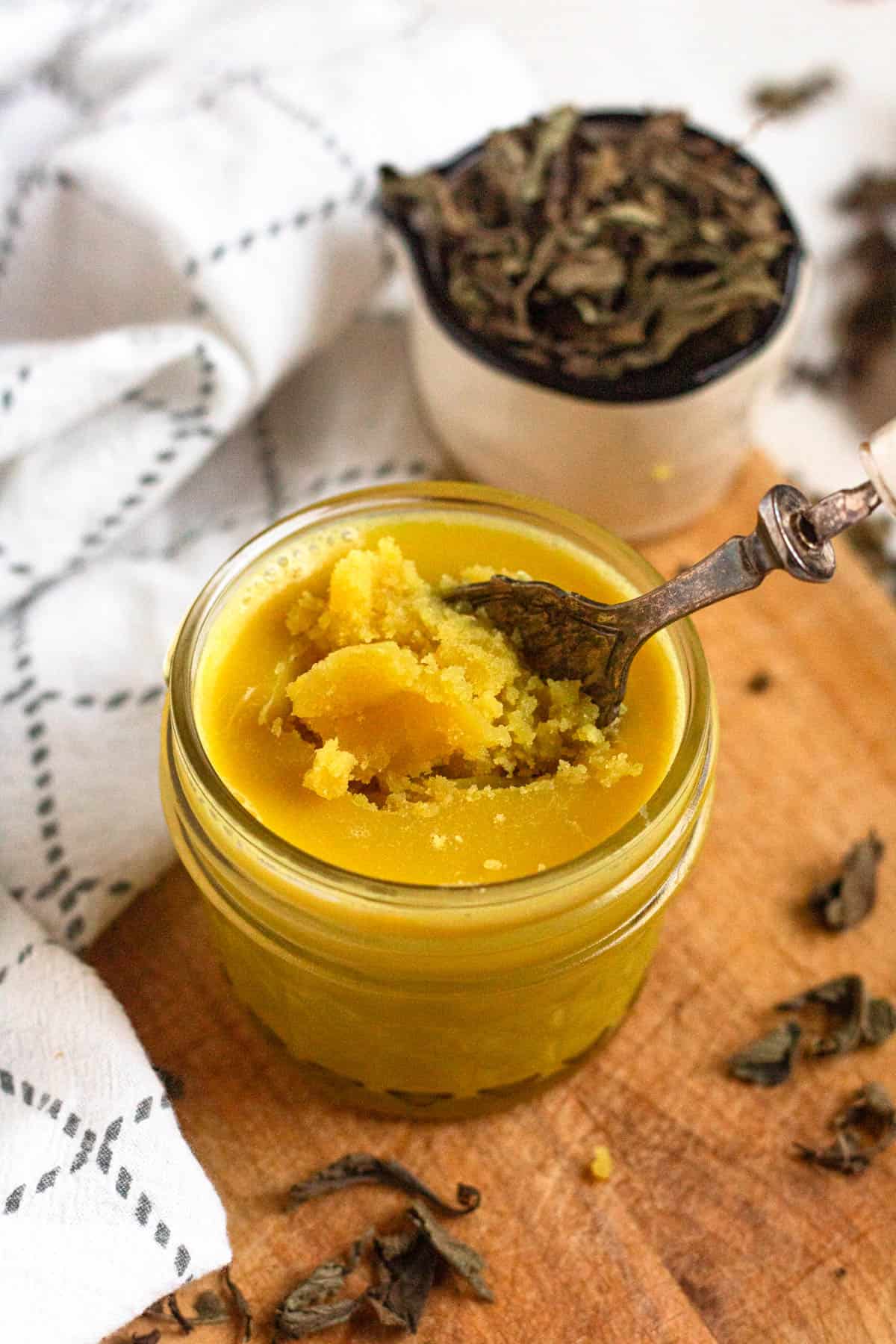
Homemade Niter Kibbeh is a flavorful, rich and delicious ghee. Filled with bold aromatics, once you try cooking with this spiced ghee, you’ll find endless ways to use it.
Hello Reader! I try my hardest to research recipes as best as I can before posting to ensure I am representing each culture correctly. If this recipe is from your country and I have made a mistake or you have suggestions for how to make it more authentic, I would love to hear! Please leave a comment below letting me know what should be different, and I will rework the recipe. It is always my intention to pay homage and respect to each cultural dish that I cook. Thanks for reading!
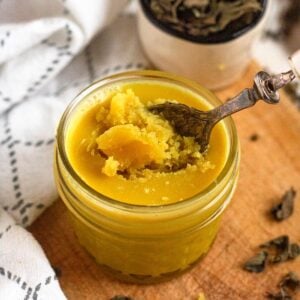
Niter Kibbeh is a fragrant, golden clarified butter infused with warm spices, garlic, and ginger. A staple in Ethiopian cooking, this deeply aromatic butter forms the flavor base for many traditional dishes, adding richness and complexity to beef stews, vegetables, and meats.
While it may look similar to regular ghee, Niter Kibbeh is what truly sets many Ethiopian recipes apart. The slow infusion of Ethiopian spices like korerima, koseret, and besobela gives the ghee a bold, layered flavor that transforms even simple dishes into something special.
Use it as a base for soups, stews and curry or spread it on some bread and enjoy it as-is. Once you smell fresh niter kibbeh your mind is sure to conjure up a million ways to use it!
Recipe Origins
Niter Kibbeh comes from the cuisine of Ethiopia, where it is one of the most important foundational ingredients in traditional cooking. It has been used for centuries to add layered flavor to many Ethiopian dishes.
Not only is it commonly used as the base for famous Ethiopian dishes like Doro Wat, Niter Kibbeh is also used when sautéing vegetables, cooking lentils, or preparing stews. It’s also a popular ingredient in Eritrea and Djibouti as well!
Each family may have its own variation of the spice blend used in Niter Kibbeh, but most versions include warming spices, garlic, and ginger slowly infused into butter until the milk solids separate and the flavors deepen.
Why Make This Recipe
- Deep, Aromatic Flavor: The combination of toasted spices, garlic, and ginger creates a rich, fragrant butter that elevates any dish it touches.
- Easy to Make: Despite the complex flavor, niter kibbeh is surprisingly easy to make at home!
- A Foundation for Ethiopian Cooking: If you’re interested in making Ethiopian recipes at home, Niter Kibbeh is an essential ingredient that adds authenticity and depth of flavor. It’s hard to find in stores, so making your own is a perfect way to make your Ethiopian recipes as authentic as possible.
Key Ingredients for Niter Kibbeh
Here is a visual overview of the ingredients in the recipe. Scroll down to the recipe at the bottom for quantities.
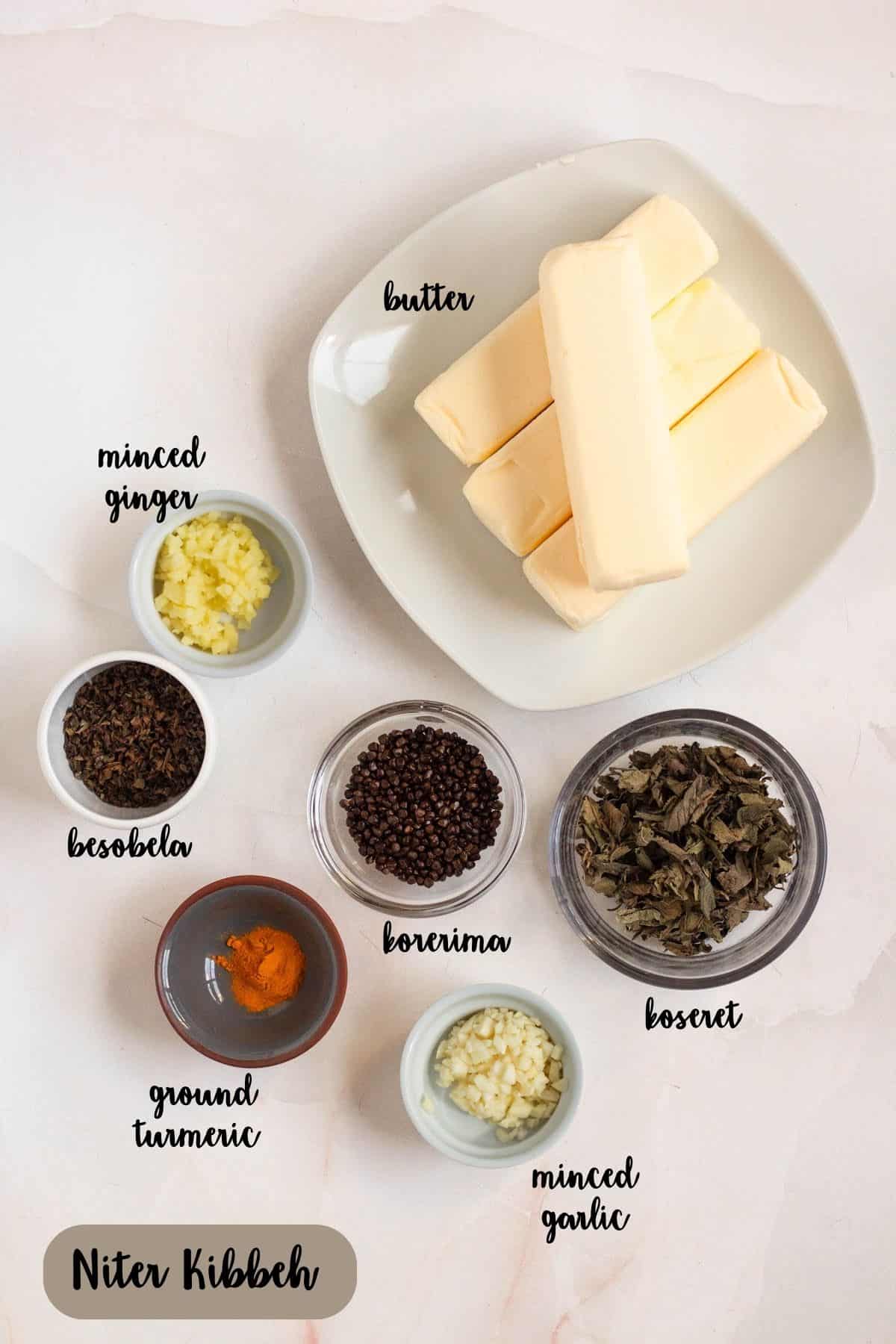
- Unsalted butter: Butter is the base of the recipe. Clarifying the butter removes milk solids and concentrates the rich buttery flavor.
- Korerima: Sometimes called Ethiopian cardamom, this spice has a warm, slightly smoky flavor that is characteristic of Ethiopian cuisine.
- Koseret: An Ethiopian clarifying herb with a distinctive savory aroma often used in traditional spice blends. It often comes in a package of dried leaves with twigs still attached. It’s totally fine to add everything into the butter, as it contributes more flavor and then gets strained out later.
- Besobela: Also known as Ethiopian holy basil, this herb adds a subtle herbal note to the butter.
- Turmeric: Provides warmth and gives the butter its beautiful golden color.
- Fresh garlic: Adds savory depth and aroma.
- Fresh ginger: Balances the richness of the butter with a hint of warmth and spice.
How to Make Niter Kibbeh
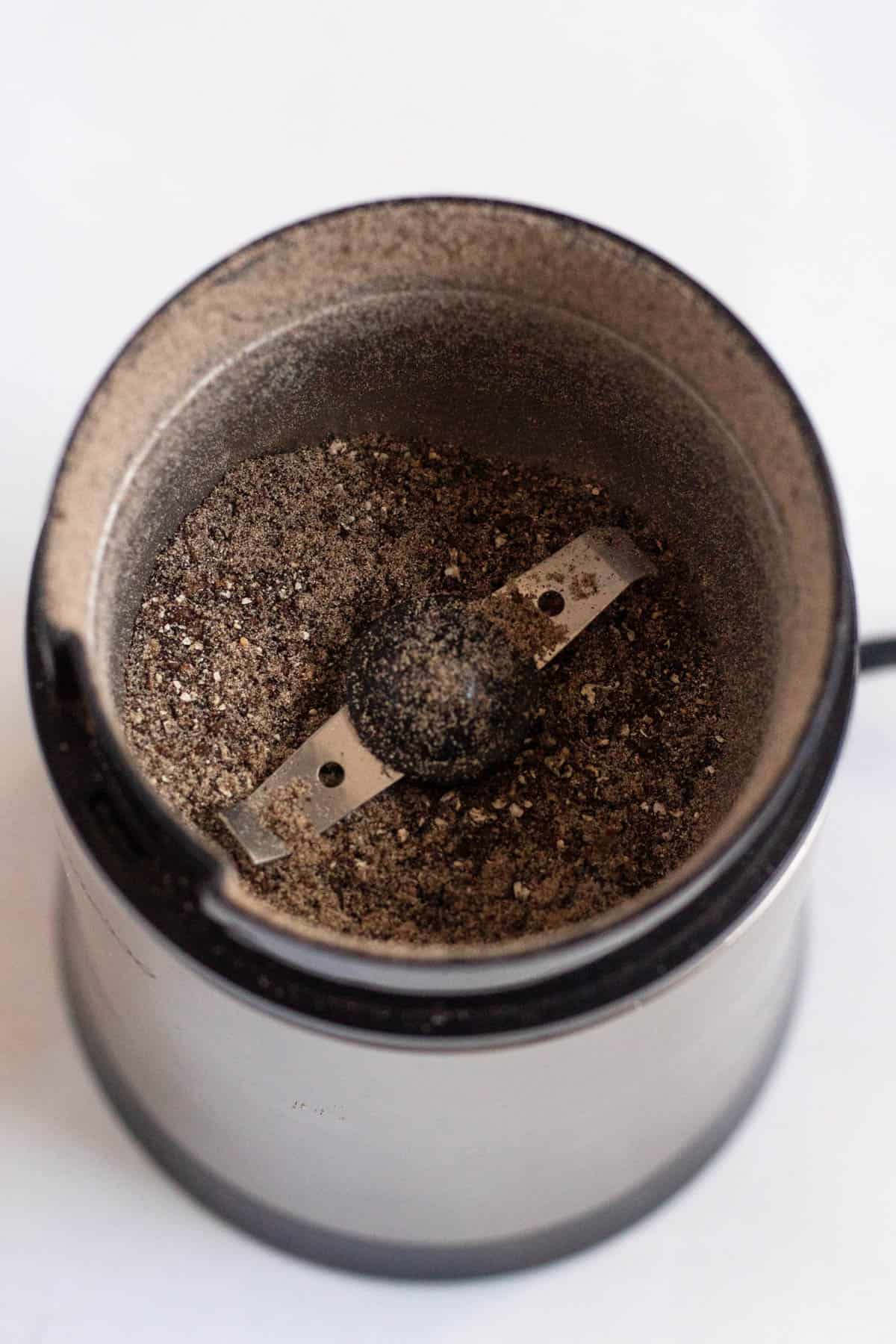
Step One: Toast the korerima in a dry pan until fragrant, then grind into a powder.
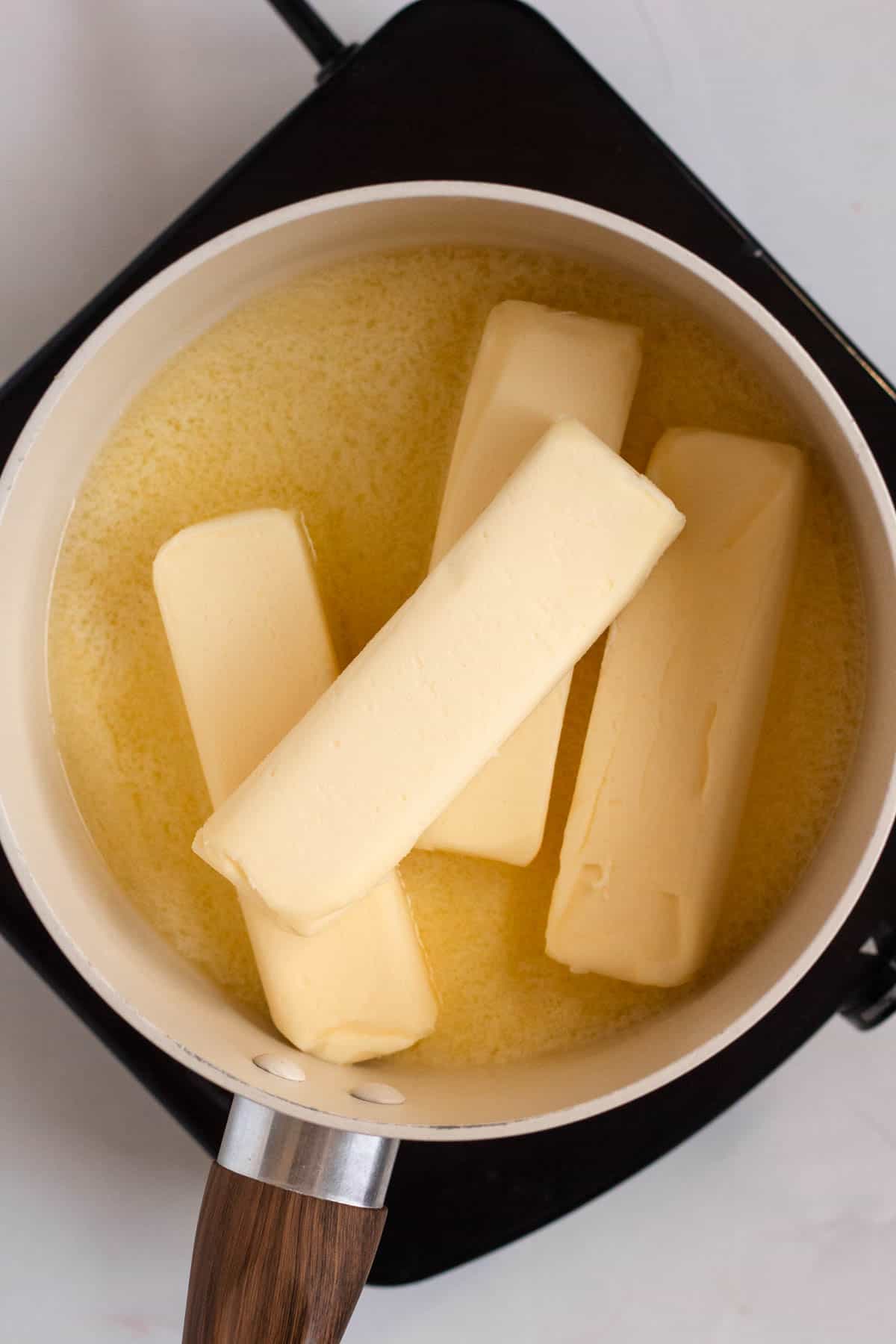
Step Two: Melt the butter in a large pot.
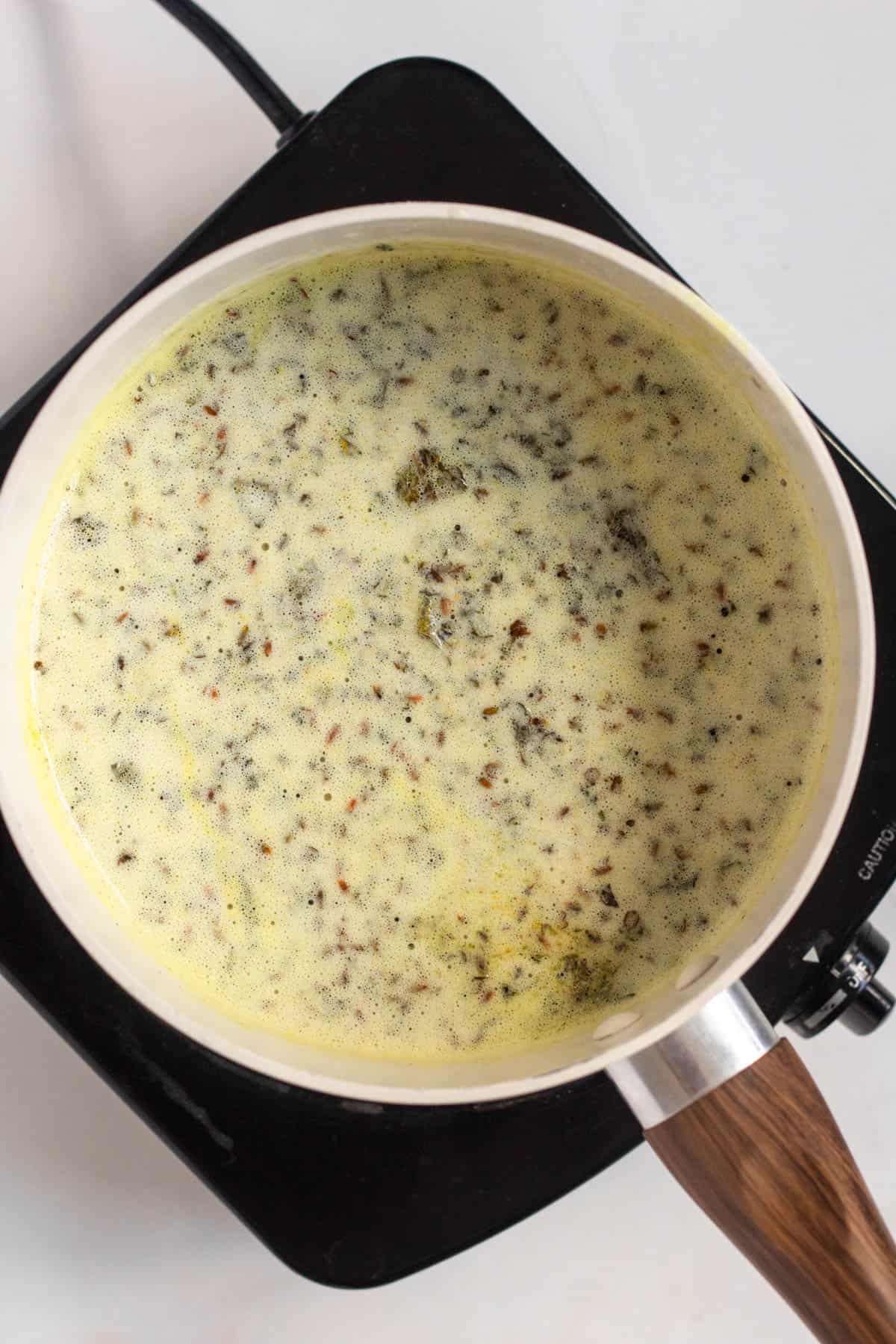
Step Three: Stir your spices into the butter.
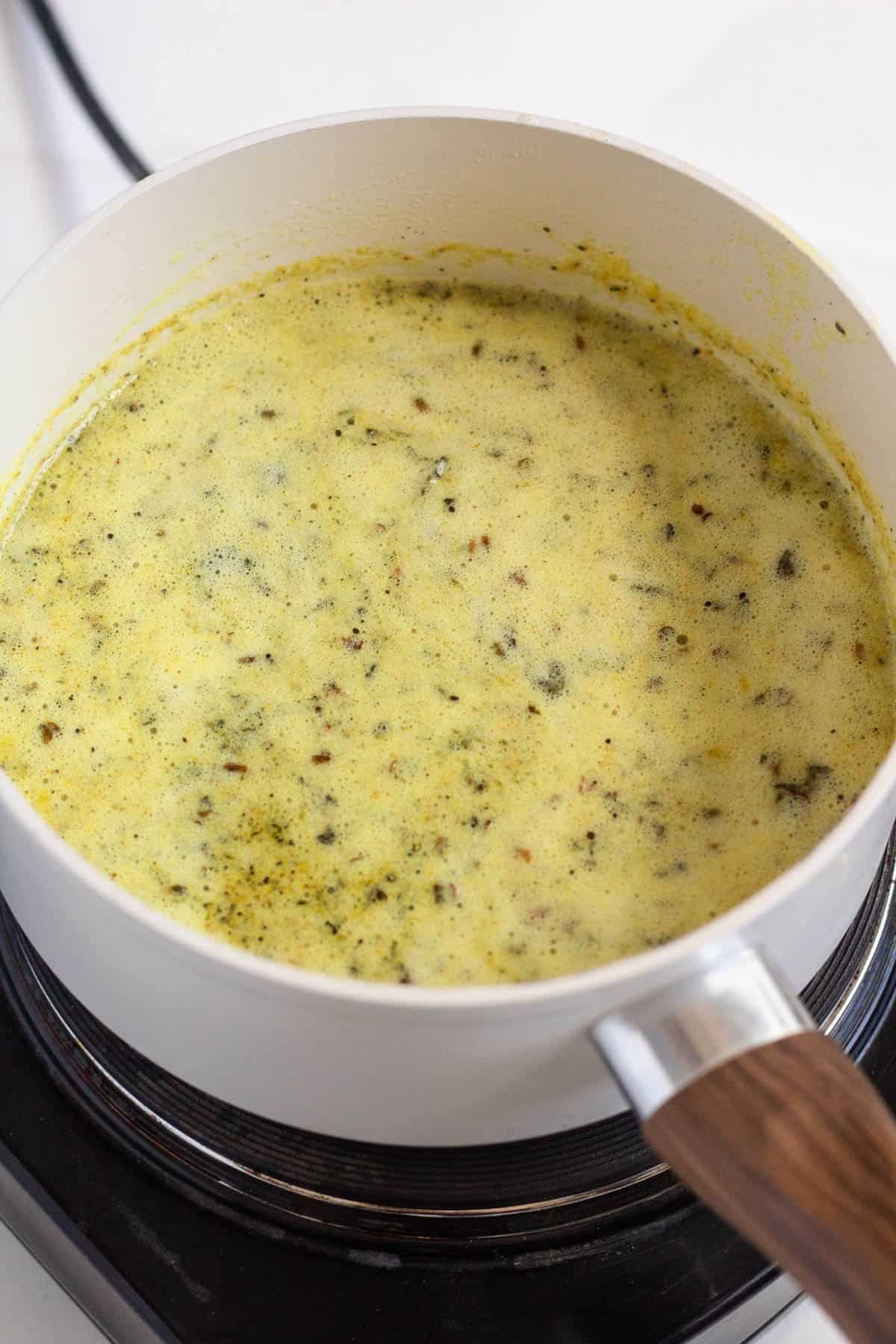
Step Four: Simmer for about 20-30 minutes, until the butter mostly stops bubbling and the milk solids have sunk to the bottom of the pot.
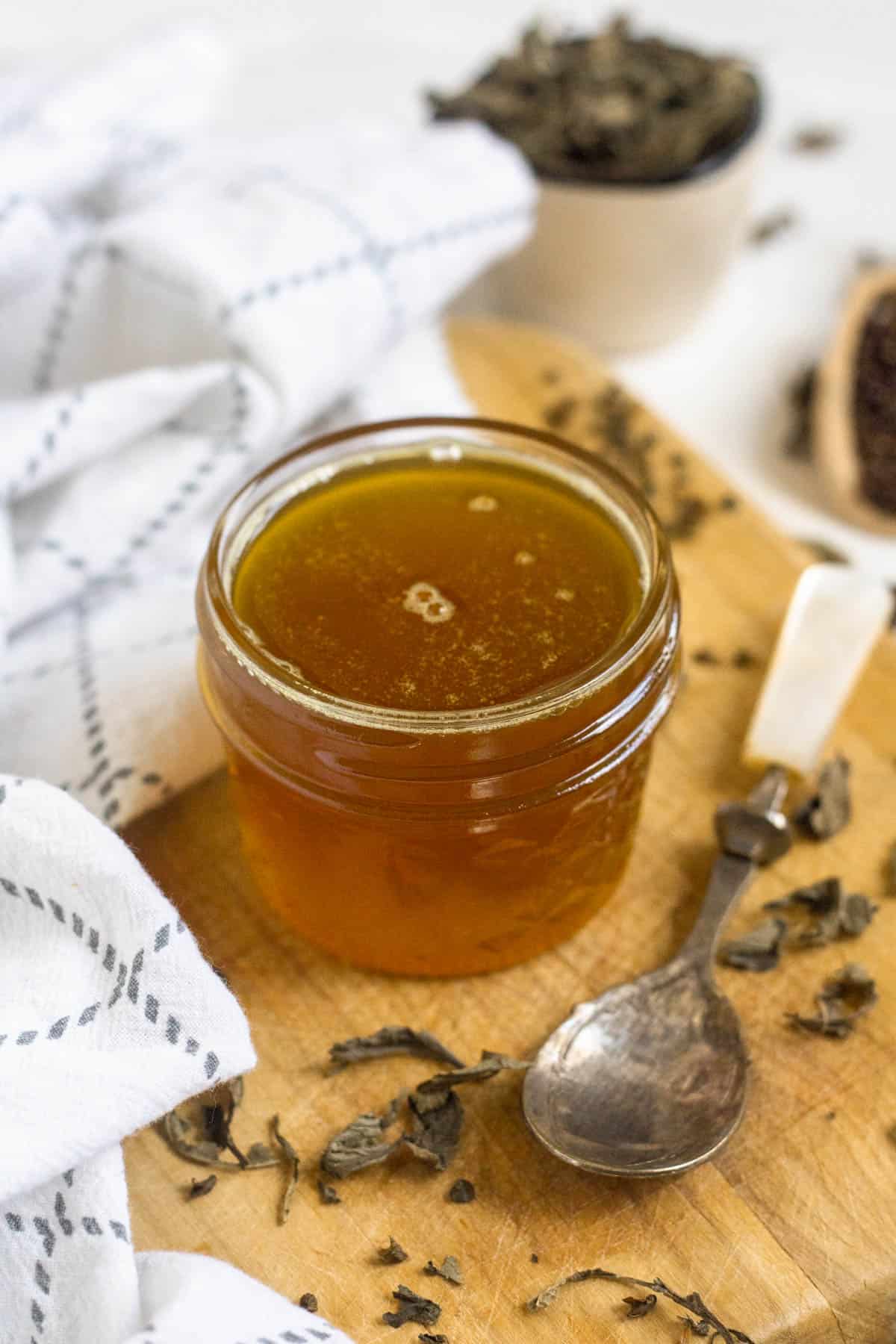
Step Five: Strain your butter with a cheesecloth to remove all of the whole spices. Cool and store!
Expert Tips
- Use a large pot. As the butter simmers, it bubbles quite a bit. A large pot prevents the butter from boiling over. I learned this lesson the hard way after a very messy kitchen cleanup.
- Add the garlic and ginger at the beginning of the process, right after the butter has melted. This allows their flavors to infuse slowly without causing excess bubbling later in the process. The first two times I made this recipe, I tried adding the garlic and ginger when there was about 10 minutes of cooking time left. This made the butter bubble SO much more, and contributed to my kitchen mess!
- Keep the heat low. A gentle simmer is key to properly clarifying the butter and developing the flavors.
- Watch the milk solids carefully. Once they turn lightly toasted and the bubbling slows, the butter is ready to strain. If they turn a dark brown, you have cooked them for too long!
Recipe FAQs
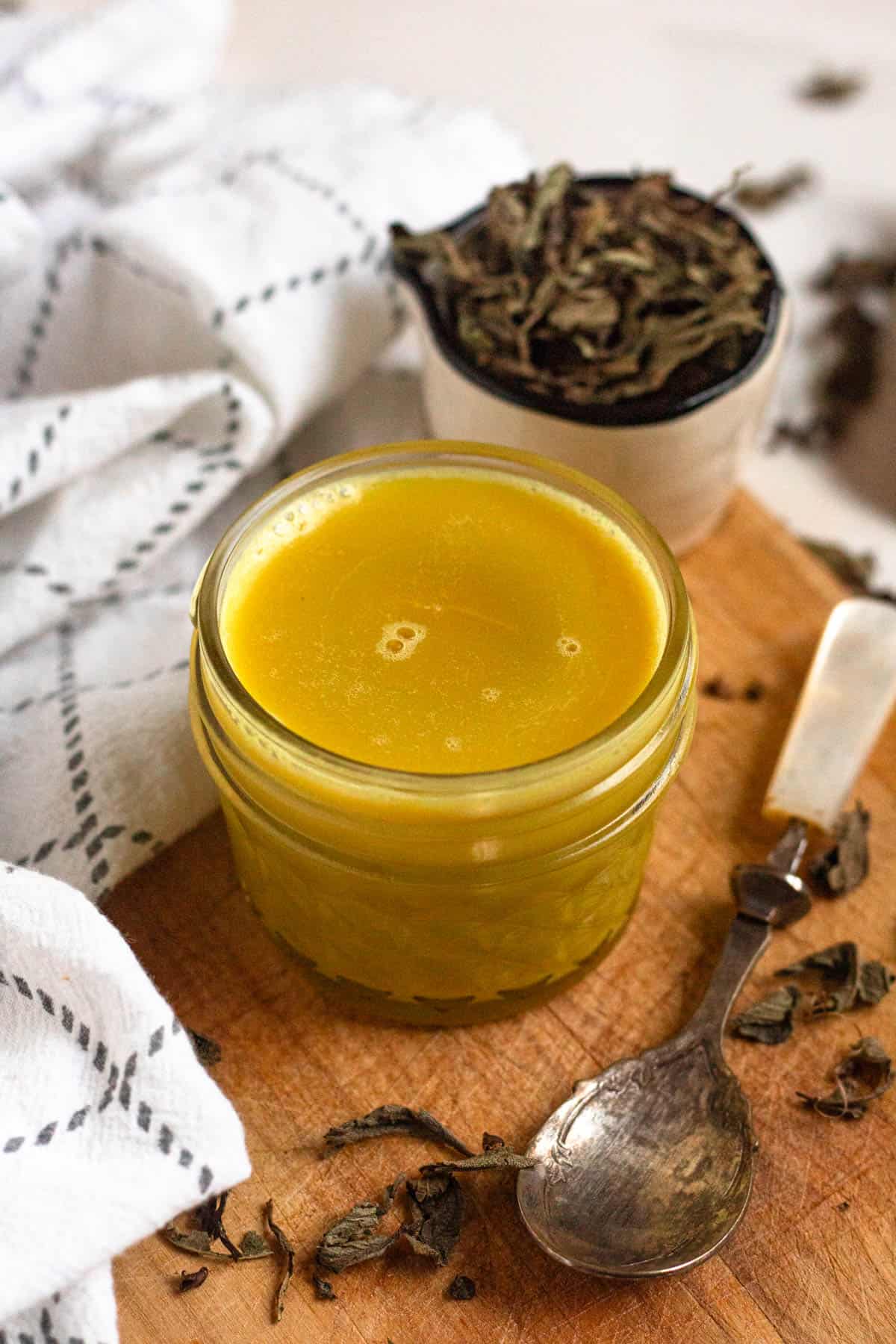
It has a rich, buttery flavor with warm spice notes from garlic, ginger, and traditional Ethiopian herbs.
Store it in a closed jar in the refrigerator for several months, or keep it at room temperature for shorter periods.
Yes! Melt your butter and add your spices and cook using the saute function. It’s just as easy as cooking on the stovetop! Just be careful to use a low setting to avoid burning your butter.
I prefer Kerrygold butter as I prefer the rich flavor, but any butter will work just fine. I prefer to use unsalted, as limiting the salt in the butter makes it easier to control the taste of your recipe.
Did you like this recipe? If so, make sure to check out some of the other recipes below that I picked out just for you:
- Butter Tea from Bhutan
- Butter and Honey Crepes
- Brown Butter Gnocchi with Sage and Walnuts
- Beet and Potato Salad from Ethiopia
If you tried this Niter Kibbeh Recipe or any other recipe on my website, please leave a 🌟 star rating and let me know how it went in the 📝 comments below!
Niter Kibbeh
Equipment
- Strainer/Colander
- Cheesecloth
Ingredients
- 1 Tbsp korerima
- 1 lb unsalted butter
- 2 Tbsp koseret
- 1 Tbsp besobela
- ¼ tsp ground turmeric
- 1 Tbsp freshly minced garlic
- 1 Tbsp freshly minced ginger
Instructions
- In a dry pan over medium heat, roast 1 Tbsp korerima for about 2 minutes until it toasts and becomes fragrant. Place the toasted whole spices into a spice grinder and grind them into a powder.
- Add 1 lb unsalted butter to a large pot on the stove and put it over medium heat, allowing the butter to melt. Once the butter melts, add 2 tsp of the ground korerima and the remainder of the spices and aromatics (2 Tbsp koseret, 1 Tbsp besobela, ¼ tsp ground turmeric, 1 Tbsp freshly minced garlic, and 1 Tbsp freshly minced ginger).
- Cook over low heat, allowing the butter to bubble. A foam will start to form on top of the butter, and the bubbles will get stronger. Continue stirring during this process to release steam so that the bubbles do not spill over the top of the pot.
- Cook in total for about 20-30 minutes or so, until you see the milk solids settle at the bottom of the pot.
- You will know your niter kibbeh is done when most of the bubbles calm down and the film is mostly gone from the top of the butter. There may still be some white residue on the top of the butter, but most of it will be gone. There will also be a bit of a toasty brown color to the milk solids at this point. See photos above for visual cues.
- At this point your ghee has finished cooking, so line a mesh strainer with a cheesecloth and place this on top of a glass bowl. Ladle the niter kibbeh into the mesh strainer so that only the clear ghee is left over and all of the spices are removed.
- Place in a jar where it will harden. Enjoy!
Video
Notes
- Use a large pot. As the butter simmers, it bubbles quite a bit. A large pot prevents the butter from boiling over. I learned this lesson the hard way after a very messy kitchen cleanup.
- Add the garlic and ginger at the beginning of the process, right after the butter has melted. This allows their flavors to infuse slowly without causing excess bubbling later in the process. The first two times I made this recipe, I tried adding the garlic and ginger when there was about 10 minutes of cooking time left. This made the butter bubble SO much more, and contributed to my kitchen mess!
- Keep the heat low. A gentle simmer is key to properly clarifying the butter and developing the flavors.
- Watch the milk solids carefully. Once they turn lightly toasted and the bubbling slows, the butter is ready to strain. If they turn a dark brown, you have cooked them for too long!




Judy Love says
Thank you for this recipe! Interested in how you store this and how long does it keep?
The Foreign Fork says
My pleasure! You can store ghee in the fridge or at room temperature. If you store it at room temperature it will never completely harden. Ghee has a long shelf life and will keep for about 3 months (though many blogs will tell you much longer than that, even up to a year!).