

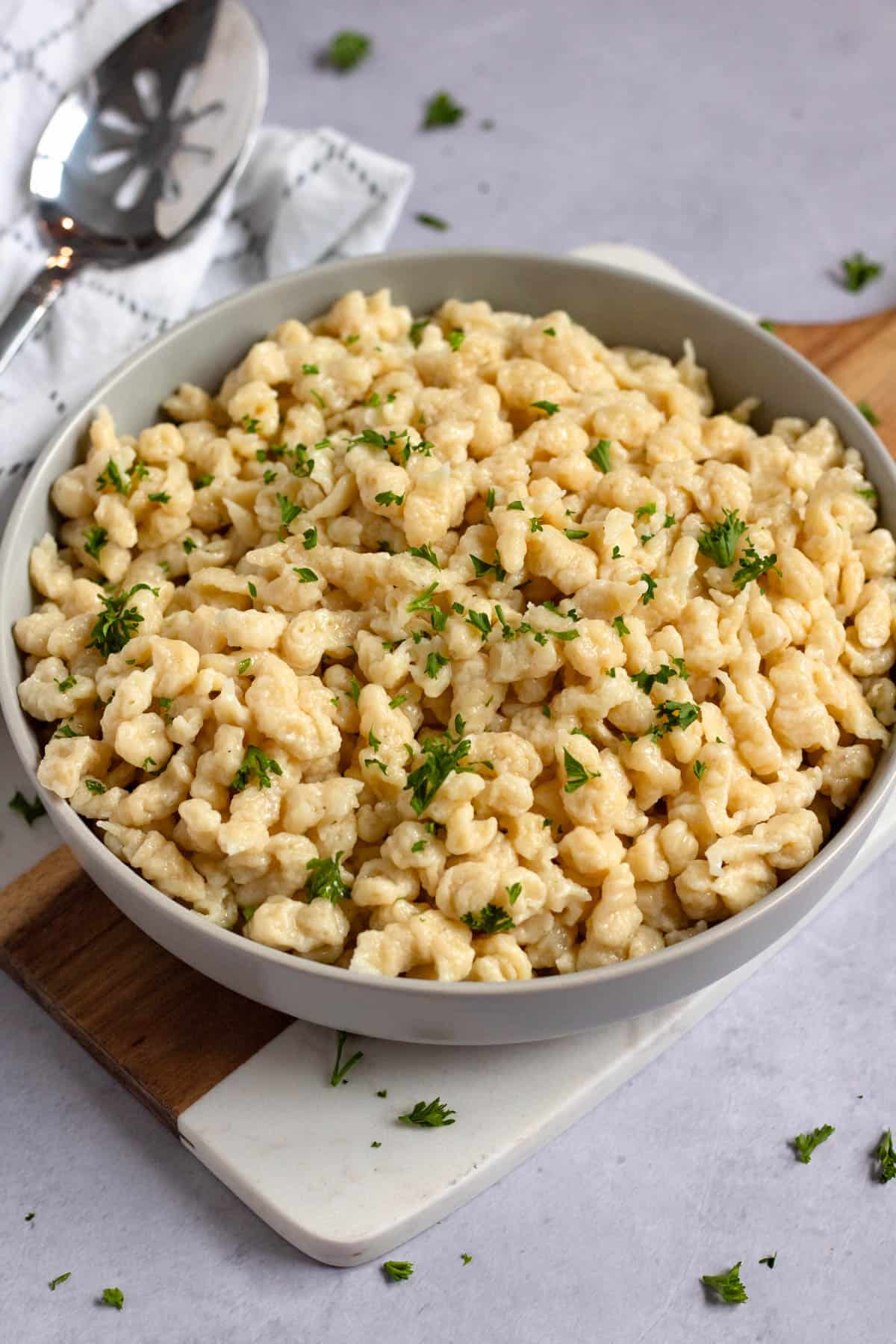
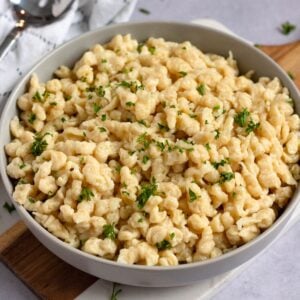
Spaetzle is a traditional German egg noodle made from a simple batter of flour, eggs, and water. This Spaetzle recipe creates tender, chewy dumplings that are perfect tossed with butter and served alongside hearty meats.
Hello Reader! I try my hardest to research recipes as best as I can before posting to ensure I am representing each culture correctly. If this recipe is from your country and I have made a mistake or you have suggestions for how to make it more authentic, I would love to hear! Please leave a comment below letting me know what should be different, and I will rework the recipe. It is always my intention to pay homage and respect to each cultural dish that I cook. Thanks for reading!
Spaetzle may look like pasta, but these soft German egg noodles have a texture all their own. Light, chewy, and incredibly comforting, they’re one of the most beloved side dishes in Germany.
The best part? Despite their unique appearance, spaetzle is surprisingly easy to make at home. A simple batter is mixed until shiny and smooth, pushed through a spaetzle maker (or another kitchen tool), and briefly boiled until the dumplings float to the surface.
Whether you’re serving them with schnitzel, beef rouladen, or simply tossing them with browned butter and herbs, homemade spaetzle has a pillowy, tender, and fresh texture that store-bought versions simply can’t match.
Worried you don’t have the right tools? Don’t! I’ve provided a whole list of alternatives to help you achieve beautiful spaetzle without adding another tool to your kitchen.
The key to amazing Spaetzle is achieving the proper batter consistency, which this recipe focuses on. Look for smooth, glossy and slightly elastic batter and be sure and allow it time to rest to fully hydrate the flour. This will result in softer, more tender spaetzle that you will not soon forget!
Why Make this Recipe
- Easier than Homemade Pasta: Unlike homemade pasta dough, spaetzle batter comes together in one bowl and requires no rolling or cutting.
- Incredibly Versatile: Serve spaetzle with roasted meats, rich gravies, creamy sauces, soups, or simply butter and herbs for a comforting side dish.
- Unbeatable Texture: Homemade spaetzle is soft, springy, and tender in a way that dried or frozen spaetzle simply can’t replicate. Making it from scratch is truly the only way to enjoy authentic spaetzle!
Key Ingredients for Spaetzle
Here is a visual overview of the ingredients in the recipe. Scroll down to the recipe at the bottom for quantities.
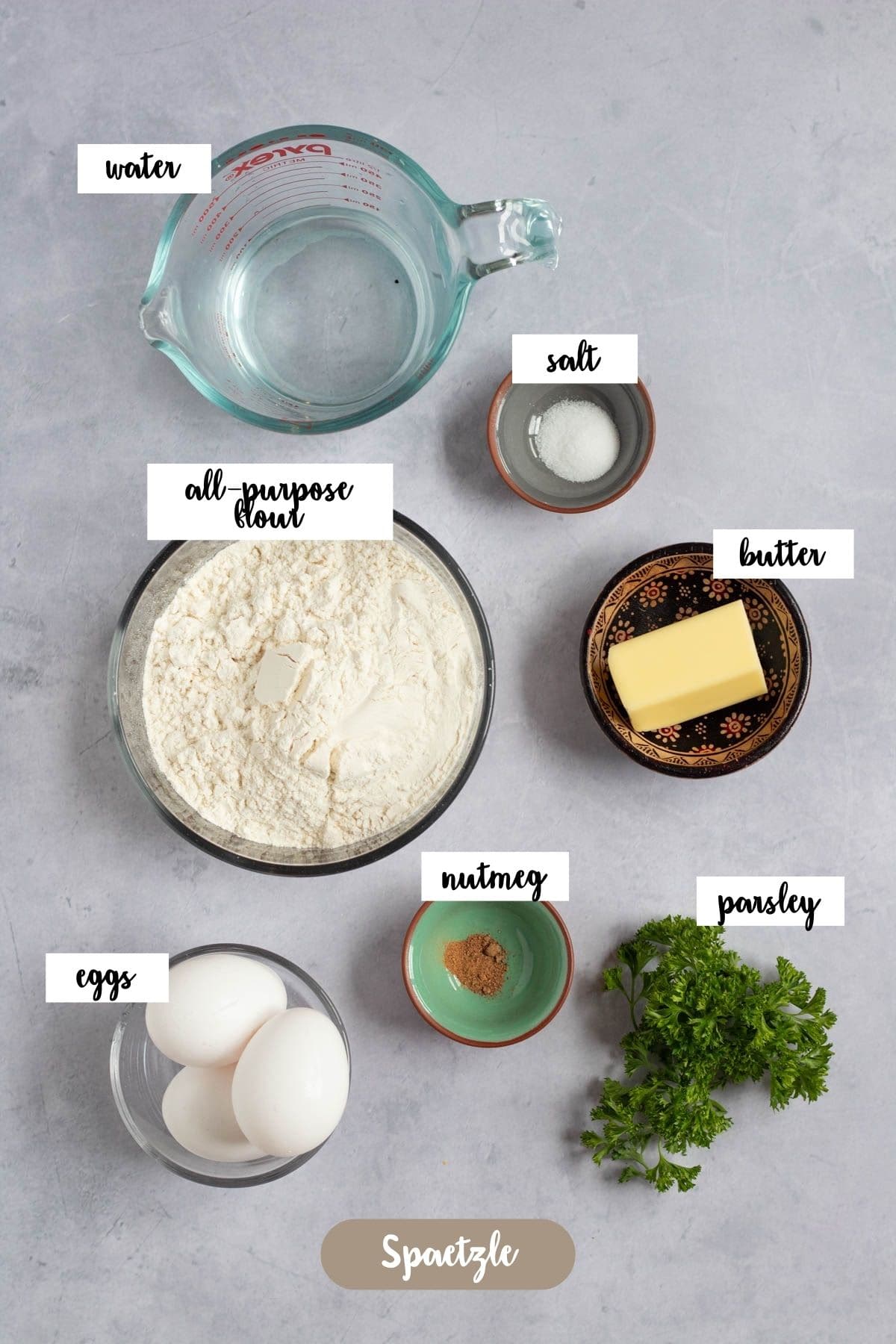
- All-Purpose Flour: Flour provides the structure for the noodles while still allowing them to remain soft and tender. All-purpose flour produces a delicate texture that’s ideal for traditional spaetzle.
- Eggs: Eggs give spaetzle its signature rich flavor, golden color, and chewy texture. Because eggs make up such a large portion of the batter, using fresh, high-quality eggs will noticeably improve the finished noodles.
- Water: Water loosens the batter to the proper consistency. Some traditional recipes replace part or all of the water with milk, creating a richer and slightly softer spaetzle. If your batter feels too thick to easily pass through the spaetzle maker, adding a little extra water (up to about ¾ cup total) can help.
- Nutmeg: Just a small amount of nutmeg adds the subtle warm flavor traditionally found in many German spaetzle recipes. It shouldn’t overpower the noodles but instead adds gentle depth.
- Salt: Salt seasons both the batter and the boiling water, ensuring the noodles are flavorful throughout instead of tasting bland.
- Butter and Fresh Parsley (Optional): Tossing freshly cooked spaetzle with melted butter keeps the noodles from sticking together while adding richness. Fresh parsley provides color and a bright finish.
Recipe Variations
- Replace part or all of the water with whole milk for a richer dough.
- Toss the cooked spaetzle with browned butter and crispy sage for a deeper, nuttier flavor (similar to my browned butter gnocchi).
- Stir shredded Emmental or Gruyère cheese into hot spaetzle to make traditional Käsespätzle.
- Sauté leftover spaetzle with onions, mushrooms, or bacon for an easy side dish.
Tools You’ll Need
- Stand Mixer: Makes developing the elastic batter much easier, though a sturdy whisk and mixing bowl also work.
- Spaetzle Maker: The easiest tool for creating evenly sized spaetzle quickly.
- Large Pot: Needed for boiling the noodles.
- Slotted Spoon: Makes removing the cooked spaetzle from the boiling water easy.
- Plastic Wrap: Used while the batter rests.
Alternatives to Spaetzle Maker
You can still make spaetzle without going out and buying a spaetzle maker! Here are several different methods to try:
- Traditional Wooden Cutting Board Method: Spread a small amount of batter onto a wet cutting board, then use a knife or bench scraper to quickly scrape thin strips of batter directly into the pot of boiling water. This takes a little practice, but it’s the traditional technique and creates beautifully irregular, homemade-looking spaetzle.
- Spaetzle Press: A spaetzle press looks similar to a potato ricer and is another excellent option. Fill the press with batter and squeeze it directly over the boiling water. This method creates longer, more uniform noodles and is especially helpful if you make spaetzle often.
- Colander: A colander with large holes can work surprisingly well. Hold the colander over the pot and press a portion of batter through the holes using a spatula or the back of a spoon. The batter will drop through the holes and into the boiling water, creating small dumplings.
- Large-Holed Grater: A flat grater with large holes can be used much like a spaetzle maker. Place it over the pot and push the batter through the holes with a rubber spatula.
- Potato Ricer: A potato ricer can also be used to press the batter into the boiling water. Depending on the size of the holes, this method may create longer or thinner spaetzle, so you may need to experiment with the amount of batter you use at a time.
The shape of your spaetzle may vary depending on the tool you choose, but part of the charm of spaetzle is how unique each little noodle is. The most important thing is getting the batter to the right consistency so it can easily pass through whichever tool you choose.
How to Make this Recipe
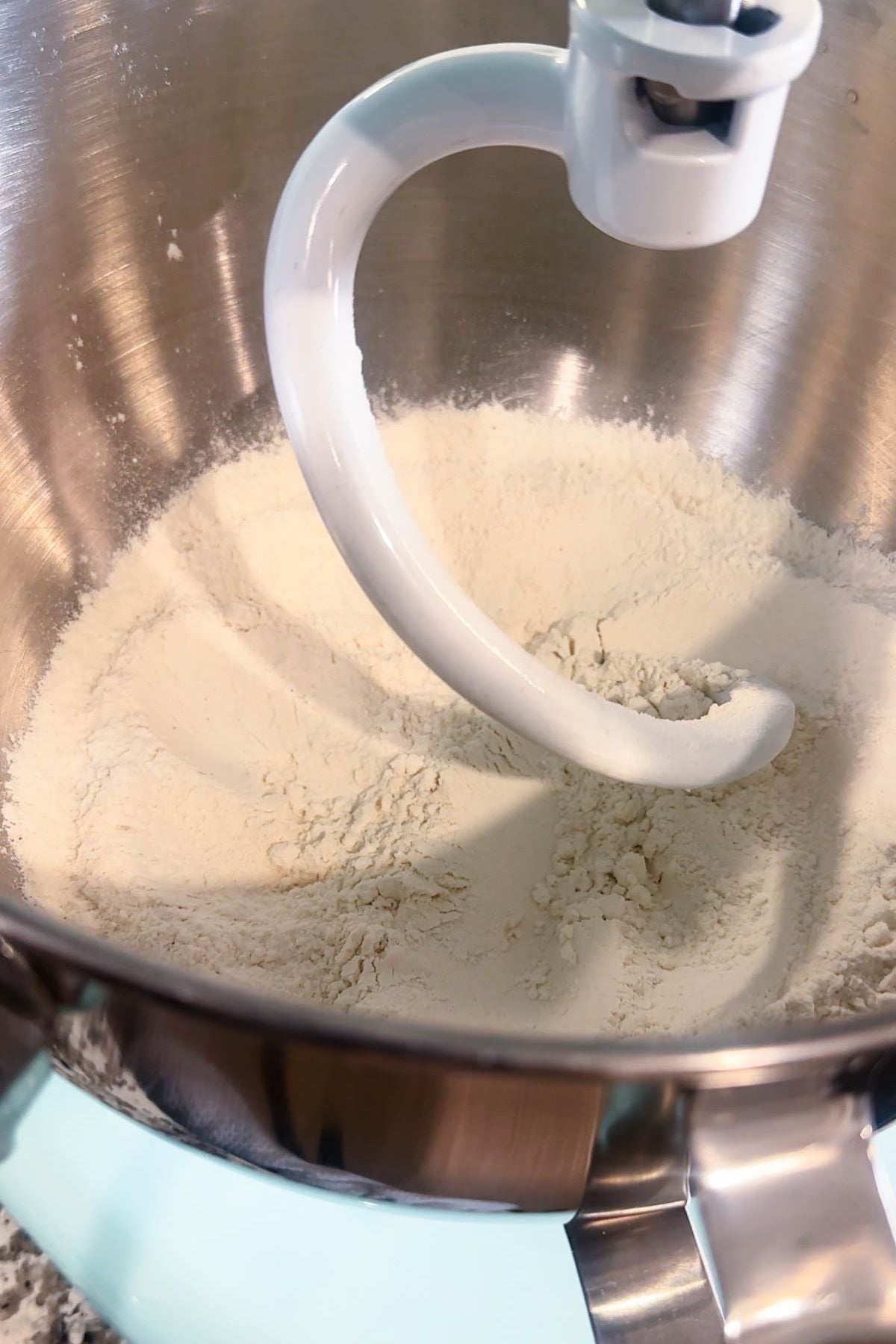
Step 1: Mix the flour, salt, and nutmeg in a stand mixer
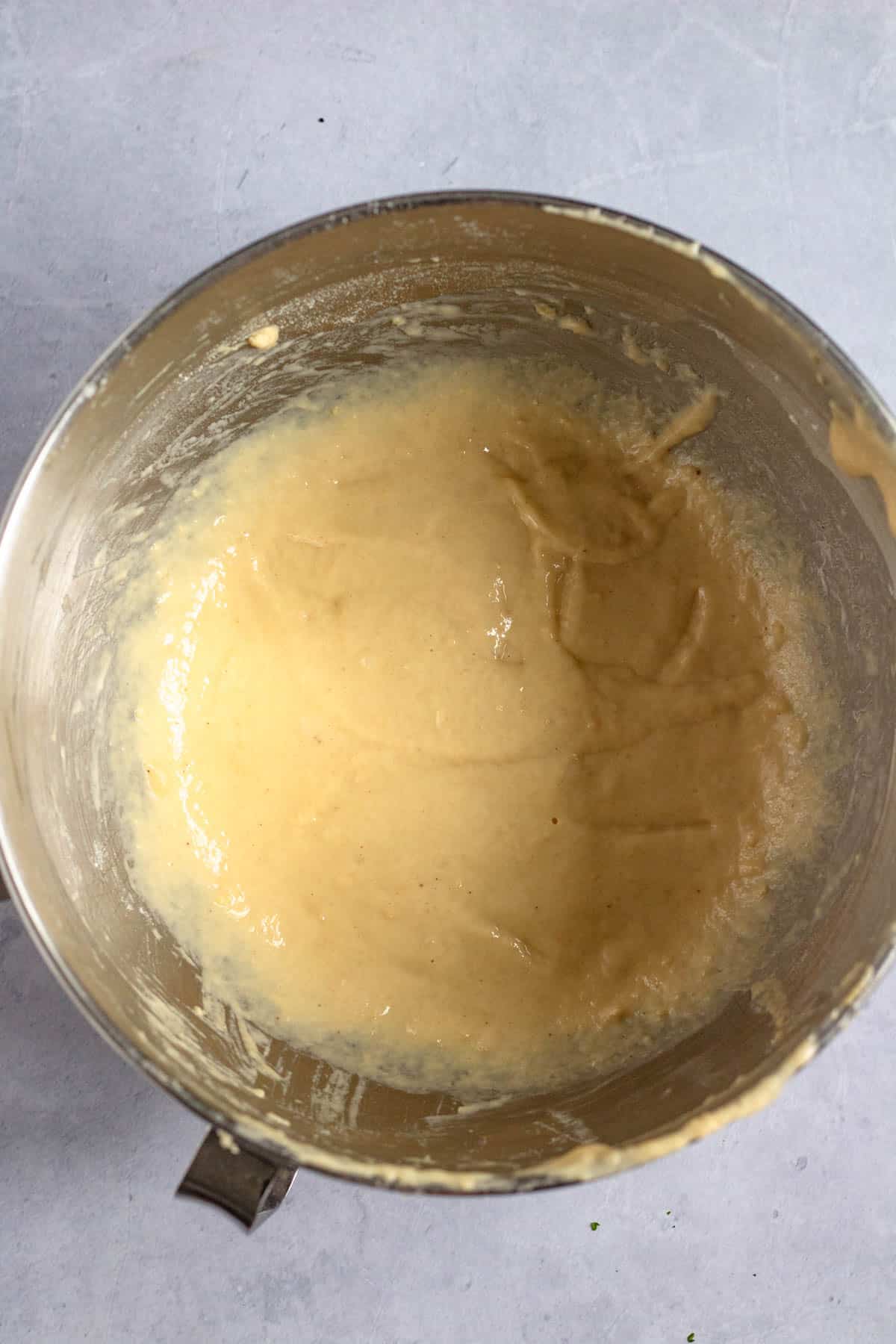
Step 2: Add eggs and water and mix until the batter becomes smooth, glossy, and slightly elastic. Cover and refrigerate for about 20–25 minutes.
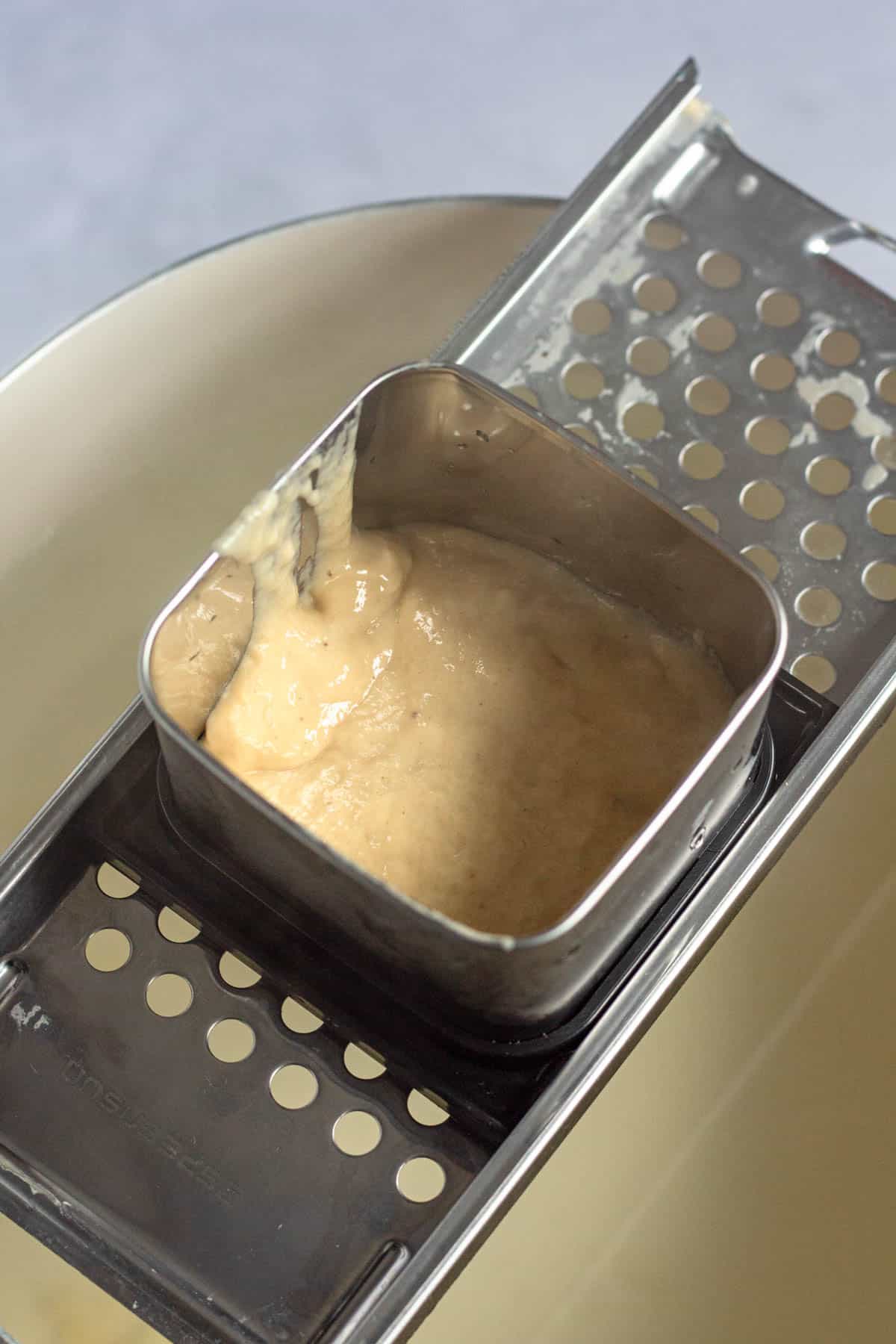
Step 3: Place the spaetzle maker over a pot of boiling water and press portions of the batter through the holes into the boiling water.

Step 4: Cook the spaetzle until they float, then continue cooking for another 2–3 minutes until tender.
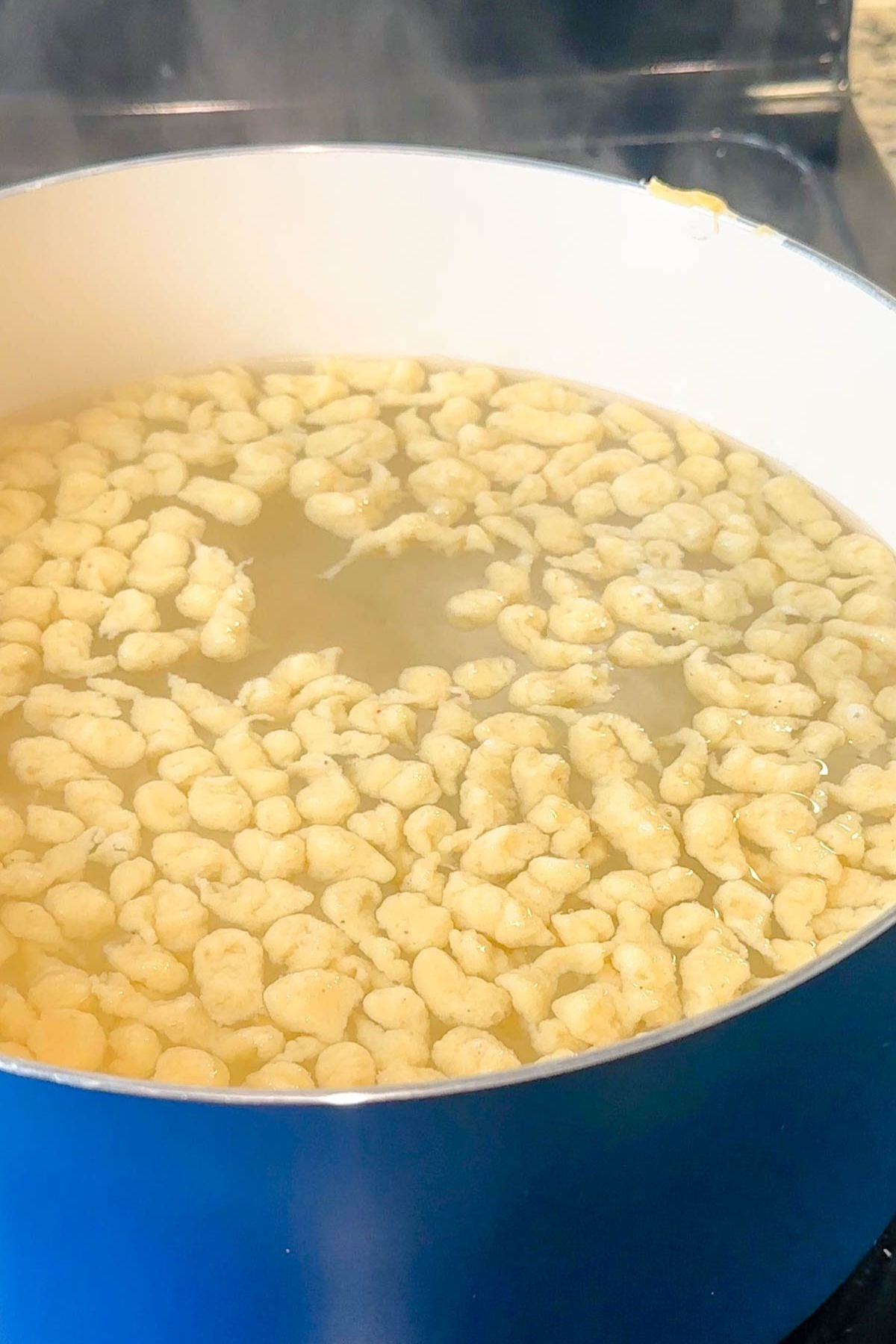
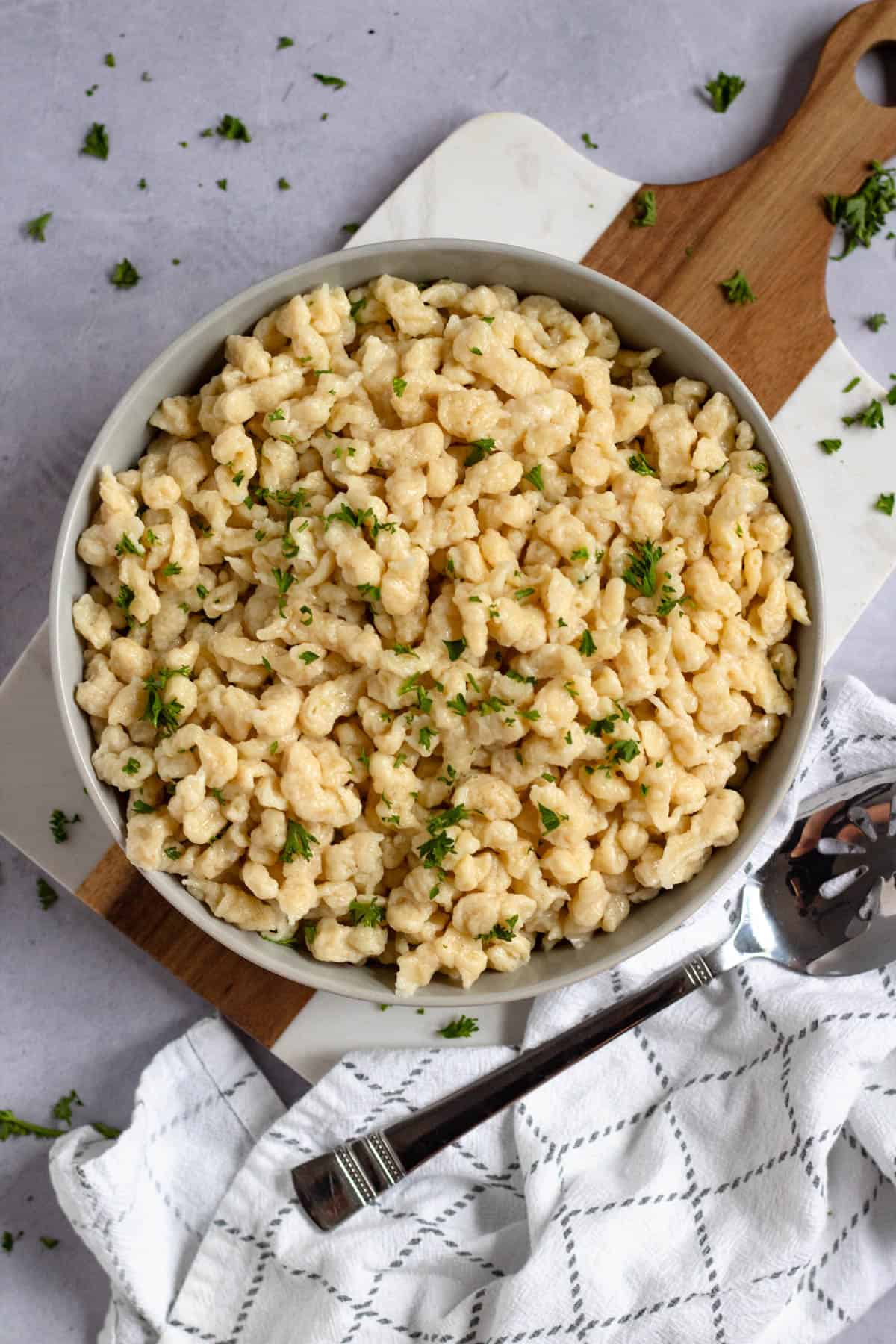
Step 5: Remove the spaetzle with a slotted spoon and serve immediately, or toss with melted butter and fresh parsley.
Expert Tips
- The batter should be thick enough to hold together but soft enough to slowly fall through the spaetzle maker.
- If the batter seems too stiff after mixing, add a tablespoon of water at a time until it reaches the proper consistency.
- Resting the batter helps hydrate the flour and creates a smoother, more elastic texture. Don’t skip this step!
- Watch for tiny bubbles to form after mixing or a glossy appearance—both are signs the batter is properly developed.
- If making spaetzle ahead of time, toss it lightly with oil to prevent sticking, then reheat in butter before serving.
- Work in batches so the pot doesn’t become overcrowded and the spaetzle cook evenly.
What to Serve with Spaetzle
Spaetzle is traditionally served alongside hearty German dishes like schnitzel, beef rouladen, sauerbraten, or roast pork. The tender noodles are excellent for soaking up rich gravies and sauces.
For a simple meal, toss spaetzle with browned butter and herbs, or transform it into Käsespätzle by mixing it with melted cheese and caramelized onions.
Recipe FAQs
Absolutely. Toss the cooked spaetzle with a little oil to prevent sticking, refrigerate, and reheat in a skillet with butter just before serving.
Different flours absorb water differently so it’s important to pay attention to your batter as you mix. If the batter won’t slowly fall through the spaetzle maker, stir in additional water one tablespoon at a time until it reaches a thick but pourable consistency.
Yes. After cooking and cooling, freeze the spaetzle on a baking sheet until firm, then transfer them to a freezer-safe container for up to 3 months. Reheat directly in butter or boiling water before serving.
Did you enjoy this recipe? If so, check out these other recipes I’ve selected just for you:
If you tried this Easy German Spaetzle Recipe or any other recipe on my website, please leave a 🌟 star rating and let me know how it went in the 📝 comments below!
Easy German Spaetzle Recipe
Equipment
- Spaetzle Maker or cheese grater
Ingredients
- 2 cups all-purpose flour
- ½ tsp salt
- ⅛ tsp nutmeg
- 3 large eggs
- ½ cup water
- 1 tbsp salt (for boiling water)
- ½ tbsp butter, melted, optional
- 1 tbsp finely chopped fresh parsley, optional
Instructions
- In a stand mixer bowl, combine 2 cups all-purpose flour, ½ tsp salt, and ⅛ tsp nutmeg.
- Using the paddle attachment, add the 3 large eggs into the flour and mix to combine on low speed until incorporated.
- Gradually pour in ½ cup water while mixing on medium-low speed. Continue mixing for 2–3 minutes, or until the batter is smooth, elastic, and slightly glossy.
- Cover the bowl with cling wrap and let it rest in the fridge for about 20-25 minutes.
- Fill a large pot about ¾ full with water and bring it to a boil. Add about 1 tbsp salt (for boiling water) to the water.
- Place a spaetzle maker over the pot, add about ⅓ of the batter, and scrape it through the holes.
- Allow the spaetzle to cook until they float to the top of the water, then continue cooking for an additional 2-3 minutes.
- Using a slotted spoon, transfer the cooked spaetzle to a serving bowl. Serve warm. Toss with melted ½ tbsp butter and 1 tbsp finely chopped fresh parsley, if desired.
Video
Notes
- The batter should be thick enough to hold together but soft enough to slowly fall through the spaetzle maker.
- If the batter seems too stiff after mixing, add a tablespoon of water at a time until it reaches the proper consistency.
- Resting the batter helps hydrate the flour and creates a smoother, more elastic texture. Don’t skip this step!
- Watch for tiny bubbles to form after mixing or a glossy appearance—both are signs the batter is properly developed.
- If making spaetzle ahead of time, toss it lightly with oil to prevent sticking, then reheat in butter before serving.
- Work in batches so the pot doesn’t become overcrowded and the spaetzle cook evenly.
- All-Purpose Flour: Flour provides the structure for the noodles while still allowing them to remain soft and tender. All-purpose flour produces a delicate texture that’s ideal for traditional spaetzle.
- Eggs: Eggs give spaetzle its signature rich flavor, golden color, and chewy texture. Because eggs make up such a large portion of the batter, using fresh, high-quality eggs will noticeably improve the finished noodles.
- Water: Water loosens the batter to the proper consistency. Some traditional recipes replace part or all of the water with milk, creating a richer and slightly softer spaetzle. If your batter feels too thick to easily pass through the spaetzle maker, adding a little extra water (up to about ¾ cup total) can help.
- Nutmeg: Just a small amount of nutmeg adds the subtle warm flavor traditionally found in many German spaetzle recipes. It shouldn’t overpower the noodles but instead adds gentle depth.
- Salt: Salt seasons both the batter and the boiling water, ensuring the noodles are flavorful throughout instead of tasting bland.
- Butter and Fresh Parsley (Optional): Tossing freshly cooked spaetzle with melted butter keeps the noodles from sticking together while adding richness. Fresh parsley provides color and a bright finish.


nancy says
I haven’t made these in YEARS! My German mother-in-law’s recipe was good It was:
1 1/2 cups lour
1/2 cup milk
2 eggs
1/2 cup grated, COOKED potato
salt
She stood by a pot of boiling water & holding a small wood board, cut with a knife, small pieces into the water. They were removed when they came to the top.
The spaetzle were all rustic sizes that made them special. This is a GOOD recipe.
Hope you like it. Nancy
Alexandria Drzazgowski says
Thank you Nancy, the potato is an interesting addition! I’ll have to try that 🙂
Elaine M. Viccars says
Could you make the spaetzle in advance and reheat in hot water
Alexandria Drzazgowski says
Hi Elaine, yes you can, but you shouldn’t need to boil them for long! My preferred method for reheating spaetzle though is to pan fry them with butter 🙂 I hope you enjoy whichever you choose!