

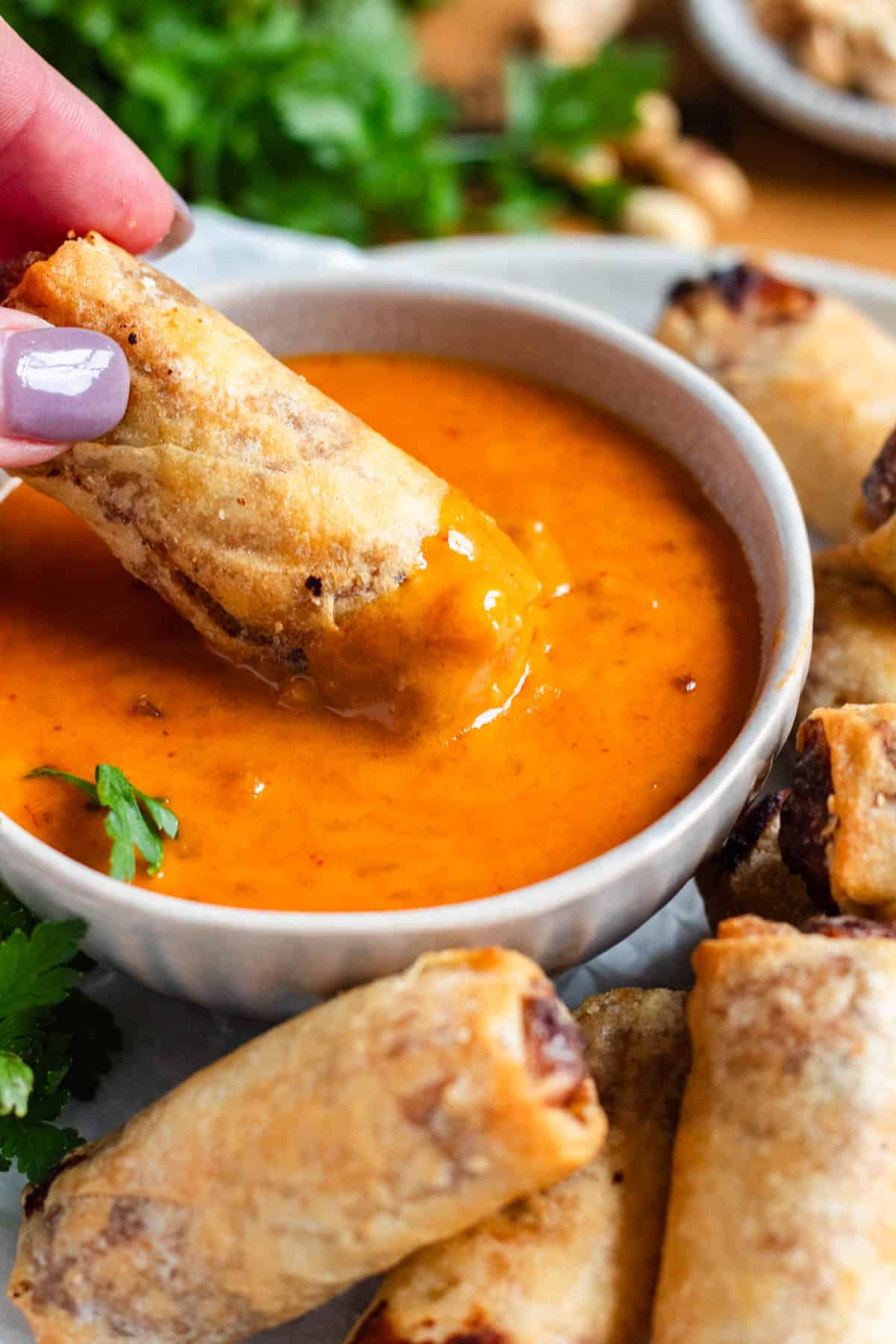
Thai Peanut Sauce is sweet and spicy, with a rich nuttiness that blends beautifully with the flavor of grilled meat. This recipe brings the authentic flavor of this unique sauce directly into your home!
Hello Reader! I try my hardest to research recipes as best as I can before posting to ensure I am representing each culture correctly. If this recipe is from your country and I have made a mistake or you have suggestions for how to make it more authentic, I would love to hear! Please leave a comment below letting me know what should be different, and I will rework the recipe. It is always my intention to pay homage and respect to each cultural dish that I cook. Thanks for reading!
If you’ve ever dipped a skewer of smoky Chicken Satay into a rich, nutty sauce or drizzled a creamy topping over Thai Peanut Noodles and wondered what made it so irresistible, chances are you’ve already fallen in love with Thai peanut sauce.
This classic condiment is a perfect example of Thailand’s culinary magic. It’s a recipe where sweet, salty, spicy, and tangy flavors come together in perfect harmony for a versatile sauce that can be enjoyed over meats, vegetables or even salad.
Unlike the overly sweetened versions you sometimes find bottled at the store, authentic Thai peanut sauce is layered with depth from roasted peanuts, coconut milk, red curry paste, and a touch of tamarind. While I’ve made a few different versions of peanut sauce over the years, (both African Peanut Sauce and a very simple Chicken Satay with Peanut Sauce) today I’m excited to introduce you to a more authentic version of this irresistible sauce.
My Thoughts on Thai Peanut Sauce
After testing my Thai Peanut Sauce from Thailand, I sat down to record some quick thoughts on what went well, what my biggest challenges were, and anything I could think of to help you enjoy this recipe as well! Watch the video below.

Recipe Origin
Thai Peanut Sauce, known locally as nam jim satay, or satay sauce, has its roots in the culinary traditions of Southeast Asia and was particularly influenced by Indonesian and Malaysian cuisine. Satay, or grilled, skewered meat, was introduced through the region from Indonesia and quickly became a very popular street food option.
Thai cooks adapted their own sauce to accompany satay, using peanuts and combining them with coconut milk, curry and tamarind to create a creamy condiment that perfectly balanced the sweet, salty, sour, and spicy that Thai cuisine is known for.
Over time, Thai peanut sauce became a beloved accompaniment not just for satay, but also for noodles, salads, and stir-fries.
Why Make This Recipe
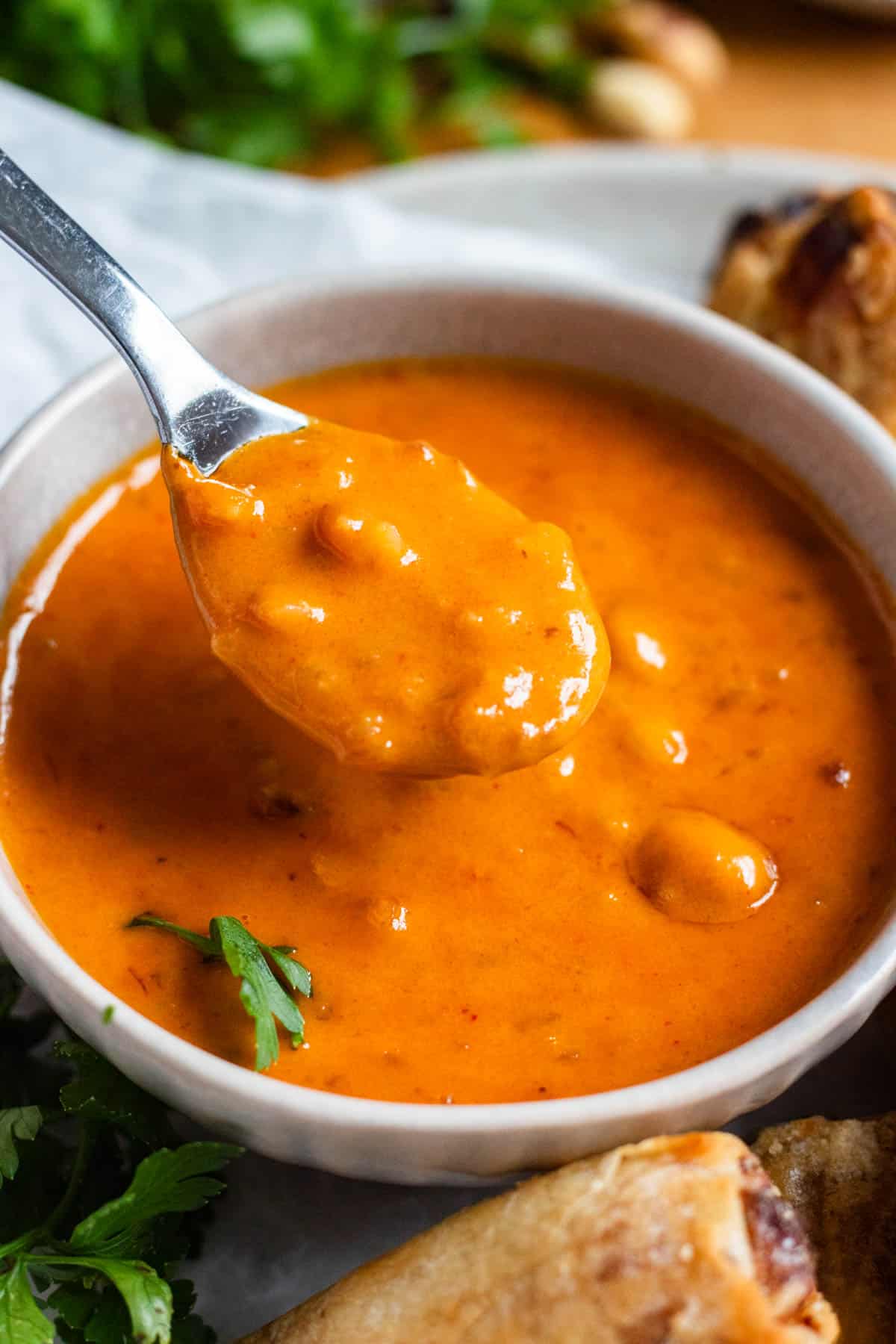
- Versatile: This sauce can be used as a marinade, dipping sauce or even a salad dressing!
- Surprisingly Easy: This recipe doesn’t take any shortcuts but I think you’ll find that grinding your own peanuts isn’t as difficult as it sounds and the flavor is worth the effort!
- Authentic Thai Flavor: Don’t be fooled by recipes that call for peanut butter. Peanut butter is an American ingredient and has a hint of sweetness you won’t find in real peanut sauce. This sauce is rich, bold, creamy and perfect!
Ingredients to Make this Recipe
Here is a visual overview of the ingredients in the recipe. Scroll down to the recipe at the bottom for quantities.
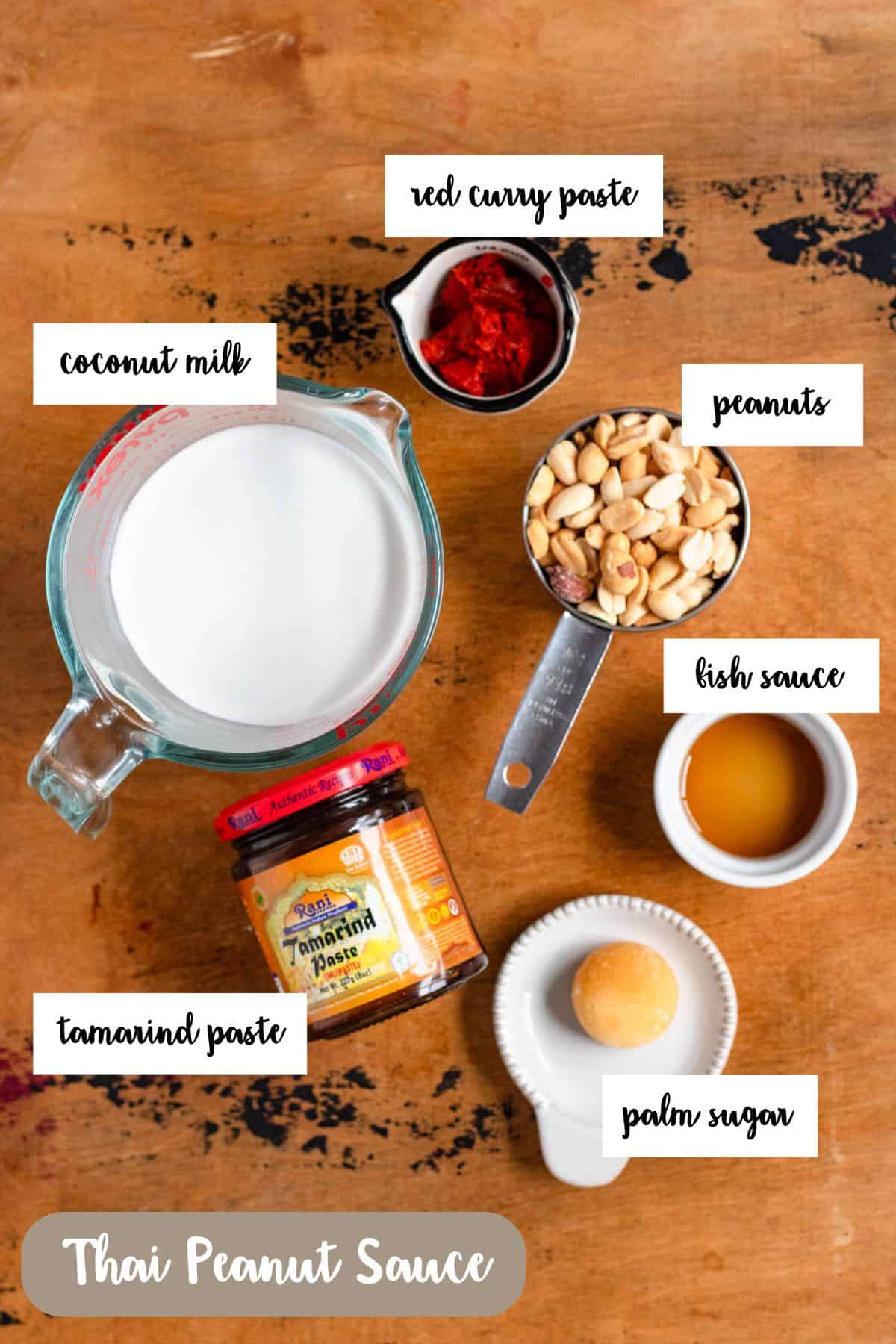
- Coconut milk: You want good quality coconut milk to give your sauce the right amount of creaminess. Do not use coconut cream or your sauce will be too thick.
- Red curry paste: Maesri is the brand I use and love. You can find it at most Asian grocery stores or at Walmart. It can be tough to find a good, authentic curry paste at most US grocery stores.
- Roasted and unsalted peanuts: Roasted peanuts are the key ingredient to authentic Thai peanut sauce! Make sure to use unsalted peanuts so that you can control the amount of salt in your recipe.
- Palm Sugar: You may find palm sugar in a block or granules. If your palm sugar comes in a block you can use a knife to shred it into slices.
- Tamarind Paste: Tamarind paste has great flavor but if you cannot find any you can substitute some white vinegar
- Fish sauce: Fish sauce adds a bit of saltiness and another layer of flavor. If you don’t want to purchase it, you can just use salt. If you do purchase some, you can also use it to flavor curry or to make Fish Soup.
How to Roast Peanuts
Roasting your own peanuts is not difficult. Just dump some raw peanuts into a pan over medium heat and stir them continually until they begin to turn brown. Be sure and move them continually or they will burn.
As soon as they gain some color, remove them from the heat and grind them up in a mortar and pestle!
Tools
- Pestle and Mortar: This is the best tool to grind your peanut to the right consistency. You still want some texture to them so grinding by hand gives you a lot of control. If you don’t have one, you can use a food processor.
How to Make this Recipe
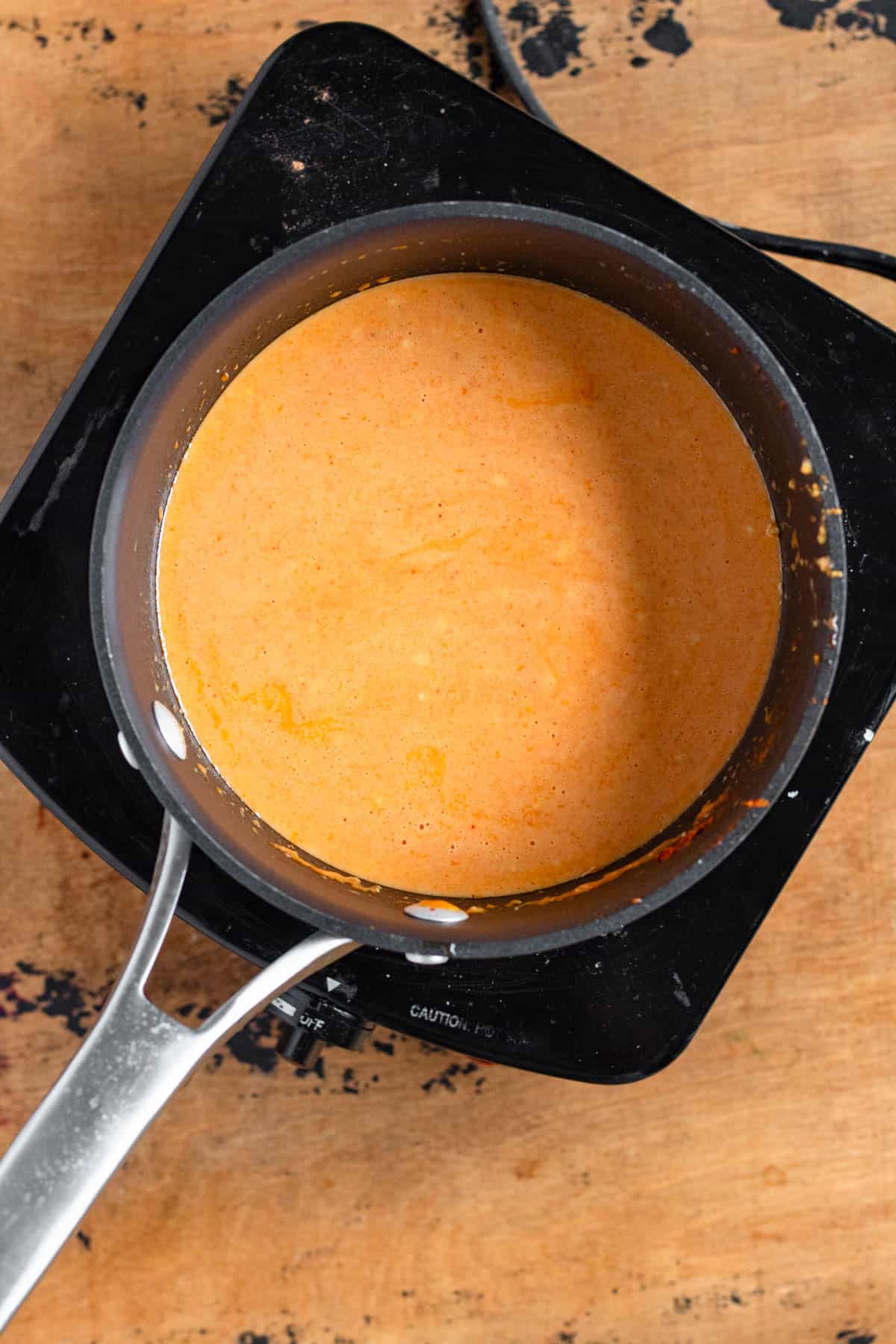
Step One: Boil your coconut milk over medium heat, then add your curry paste and mix until smooth.
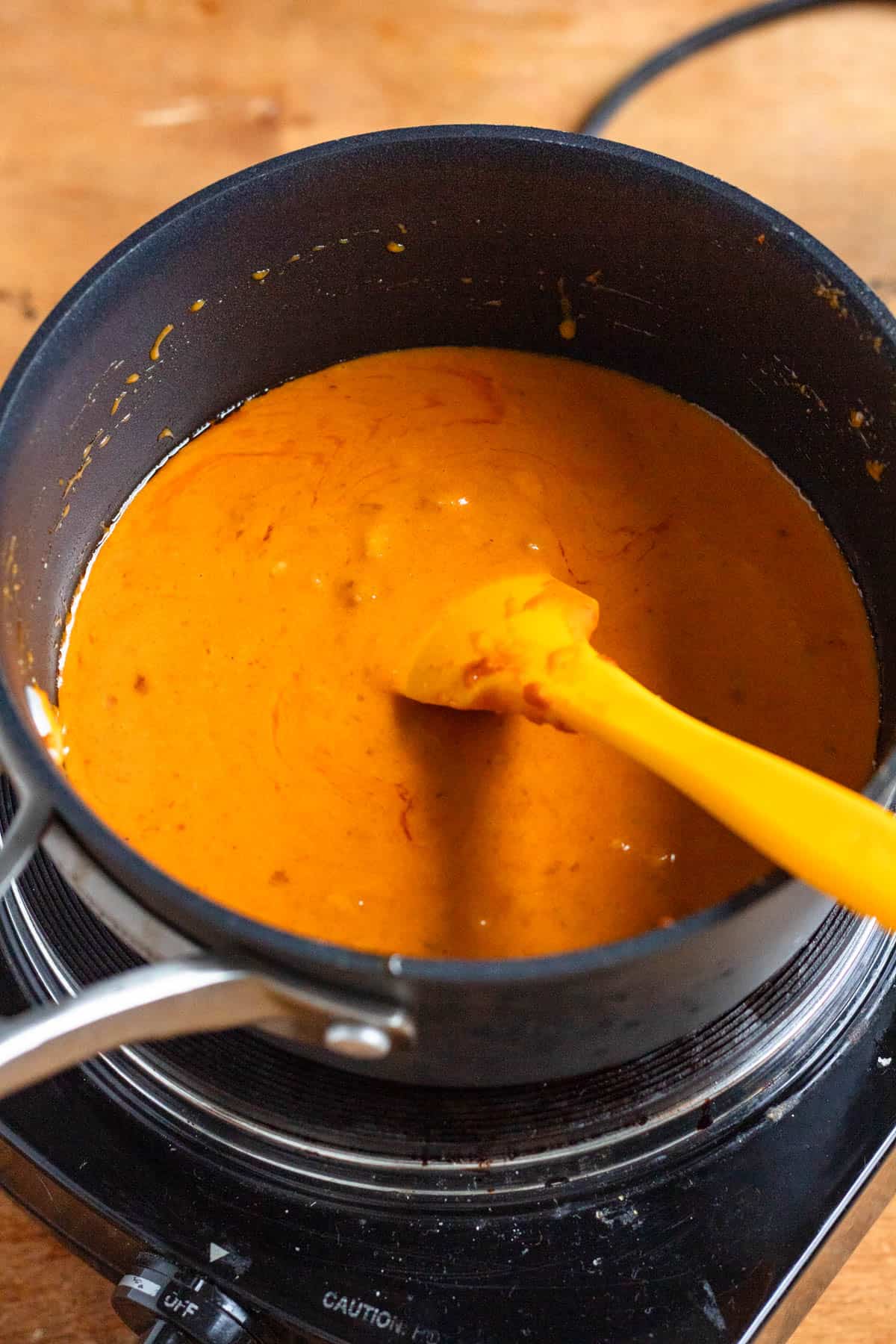
Step Two: Stir continuously over medium heat until the coconut oil separates from the coconut milk. Then pour in the remainder of the coconut milk as well as the peanuts, palm sugar, and tamarind paste.
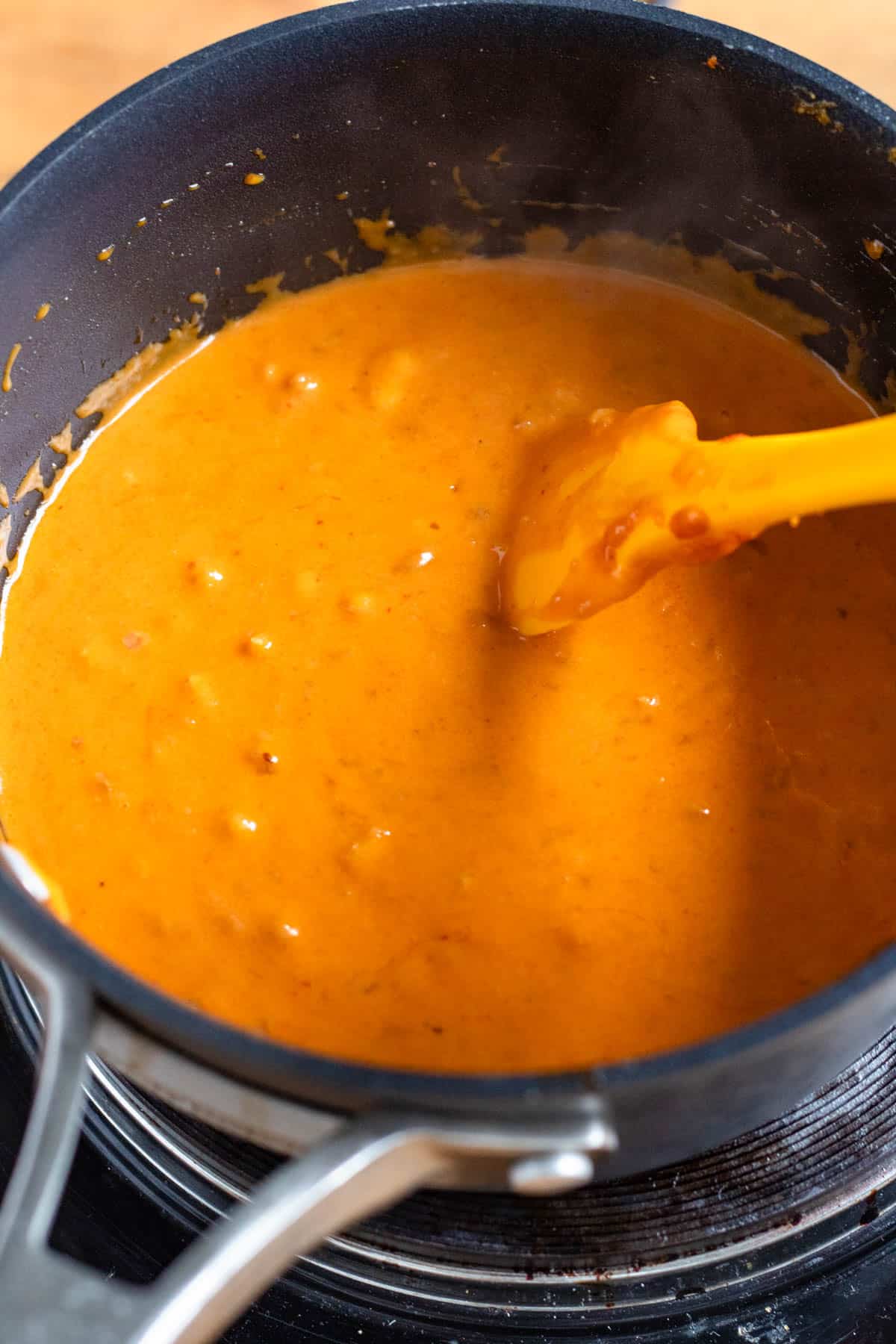
Step One: Boil your coconut milk over medium heat, then add your curry paste and mix until smooth.
Expert Tips
- You don’t want to grind your peanuts into peanut butter. A little texture adds more to this sauce. You want your peanuts to resemble dry sand, with some large chunks
- Cook your curry in your coconut milk until you start to see some oil separate from the mixture. This means your curry is frying in the coconut milk and releasing even more flavor!
- You will know that your peanut sauce is done when it has thickened and can easily coat the back of a spoon.
Recipe FAQs
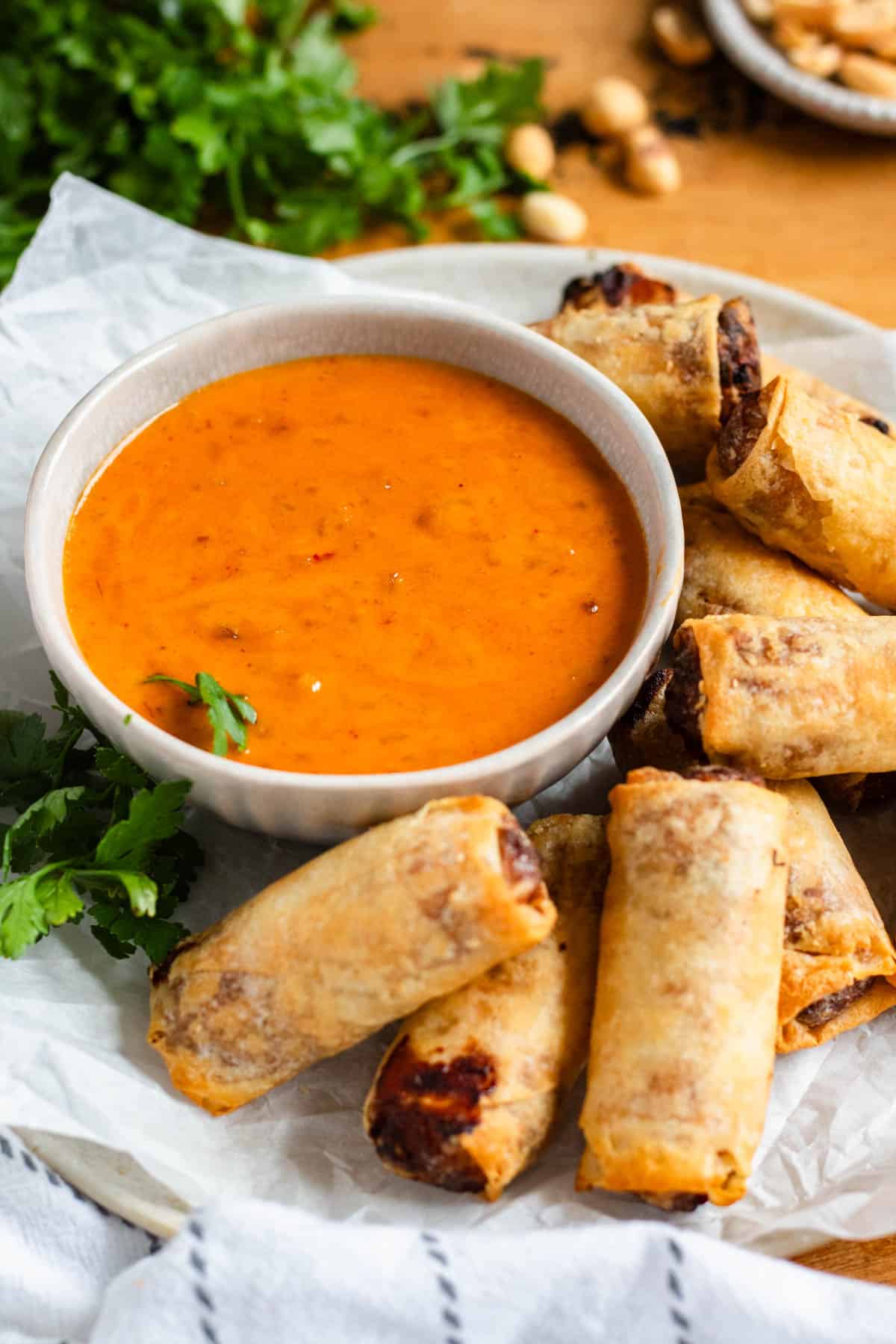
Peanut sauce has so many great uses! It adds an extra layer of flavor to many different dishes and can be used hot or cold:
As a dipping sauce for satay or spring rolls
Over noodle dishes like Pad Thai
As a salad dressing over an Asian salad
As a marinade for meat, vegetables or tofu
If you’ve tried my Spicy Peanut Sauce, this peanut sauce is completely different! African peanut sauce has more of a savory flavor while the Thai version is creamier, with a slightly sweet undertone. Both are delicious!
You can store leftovers in an airtight container in the fridge. Reheat on the stove to ensure that your coconut milk does not split.
Did you enjoy this recipe for Thai Peanut Sauce? If so, check out these other recipes I’ve selected just for you:
If you tried this Thai Peanut Sauce Recipe or any other recipe on my website, please leave a 🌟 star rating and let me know how it went in the 📝 comments below!
Authentic Thai Peanut Sauce
Equipment
- Pestle and Mortar
Ingredients
- 1¼ cup coconut milk
- 2 Tbsp red curry paste, maesri
- ½ cup roasted and unsalted peanuts
- 1 Tbsp Palm Sugar, if your palm sugar comes in a block you can use a knife to shred it into slices that equal 1 Tbsp
- 1 Tbsp Tamarind Paste
- 1 tsp fish sauce or salt to taste
Instructions
- Use a mortar and pestle or a food processor to grind your peanuts until they are a little thicker than a dry sand texture. It is okay to have larger pieces in the blend as well.
- Add about ¼ – ⅓ cup of coconut milk into a pot over medium heat and bring it to a boil. Then add the red curry paste and stir until smooth.
- Stir continuously over medium heat until the coconut oil separates from the coconut milk.
- Pour in the remainder of the coconut milk as well as the peanuts, palm sugar, and tamarind paste.
- Allow the sauce to simmer for about 5-10 minutes until the sauce thickens. Serve and enjoy!
Video
Notes
- Coconut milk: Do not use coconut cream or your sauce will be too thick.
- Roasted and unsalted peanuts: Make sure to use unsalted peanuts so that you can control the amount of salt in your recipe.
- Tamarind Paste: You can substitute some white vinegar
- Fish sauce: If you don’t want to purchase it, you can just use salt. If you do purchase some, you can also use it to flavor curry or to make Fish Soup.
- You don’t want to grind your peanuts into peanut butter. A little texture adds more to this sauce. You want your peanuts to resemble dry sand, with some large chunks
- Cook your curry in your coconut milk until you start to see some oil separate from the mixture. This means your curry is frying in the coconut milk and releasing even more flavor!
- You will know that your peanut sauce is done when it has thickened and can easily coat the back of a spoon.
Leave a Reply