

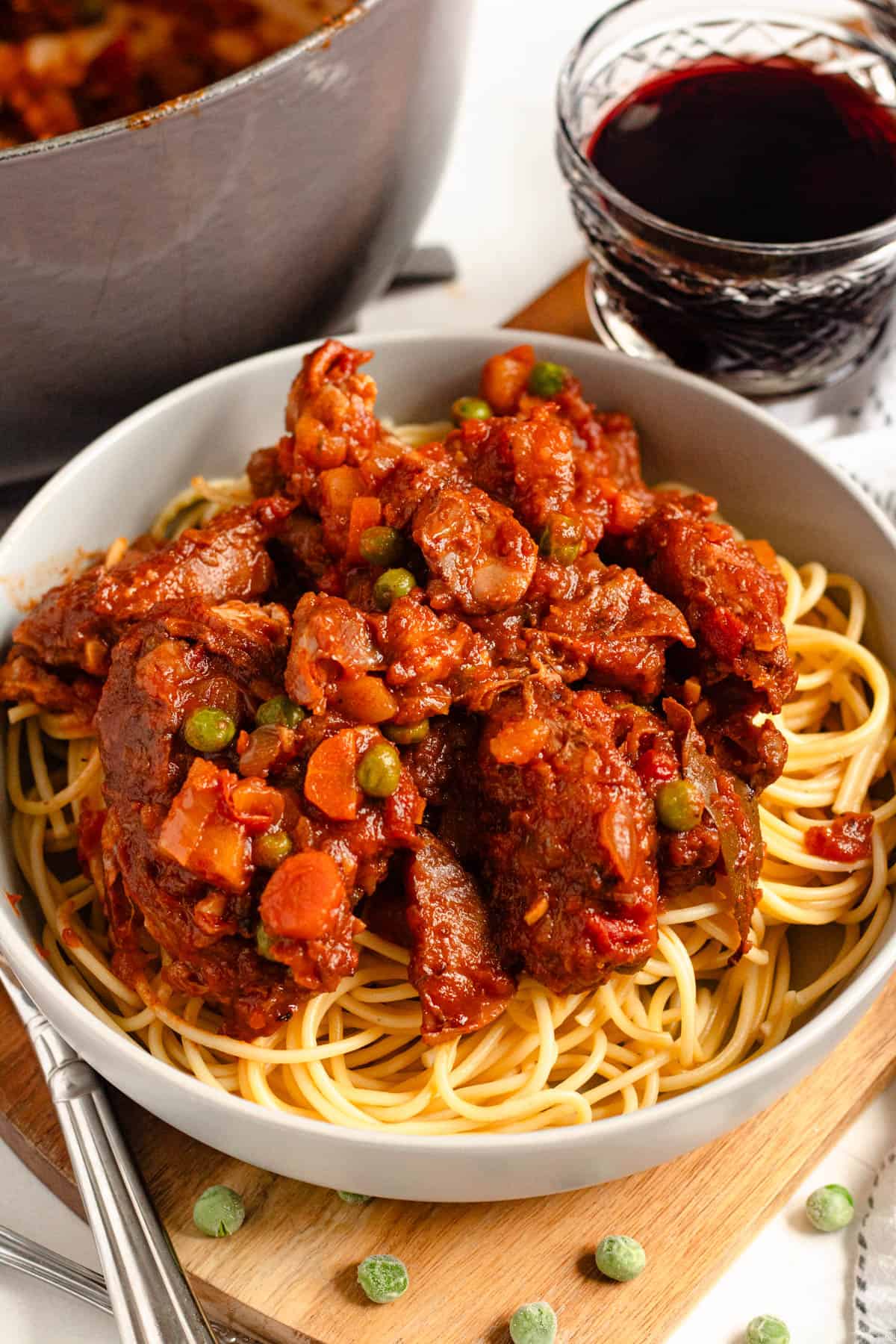
Rabbit Stew is a hearty, delicious stew that is slowly simmered for more than an hour to create a rich, deep flavor. It’s a great introduction to cooking with rabbit meat! This recipe is the Maltese version of rabbit stew and is made with red wine, carrots, garlic, potatoes, and peas.
Hello Reader! I try my hardest to research recipes as best as I can before posting to ensure I am representing each culture correctly. If this recipe is from your country and I have made a mistake or you have suggestions for how to make it more authentic, I would love to hear! Please leave a comment below letting me know what should be different, and I will rework the recipe. It is always my intention to pay homage and respect to each cultural dish that I cook. Thanks for reading!
I still remember the first time I ate rabbit. I was in high school, and my family had gone rabbit hunting that morning. They brought it home, and we pan-fried it up with onions! I was intimidated about cooking with rabbit at first, but it ended up being very familiar to cook with, reminding me a lot of chicken. This method was a great way to try a new meat, but if you want something even easier, this stew is the way to go.
This hearty rabbit stew is rich, slow-simmered, and deeply comforting, made with tender bone-in rabbit, tomatoes, red wine, garlic, and a handful of simple herbs. It’s a rustic, one-pot meal that delivers incredible flavor with very little fuss, which makes it perfect for a cozy weekend dinner or a special family meal.
Like most good stews, this recipe begins by searing the meat to bring out all the smoky flavor, similar to Fricase de Pollo, Chicken Paprikash, or Coconut Chicken Curry.
If you’ve never cooked rabbit before, this traditional rabbit stew recipe is an approachable place to start. The meat becomes beautifully tender and absorbs the savory, tomato-wine sauce as it simmers. By the end, it falls off the bone and creates an irresistible dish you will not forget!
Recipe Origin
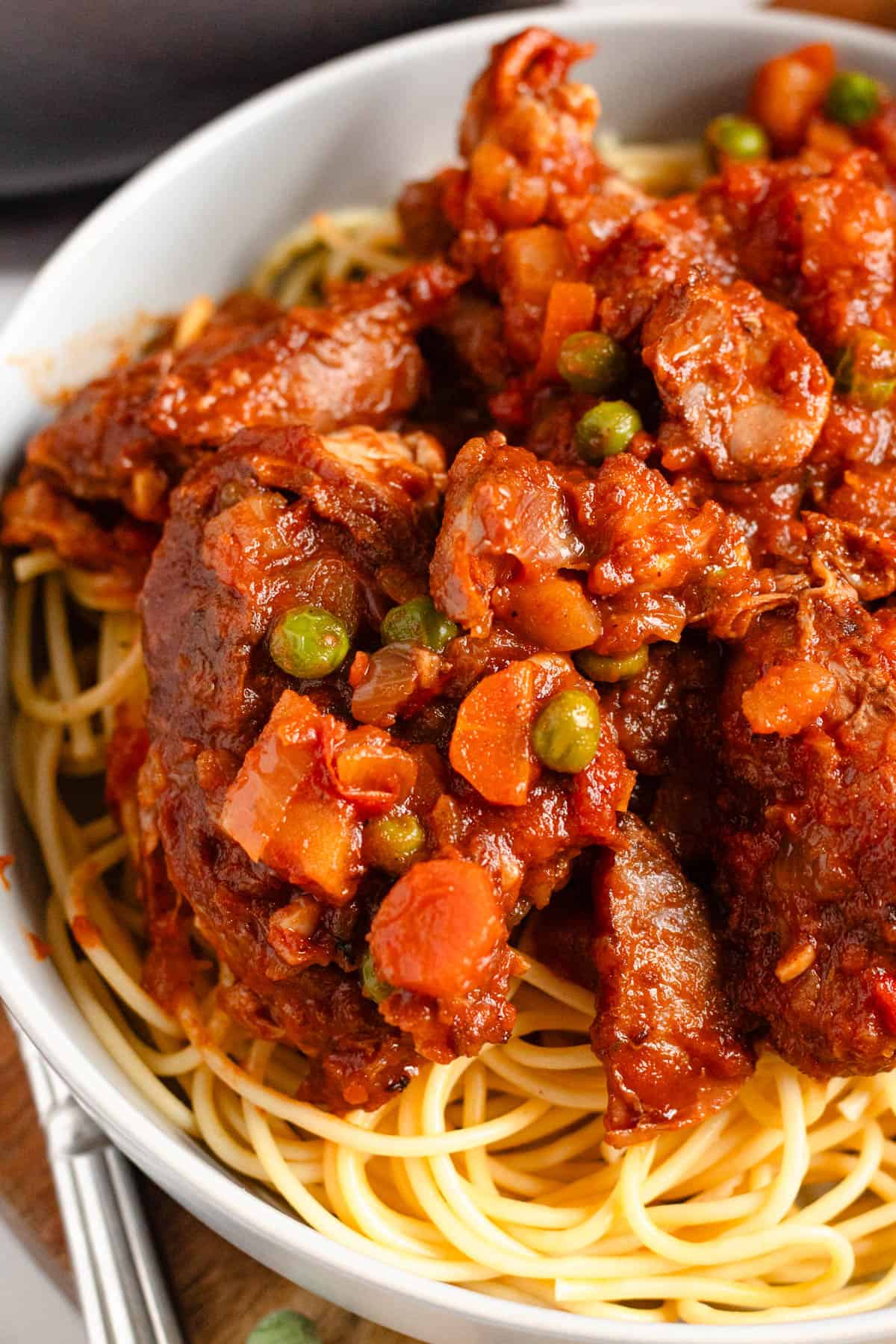
Rabbit stew, also known as Stuffat tal-fenek in Malta, is widely considered Malta’s national dish. Rabbits have been in Malta for centuries, but it is thought this dish may have been created as a form of resistance to hunting restrictions put in place by the Knights of St. John. Only the knights were allowed to hunt in the forests for larger game, and so rabbits became central to home cooking. Today, this dish is considered a delicacy and is commonly prepared for family gatherings and special occasions.
Traditionally, the rabbit is browned first, then gently simmered in a tomato and wine sauce with bay leaves and simple seasoning. Variations of the dish have been passed down for generations, but usually the seasoning is kept simple, allowing the flavor of the rabbit and sauce to shine.
In Malta, this stew is often served with spaghetti tossed in the rich sauce from the pot before the rabbit is brought to the table. It’s also common for the butcher to include the heart and liver in the stew, and in very traditional settings, even the head may be cooked as part of the dish.
Why Make This Rabbit Stew
- Tender Meat: Slow simmering transforms the rabbit into incredibly tender, flavorful bites that soak up the rich tomato and wine sauce. Perfect for pairing with crusty bread!
- Simple Ingredients, Deep Flavor: This recipe relies on pantry staples and a handful of fresh garlic, onion, carrots, bay leaves, and thyme to create a bold, slow-cooked stew without complicated steps.
- One-Pot Rustic Meal: Everything comes together in a single pot, making this easy rabbit stew perfect for relaxed cooking, minimal cleanup, and a taste of Malta.
Key Ingredients for Rabbit Stew
Here is a visual overview of the ingredients in the recipe. Scroll down to the recipe at the bottom for quantities.
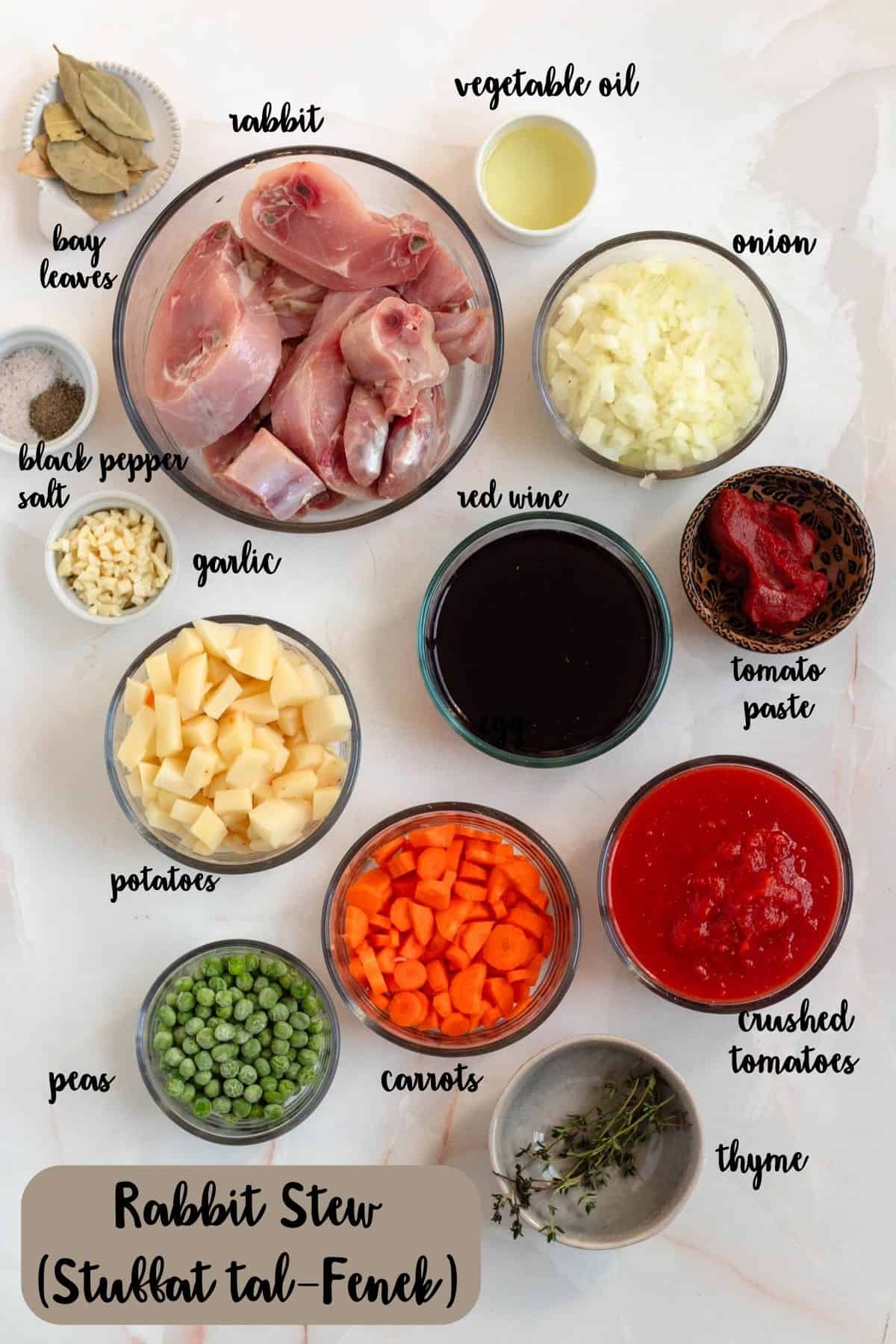
- Bone-in Rabbit: You may need to search for rabbit from a local butcher. They usually include the head and liver, but you can ask for these to be removed if that intimidates you. I had my butcher cut my rabbit into bone-in chunks about 2-3 inches wide. You could also have them cut the rabbit into quarters if you prefer.
- Garlic cloves: Fresh garlic is key here, and there is a lot of it!
- Seasonings: Fresh thyme, lots of bay leaves, salt, pepper.
- Red wine: Use a deep red wine, not a “red cooking wine” if you can help it! I used a cabernet, and it was perfect.
- Peas: Frozen peas work great!
How to Make Rabbit Stew
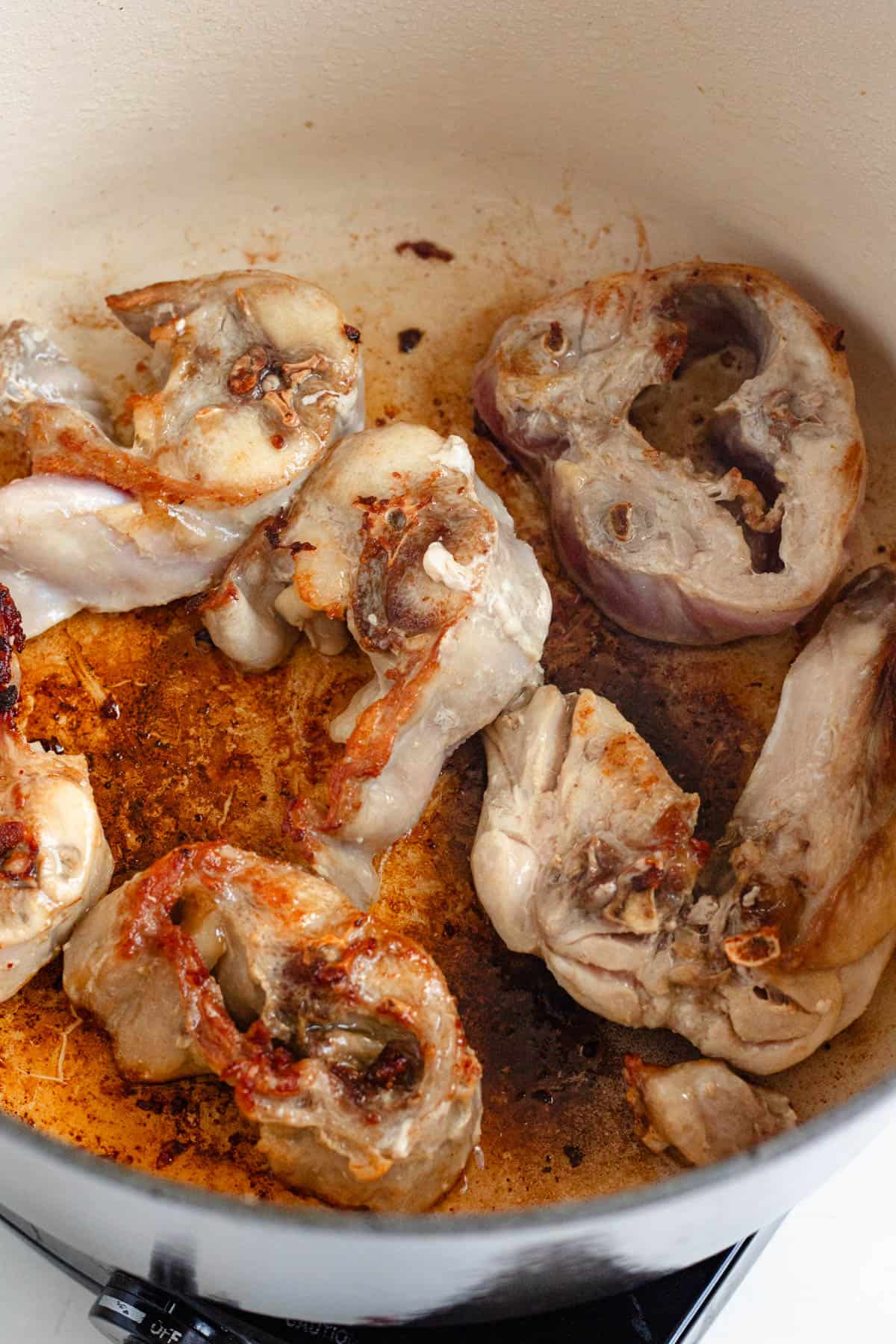
Step One: Add oil to a Dutch oven or pot and brown your rabbit on all sides.
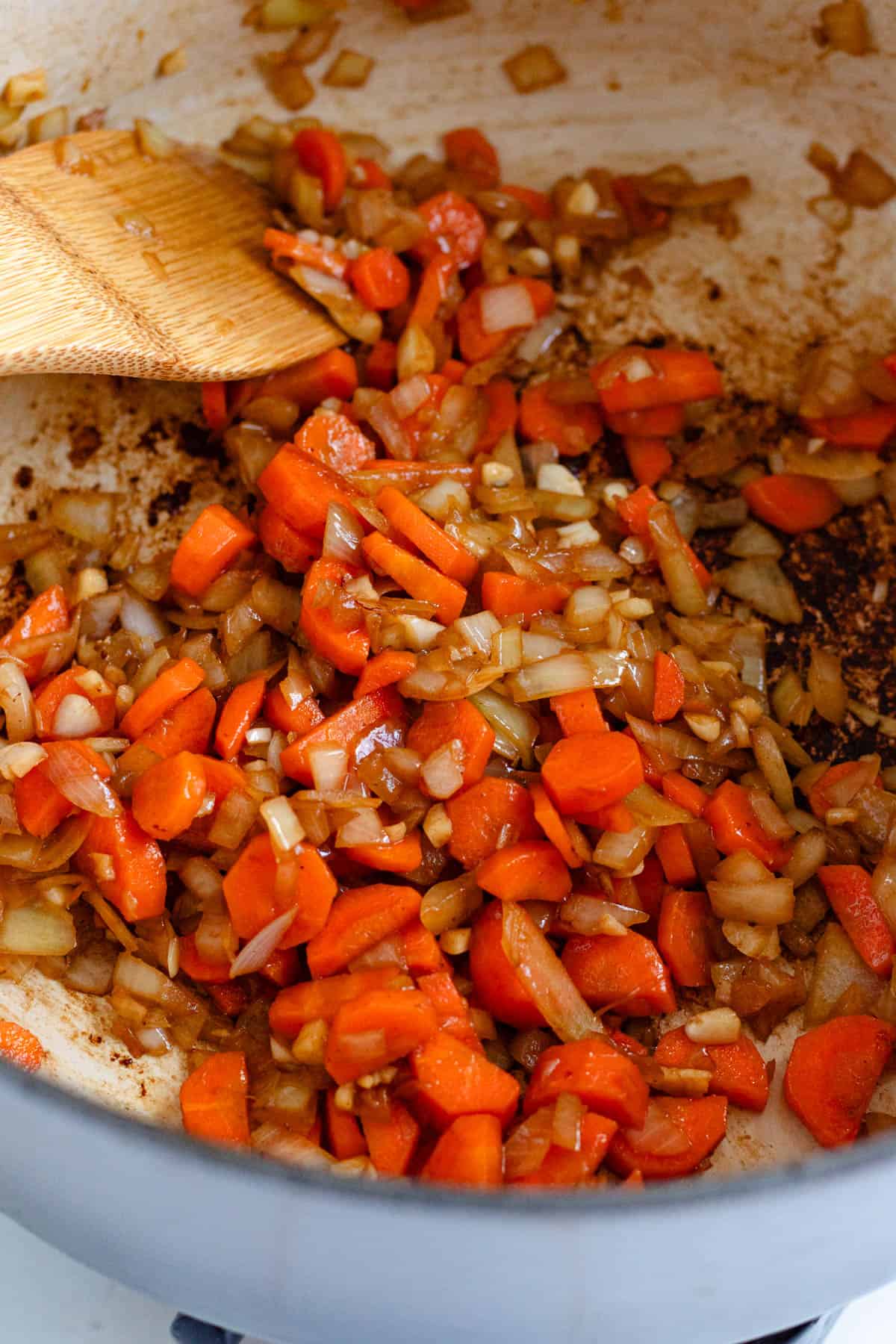
Step Two: Remove the rabbit and cook your carrots, onion, and garlic until soft, then add the tomato paste.
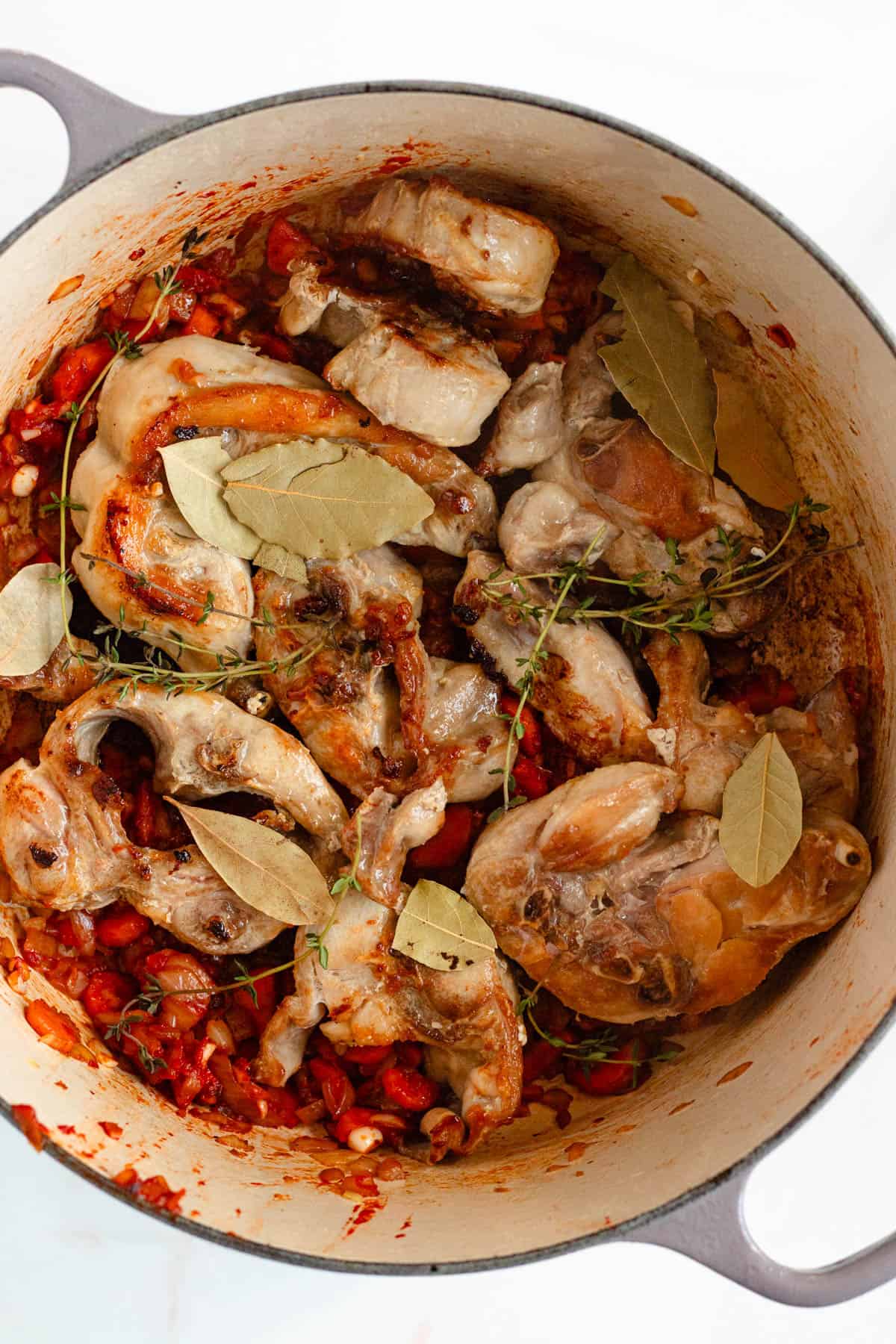
Step Three: Place the rabbit back in the pot along with the seasonings.
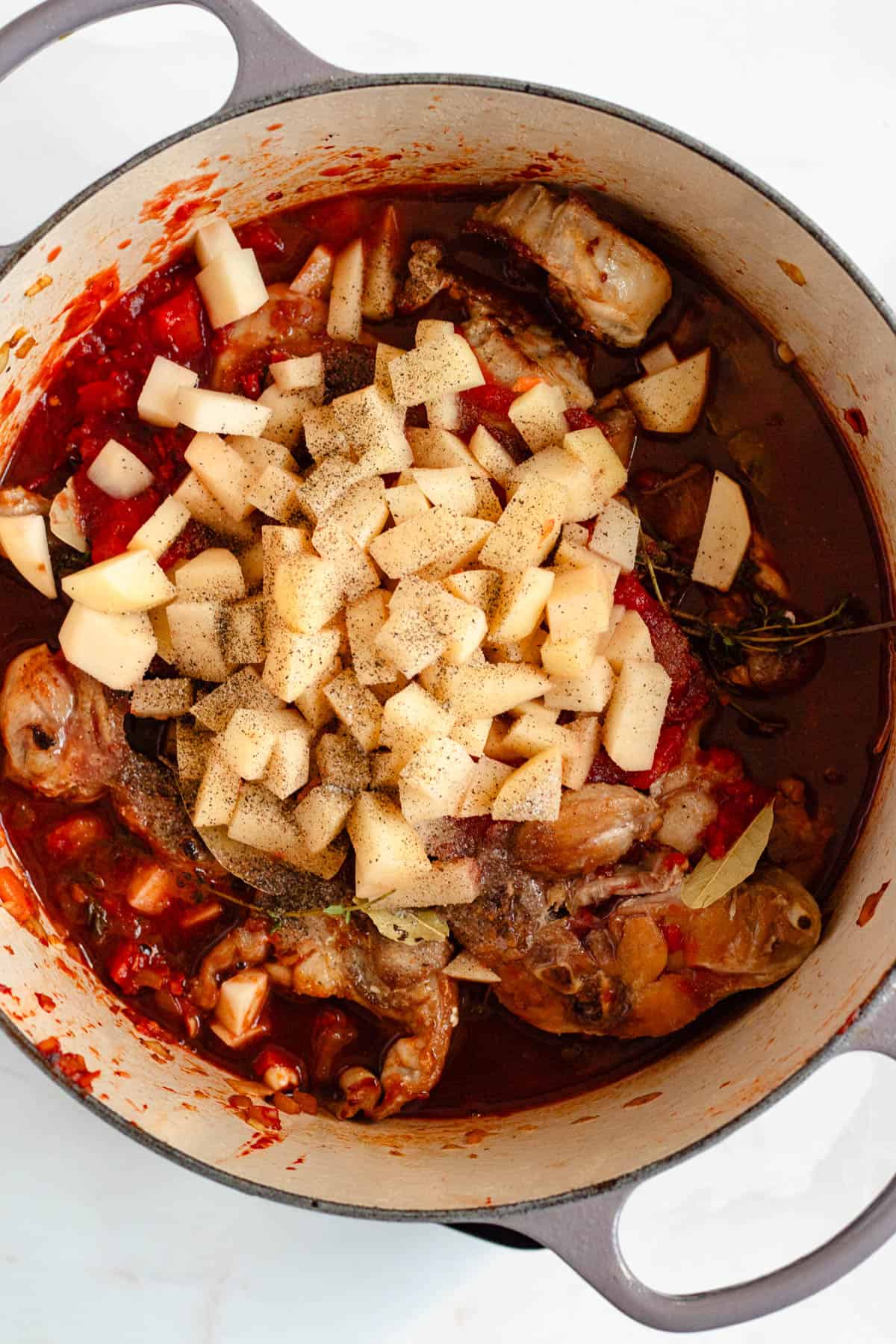
Step Four: Pour the red wine into the pot along with the crushed tomatoes, potatoes, salt, and pepper. Stir.
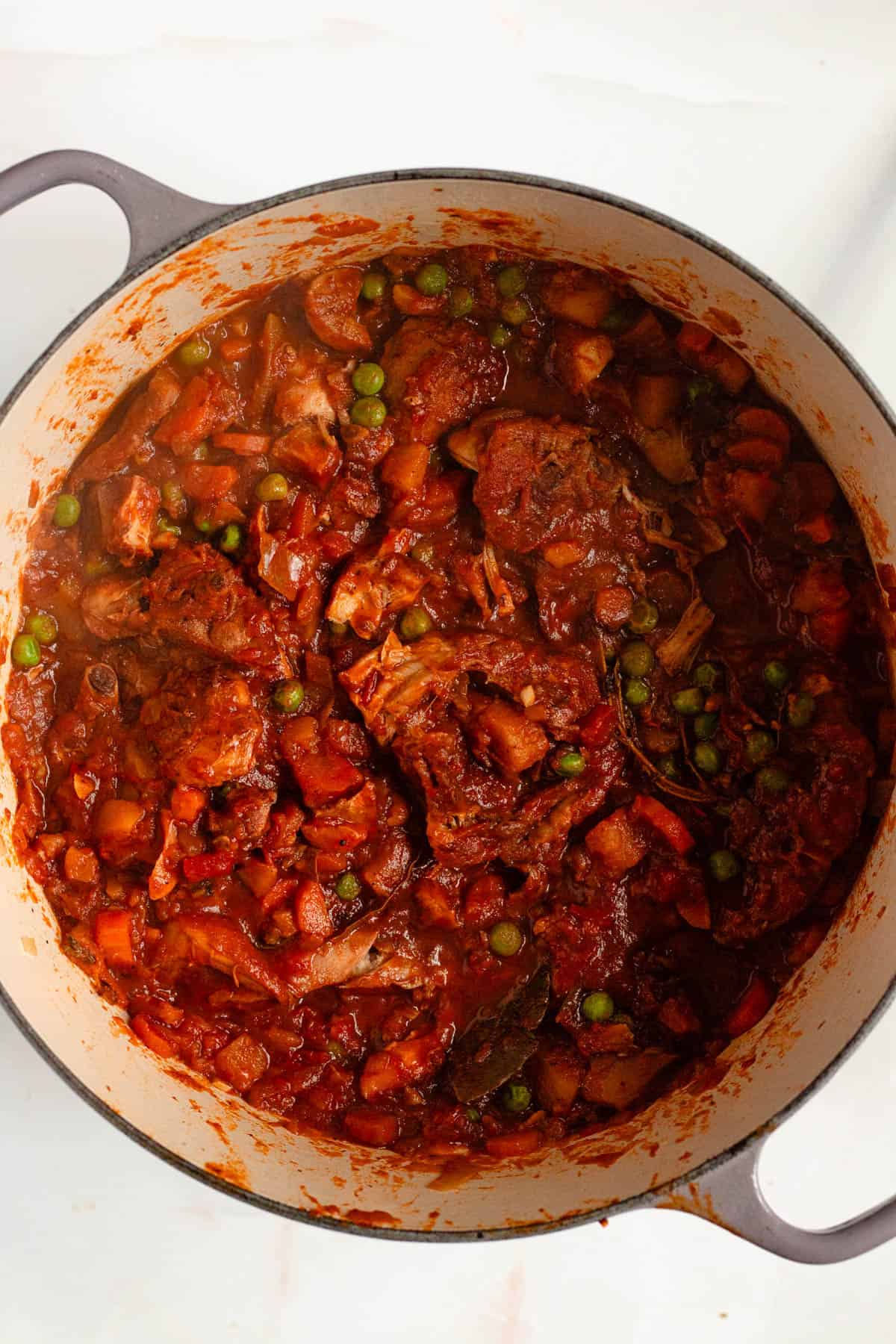
Step Five: Cover and simmer until the meat is fall-off-the-bone tender.
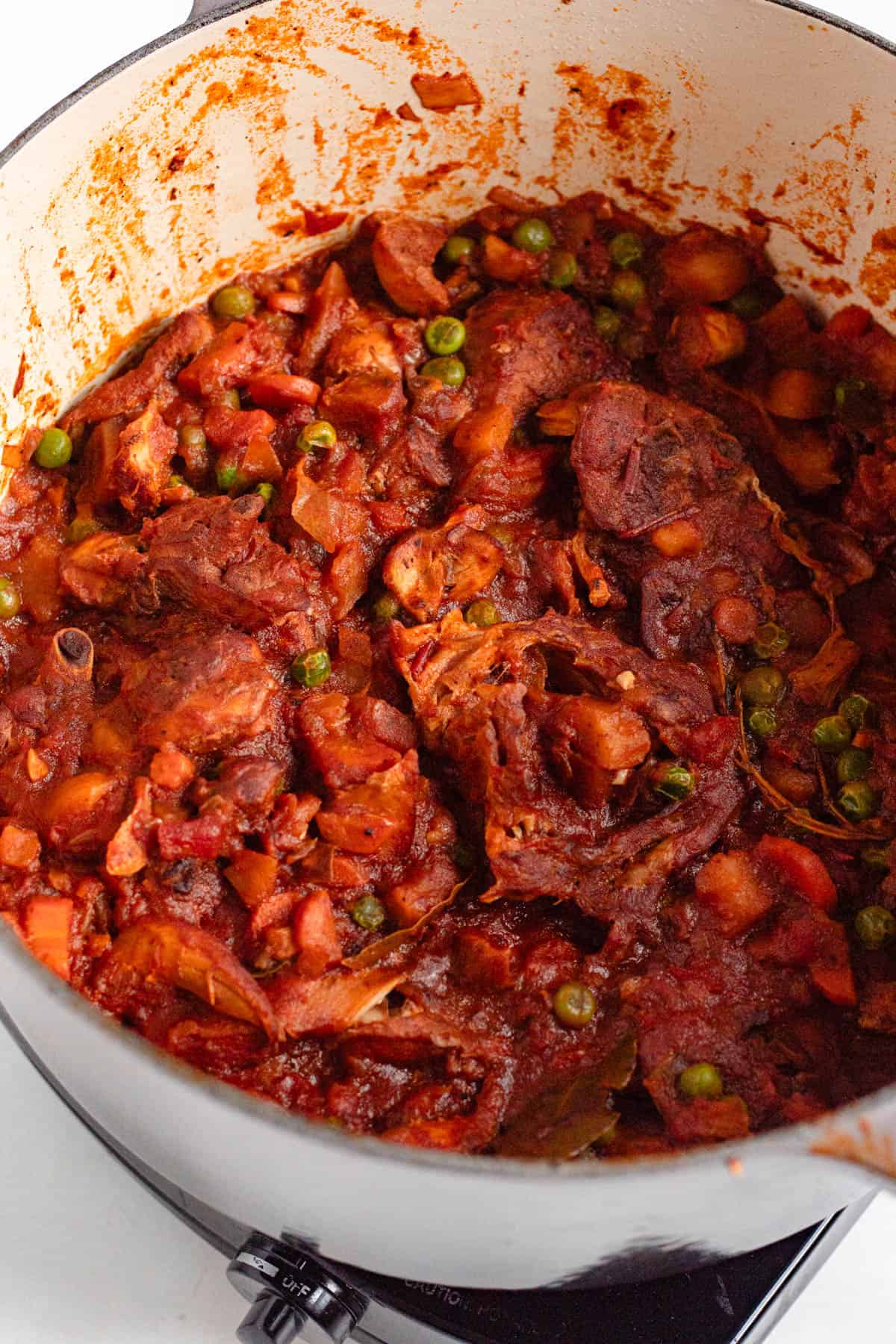
Step Six: Add the peas and stir. Allow the steam to escape for the stew to thicken.
Expert Tips
- For the most authentic stew, include the heart, liver, and head of the rabbit.
- A lot of times this stew is served with spaghetti. It’s also great with roasted potatoes and crusty bread.
- This rabbit stew has been around for generations, so naturally there are plenty of variations. I’ve seen some people add curry powder, coriander, cumin, etc. But most of the traditional recipes only have salt, pepper, and bay leaves.
- Don’t skip browning the meat before simmering. This step builds deep flavor in the finished stew.
- Don’t rush the simmer. A full hour allows the rabbit to become tender and the sauce to develop. An hour and a half is not unreasonable.
- Adjust the liquid at the end. Add a little water if you prefer a saucier stew, or prop the lid to let it reduce and thicken.
Recipe FAQs
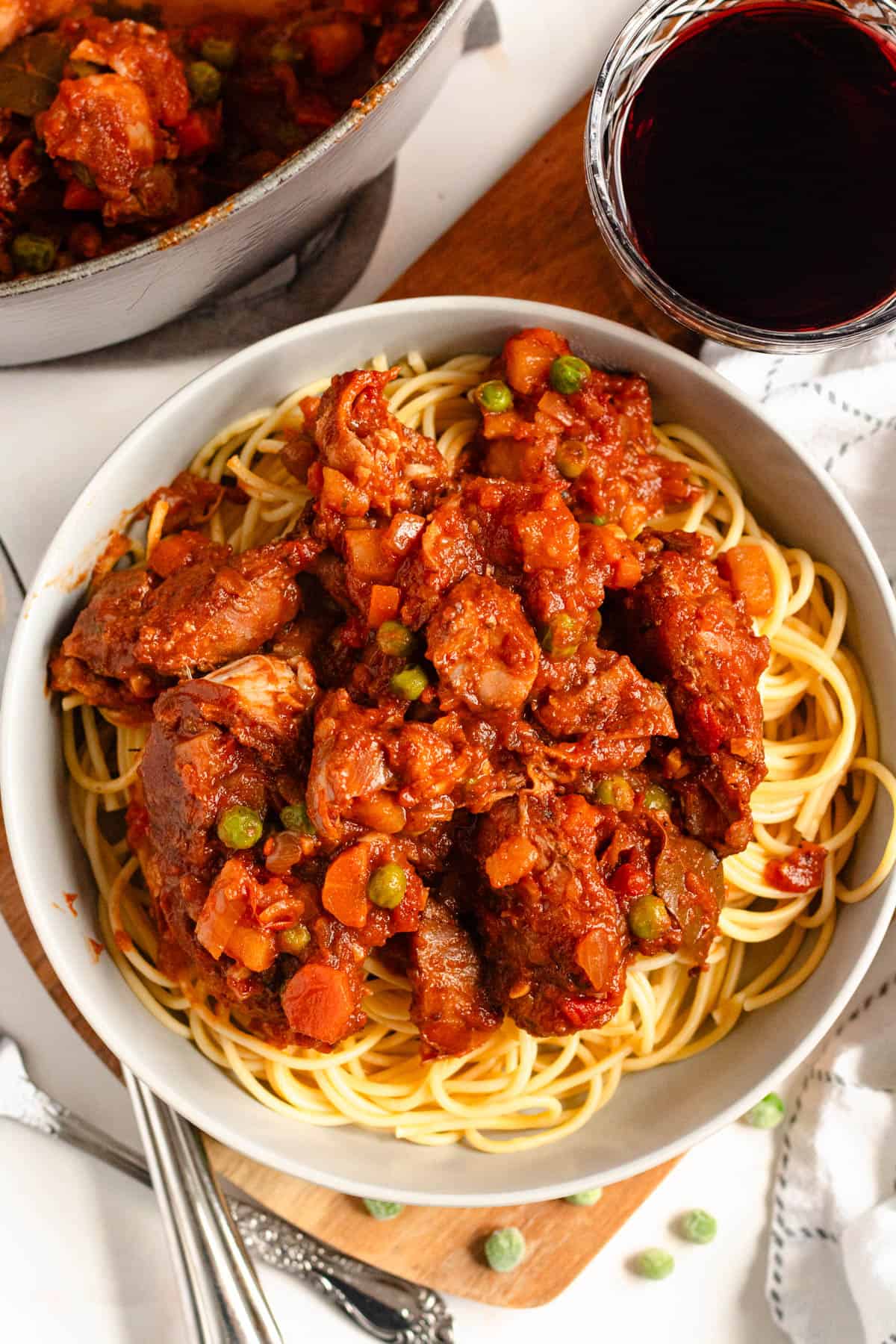
It’s tradition to serve the sauce from this stew with spaghetti and bring out the rabbit to enjoy separately. You could also enjoy this stew all by itself with a side of fresh bread or roasted potatoes.
Store leftover rabbit stew in an airtight container in the refrigerator for up to 3 days. The flavor often improves the next day.
Did you enjoy this recipe? If so, check out these other recipes I’ve chosen just for you:
If you tried this Rabbit Stew Recipe or any other recipe on my website, please leave a 🌟 star rating and let me know how it went in the 📝 comments below!

Rabbit Stew (Stuffat tal-Fenek)
Ingredients
- 2 tbsp vegetable oil
- 2 lb bone-in rabbit
- 6 garlic cloves, minced
- 1 onion, finely diced
- 2 large carrots, diced
- 3 tbsp tomato paste
- 2 sprigs fresh thyme
- 8 bay leaves
- 1 cup red wine
- 1 (400 g) can crushed tomatoes
- 2 russet potatoes, diced
- ¼ tsp black pepper
- ½ tsp salt
- ½ cup peas
Instructions
- Add 2 tbsp vegetable oil to a hot pan. Then add 2 lb bone-in rabbit, and cook until browned on all sides. Remove and set aside.
- Add 6 garlic cloves into the pan along with 1 onion and 2 large carrots. Saute for a few minutes until the onions soften, then add 3 tbsp tomato paste and stir to coat the onions and garlic.
- Add 2 sprigs fresh thyme and 8 bay leaves, and place the rabbit back in the pot.
- Pour 1 cup red wine into the pot along with the 1 (400 g) can crushed tomatoes, 2 russet potatoes, ½ tsp salt, and ¼ tsp black pepper. Stir.
- Cover and simmer for about one hour, until the rabbit is fall-off-the-bone tender. If you want a more liquidy stew, you can add some water at this point to make it saucier.
- After about an hour, add ½ cup peas and stir to combine. Prop the lid a bit, so that excess liquid can escape and the stew can thicken. Cook for another 5 or so minutes until the stew has thickened, then serve and enjoy!
Video
Notes
- Bone-in Rabbit: You may need to search for rabbit from a local butcher. They usually include the head and liver, but you can ask for these to be removed if that intimidates you. I had my butcher cut my rabbit into bone-in chunks about 2-3 inches wide. You could also have them cut the rabbit into quarters if you prefer.
- Red wine: Use a deep red wine, not a “red cooking wine” if you can help it! I used a cabernet, and it was perfect.
- Peas: Frozen peas work great!
- For the most authentic stew, include the heart, liver, and head of the rabbit.
- A lot of times this stew is served with spaghetti. It’s also great with roasted potatoes and crusty bread.
- This rabbit stew has been around for generations, so naturally there are plenty of variations. I’ve seen some people add curry powder, coriander, cumin, etc. But most of the traditional recipes only have salt, pepper, and bay leaves.
- Don’t skip browning the meat before simmering. This step builds deep flavor in the finished stew.
- Don’t rush the simmer. A full hour allows the rabbit to become tender and the sauce to develop. An hour and a half is not unreasonable.
- Adjust the liquid at the end. Add a little water if you prefer a saucier stew, or prop the lid to let it reduce and thicken.


Leave a Reply