

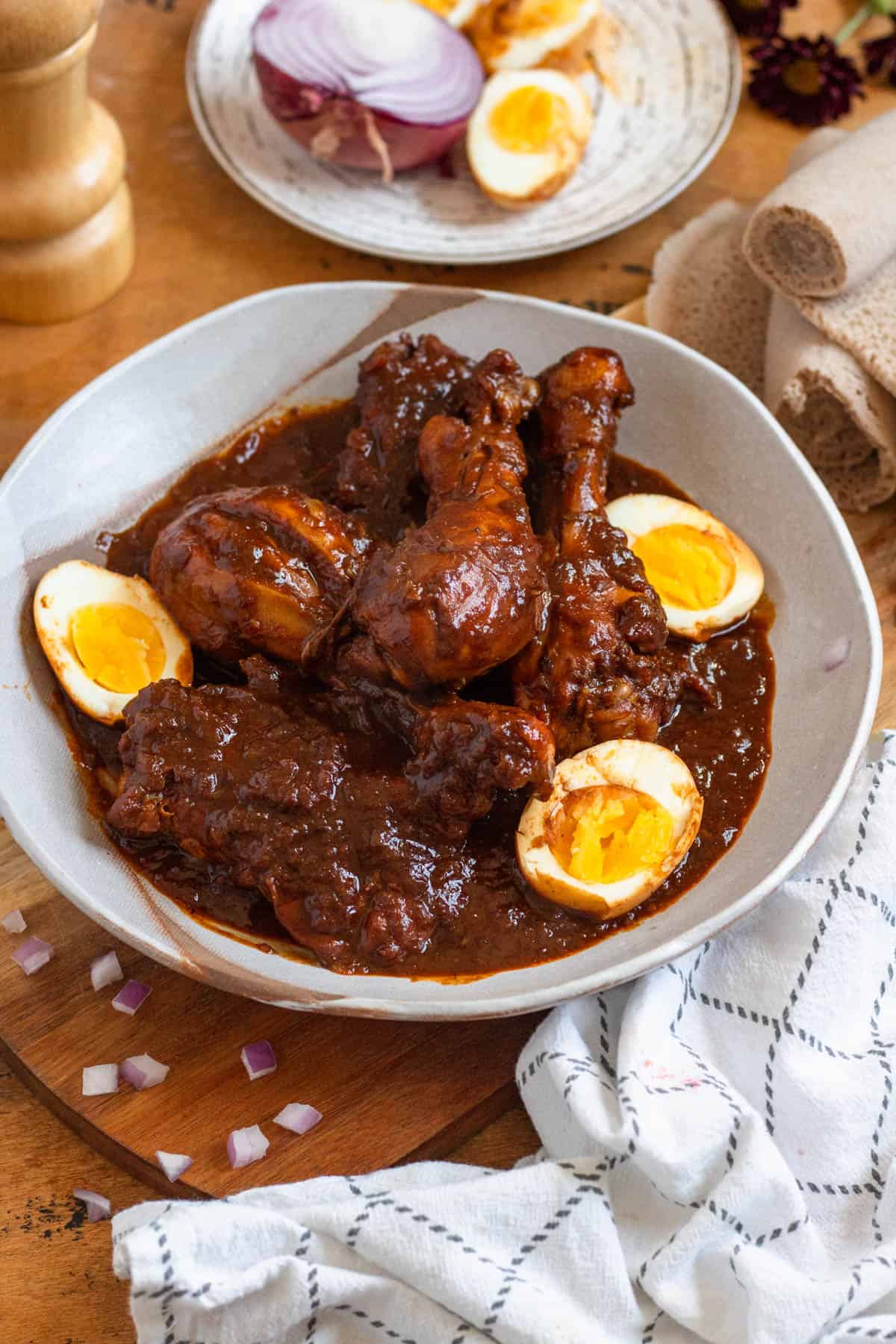
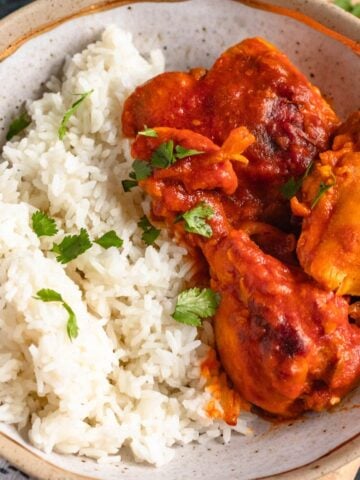
This spicy chicken stew, called Doro Wat, is an Ethiopian specialty! It is made with chicken, lots of red onions, and Berbere spice for a flavorful meal. Doro Wat can be a tough recipe to get correct, but this recipe will walk you through all of the steps with ease!
Hello Reader! I try my hardest to research recipes as best as I can before posting to ensure I am representing each culture correctly. If this recipe is from your country and I have made a mistake or you have suggestions for how to make it more authentic, I would love to hear! Please leave a comment below letting me know what should be different, and I will rework the recipe. It is always my intention to pay homage and respect to each cultural dish that I cook. Thanks for reading!
Doro Wat is a rich and flavorful chicken stew that embodies the heart of Ethiopian cooking. Simmered slowly with spiced clarified butter, onions, and the vibrant red berbere spice blend, this dish is meant to be enjoyed the same way it is prepared, slowly, savoring every spiced bite.
This recipe is similar to Zigni from Eritrea but, of course, uses chicken instead of beef and focuses on more of the caramelized onion flavor than the tomato flavor of Zigni. Both are usually eaten with a light bread, used to scoop up each bite of the spicy dish!
This spicy stewed chicken is a dish that is meant to be shared, so whether you’re exploring Ethiopian food for the first time or looking to bring a taste of home to your kitchen, this beloved dish offers a perfect balance of heat, depth, and tradition!
Why Make this Recipe
- Deep, Delicious Flavor: Doro Wat is slow cooked to allow the flavor to fully seep into the chicken. The longer it cooks, the more intense the flavor becomes.
- Unique Spices: Berbere is truly a unique blend of spices. Spicy, warm, and flavorful!
- “Travel” to Ethiopia: If you’ve ever wanted to visit Ethiopia or taste the Ethiopian food that everyone is raving about, now you can! This recipe will give you a taste of Ethiopia right from the comfort of your own kitchen.
Key Ingredients for Doro Wat
Here is a visual overview of the ingredients in the recipe. Scroll down to the recipe at the bottom for quantities.
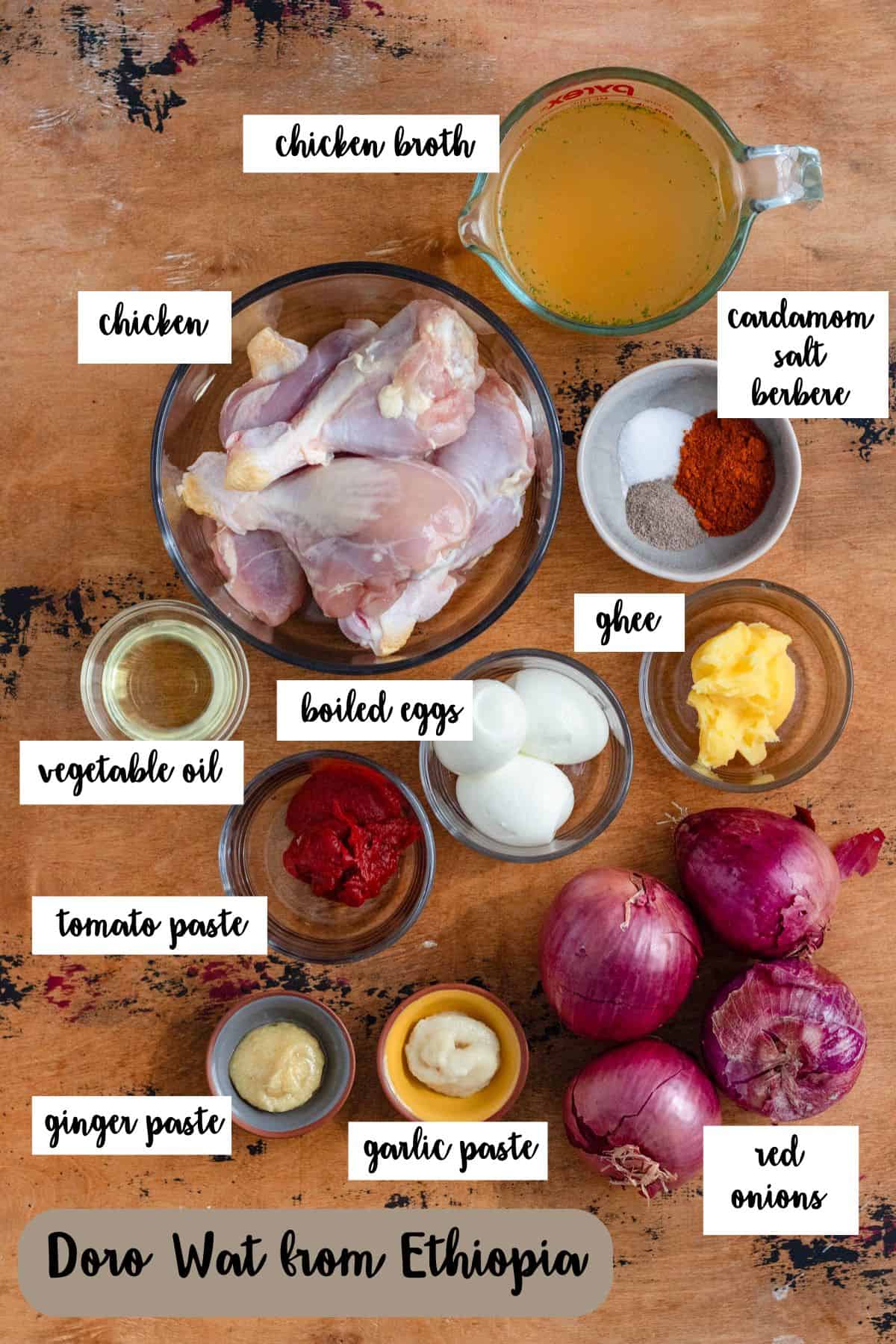
- Red Onions: You want your onions very finely diced. It’s easiest to do this with a food processor. We use red onions because they are known for being sweet and pungent! They are one of the main flavor drivers in this dish, so a strong onion taste is necessary. It is not considered authentic to use yellow or white onions. Feel free to add plenty more red onions in accordance with your taste. Some Doro Wat recipes use up to 3-5 kilograms of red onions for one stew.
- Garlic Paste + Ginger Paste: You can make this yourself by placing fresh garlic and fresh ginger in a food processor and pulsing into a smooth paste. This will make a much stronger, all-encompassing flavor. However, if you want fewer dishes, using the store-packaged stuff will work.
- Cardamom: Some Ethiopian recipes call for cardamom and some do not. Feel free to leave out if you prefer.
- Berbere: Berbere is a spice mix popular in Ethiopian cuisine, made with cumin, cayenne, paprika, nutmeg, ginger, and allspice. It is a very strong blend, so use it according to your taste! You can adjust the amount of berbere in this recipe depending on how spicy you want your chicken, keeping in mind that some recipes call for up to ½ cup of the spice, but I am too much of a baby for that. You can buy Berbere online or make your own.
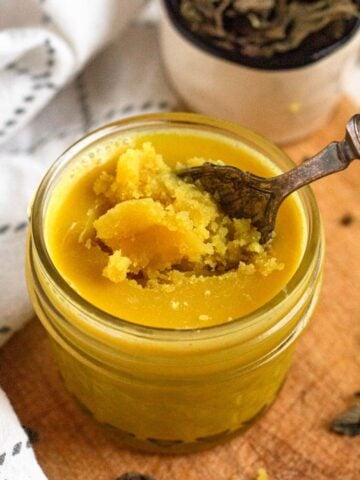
- Ghee or Niter Kibbeh: Niter Kibbeh is an Ethiopian ghee that is spiced with flavors like cumin, cinnamon, and cardamom. It is delicious spread on toast, in eggs, or, of course, in this recipe! You can buy Niter Kibbeh online, or make your own Niter Kibbeh in the Instant Pot.
- Chicken: All cuts, bone in, skin removed. I used 2 pounds of a fully jointed chicken with the bones in, including thighs, breasts, & drumsticks. I discarded the chicken wings, as I didn’t want to overcook them but you can keep them if you prefer. For juicier, more flavorful cuts, use dark meat like thighs and legs. For cheaper, thicker cuts, use chicken breast.
- Hard-Boiled Eggs: You’re going to cut small slices in the sides of your eggs to allow the flavor to seep in.
- Tomato Paste: Tomato paste is not a common ingredient in Ethiopia, but it is a very common ingredient in Eritrea! Ethiopians have likened it to using cream in a carbonara recipe… It’s not the original way, but it’s common enough in some areas that it has become a valid way to make the dish! Feel free to omit it if you’d prefer.
How to Make Doro Wat
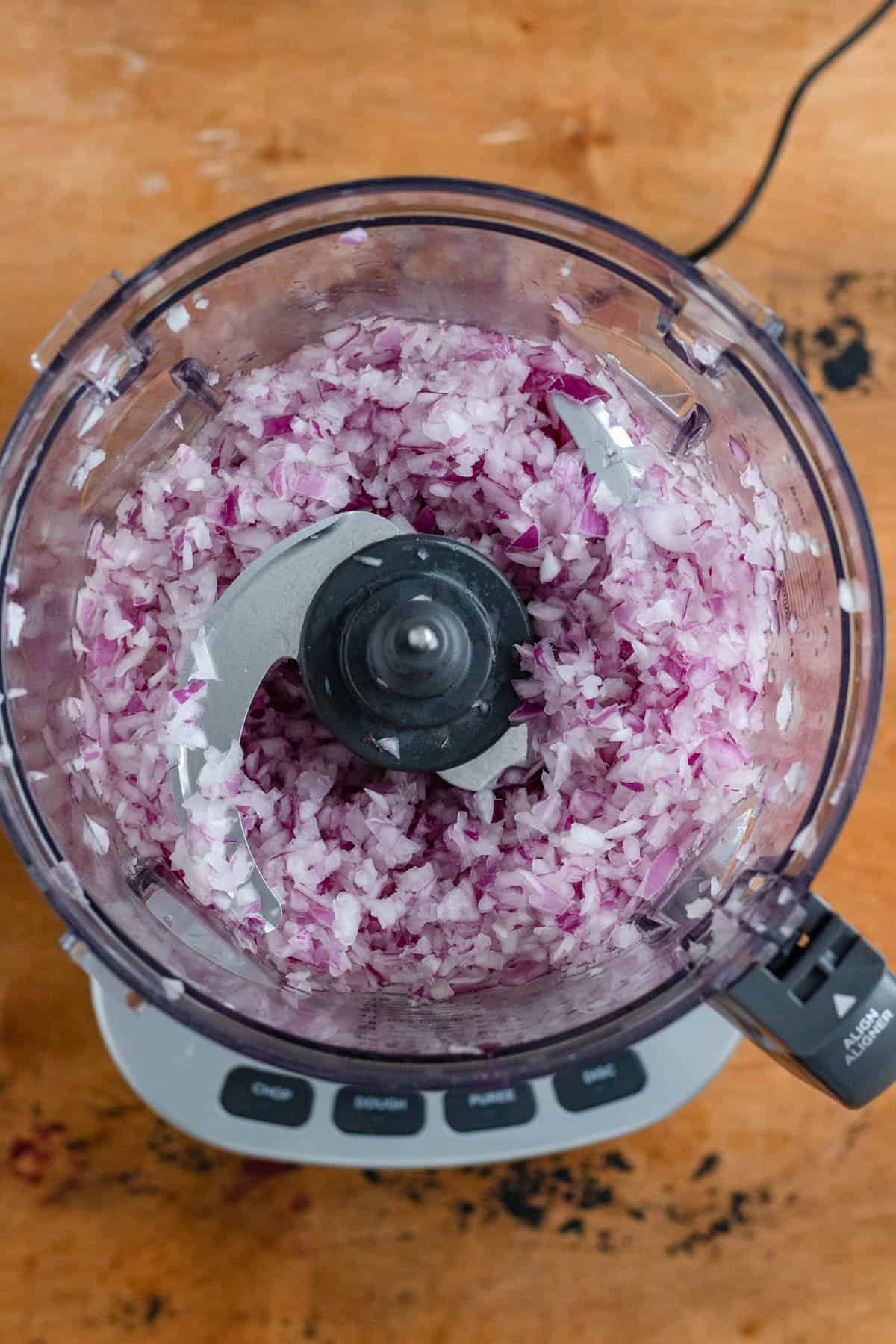
Step One: Dice your onions very finely. I used a food processor to do this.
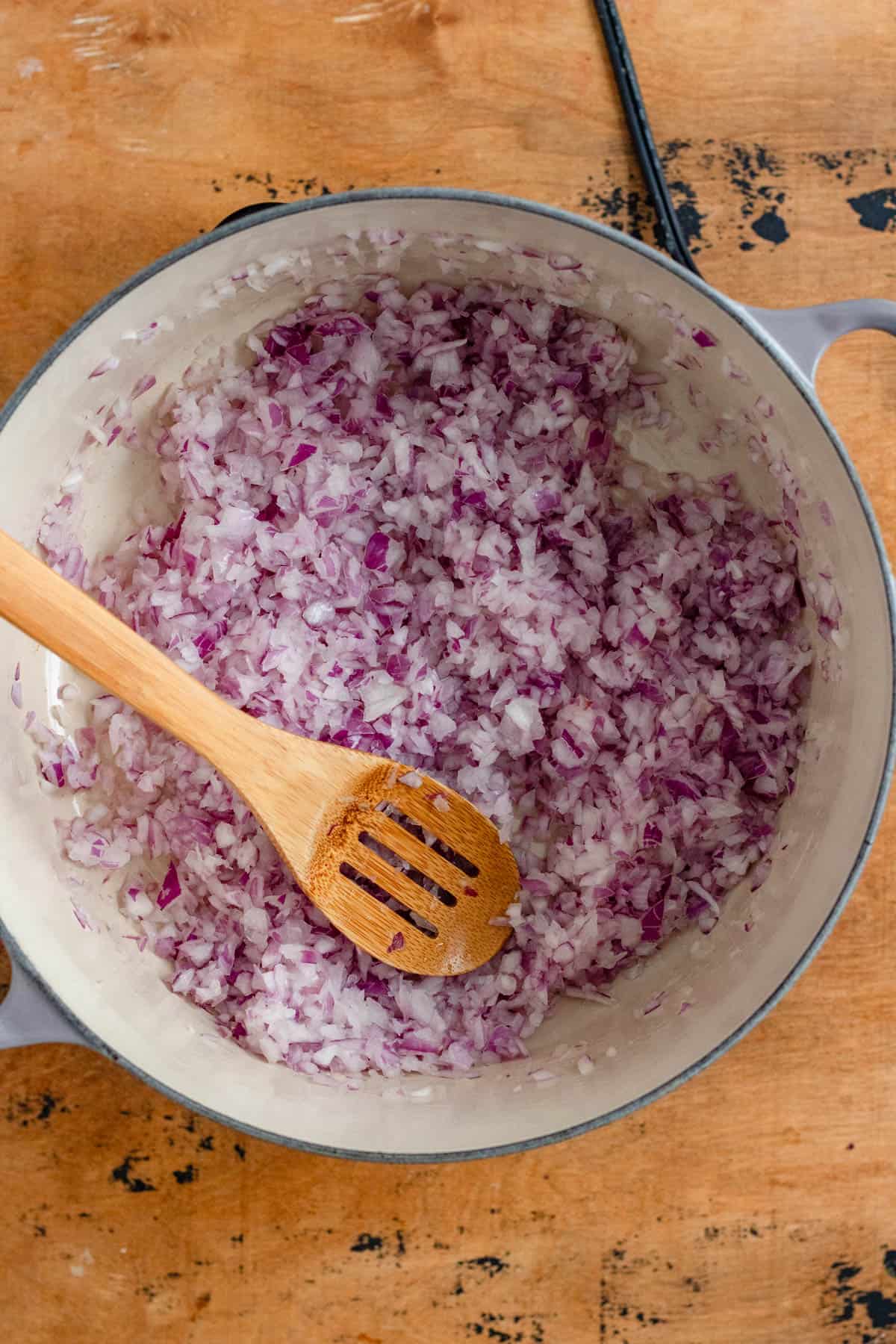
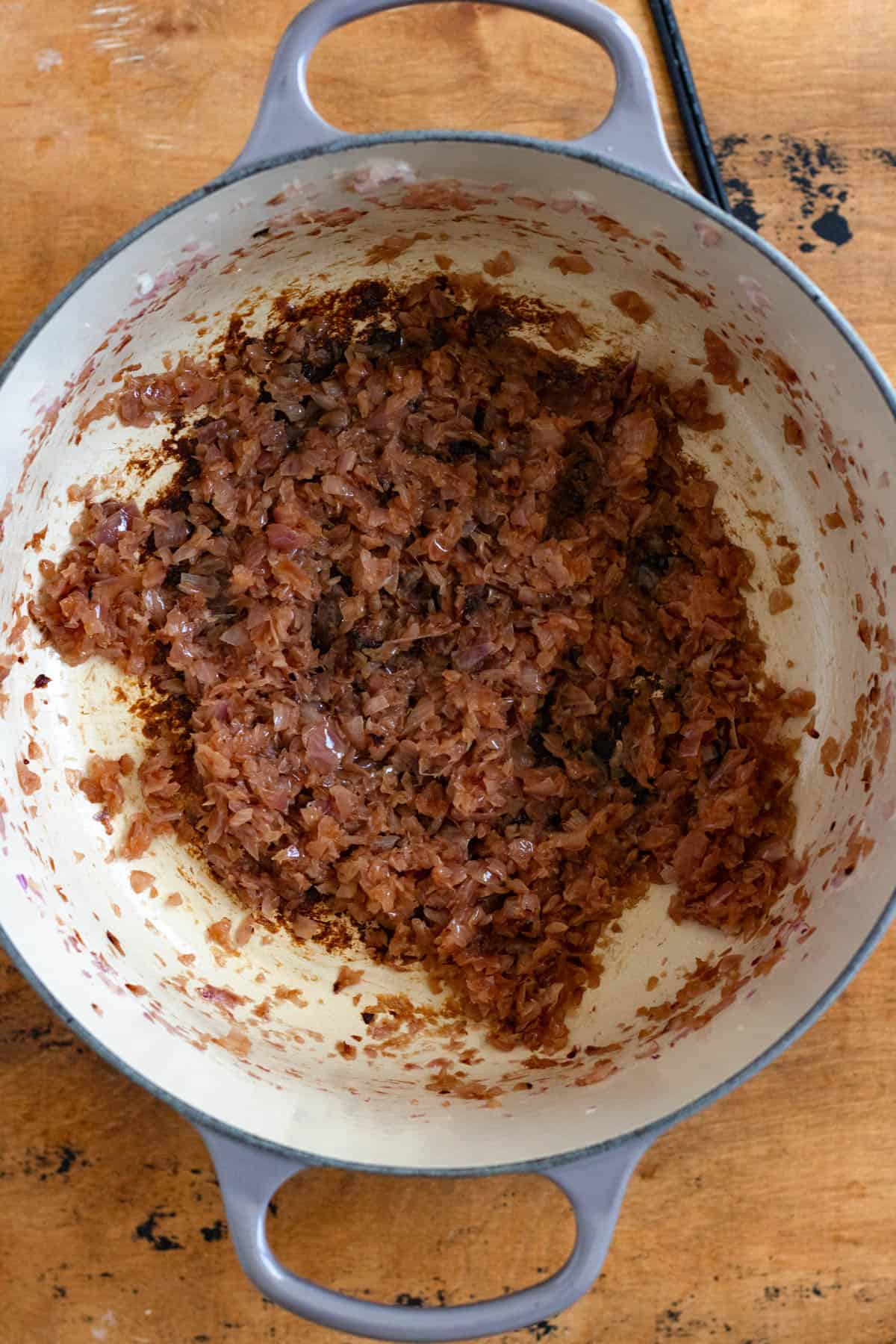
Step Two: Cook the onions in your dutch oven for 30-45 minutes until caramelized.
Step Three: Add your vegetable oil, ginger paste, garlic paste and tomato paste to the onions and stir.
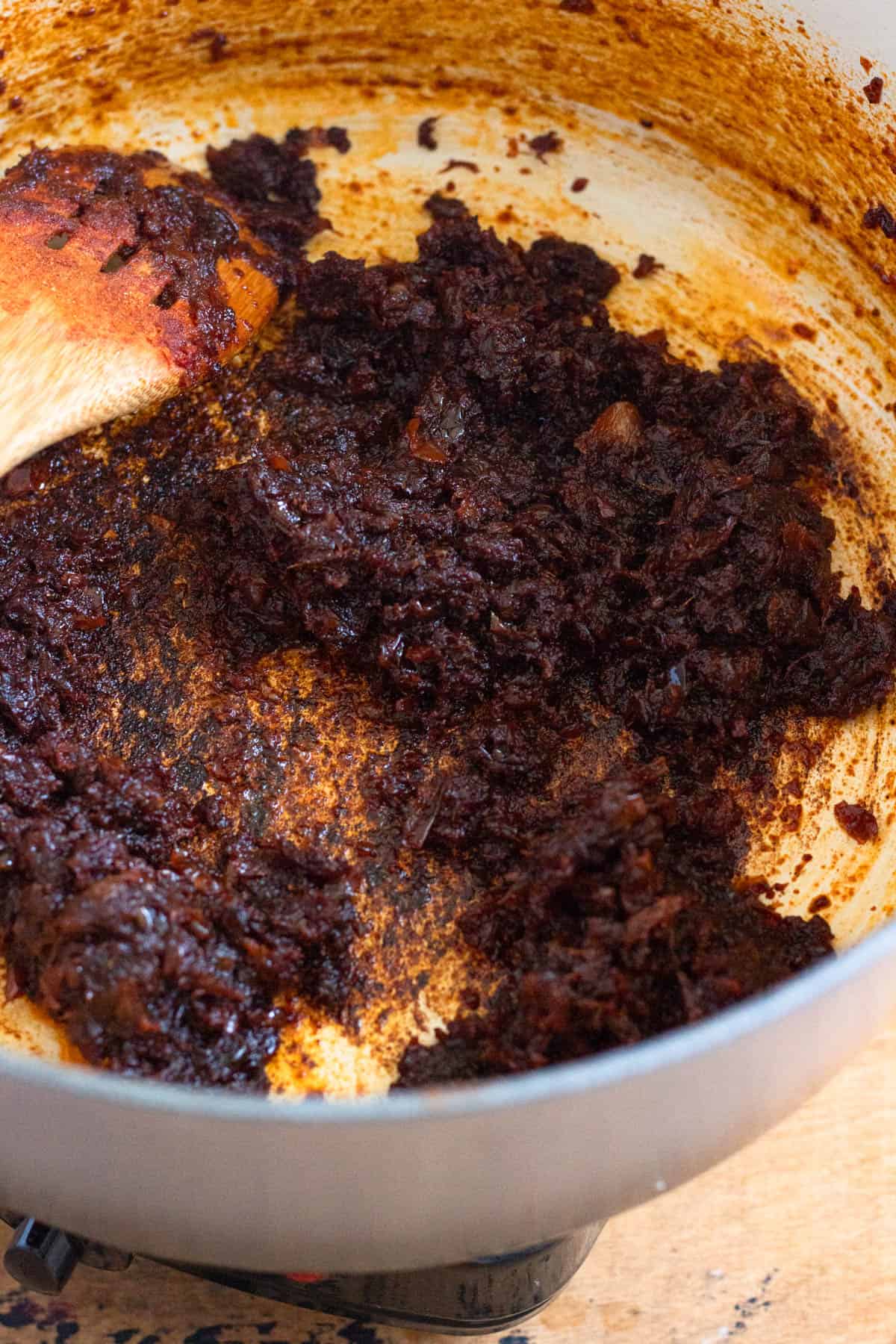
Step Four: Add your berbere seasoning, cardamom and ghee and stir again.
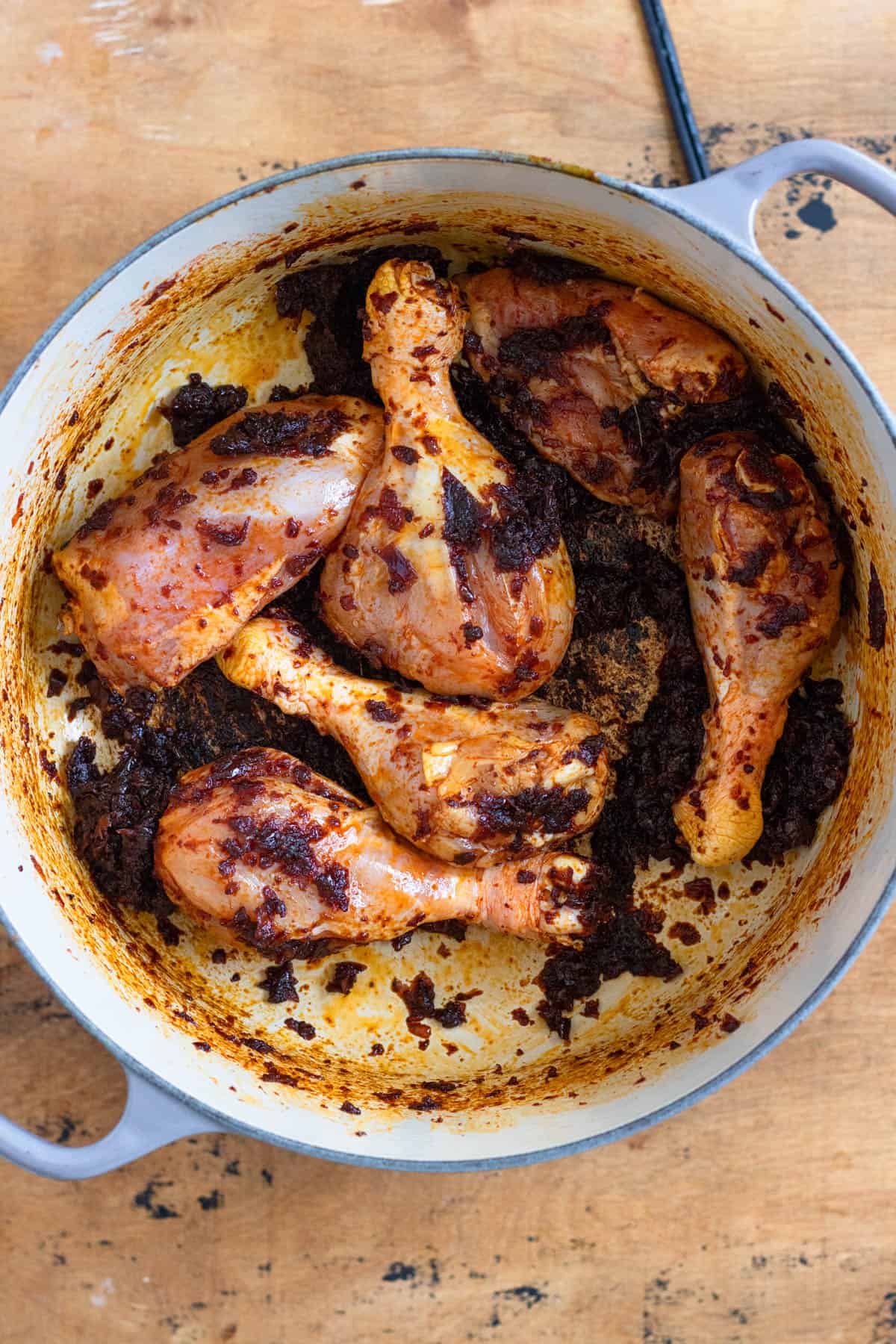
Step Five: Cut a slice into each piece of chicken and add them to the pot. Stir to coat the chicken in the onion mixture.
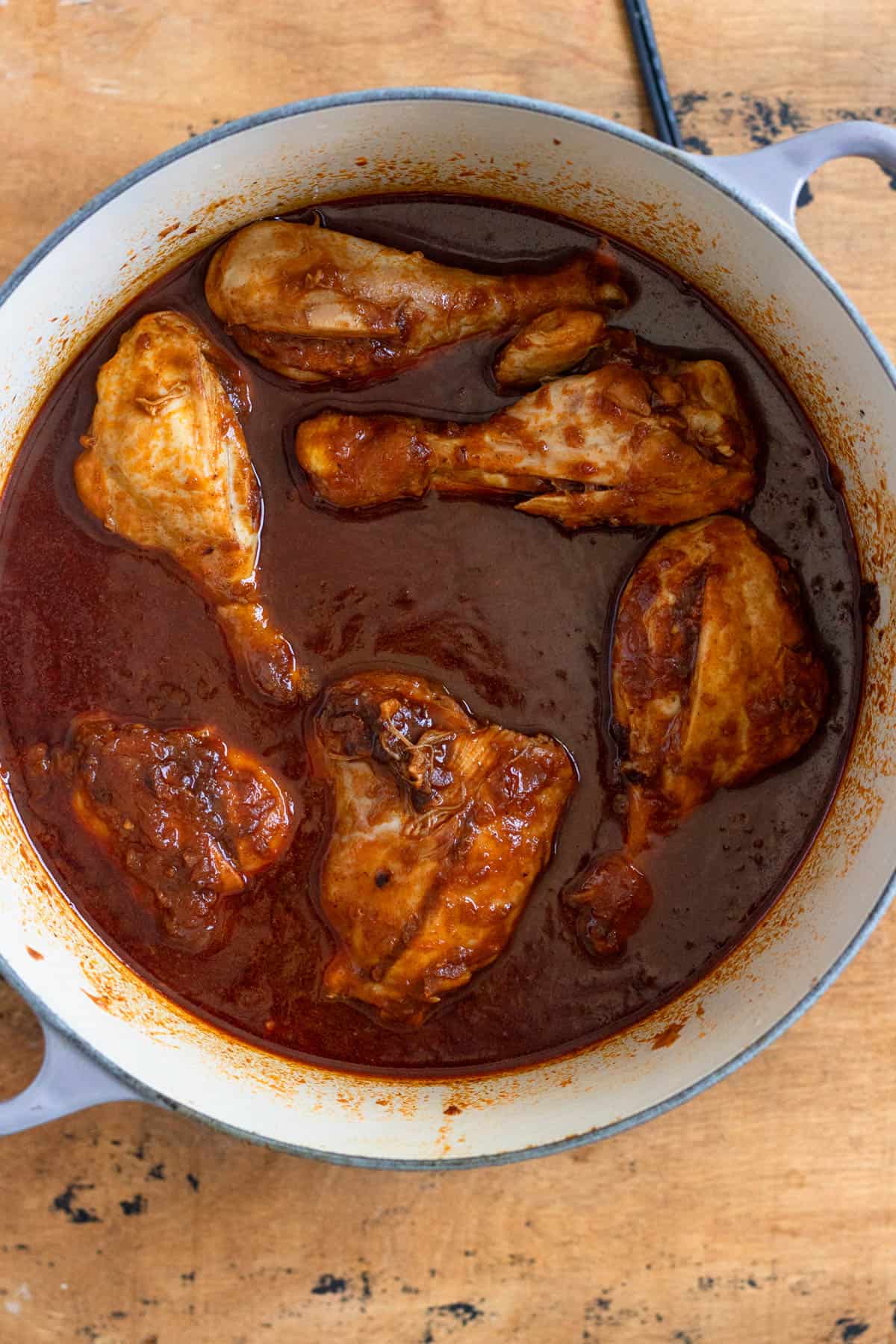
Step Six: Add the chicken broth and place a lid on the pot to simmer for about 60 minutes.
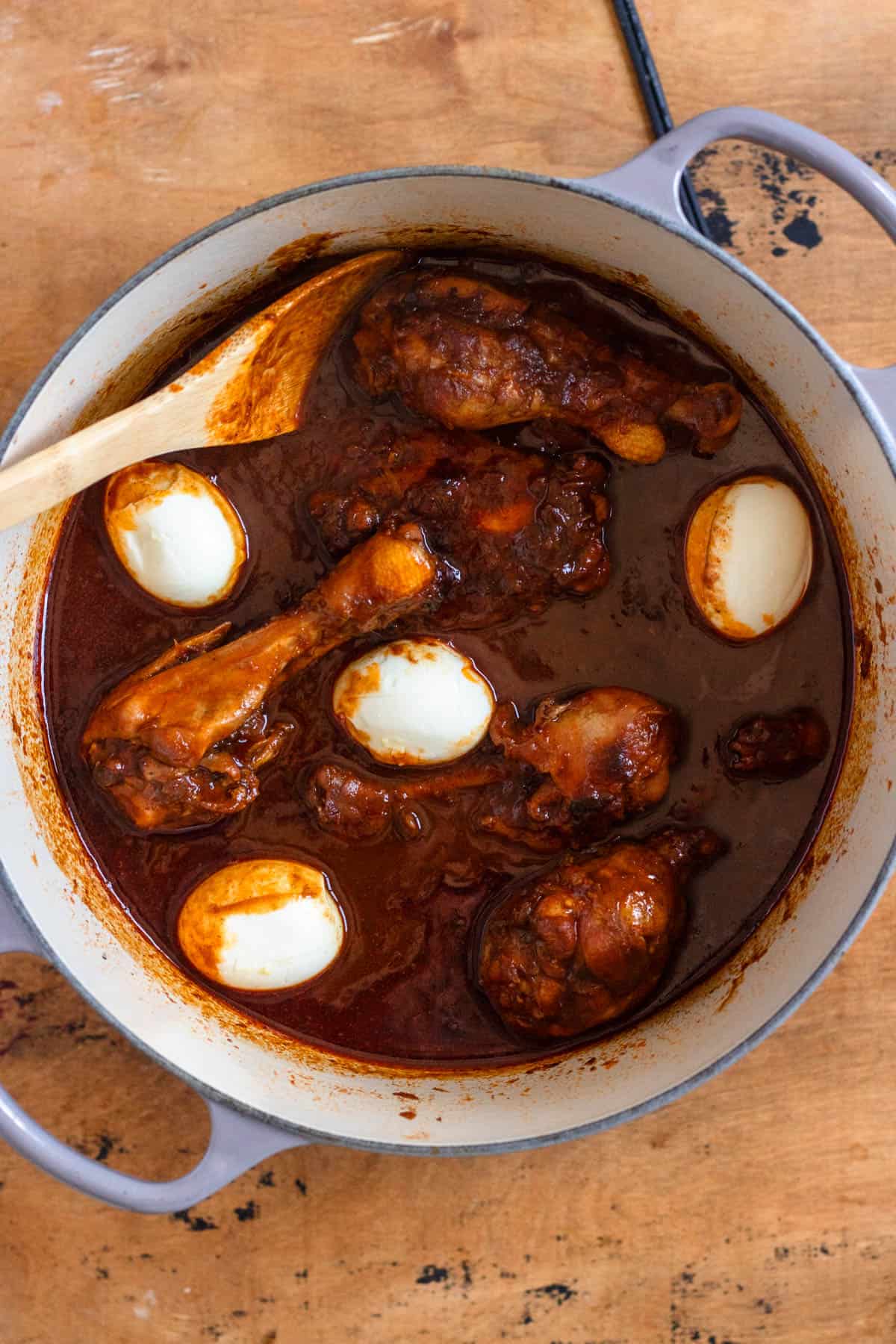
Step Seven: Cut a slice into each hard boiled egg and add them to the pot to cook for another five minutes.
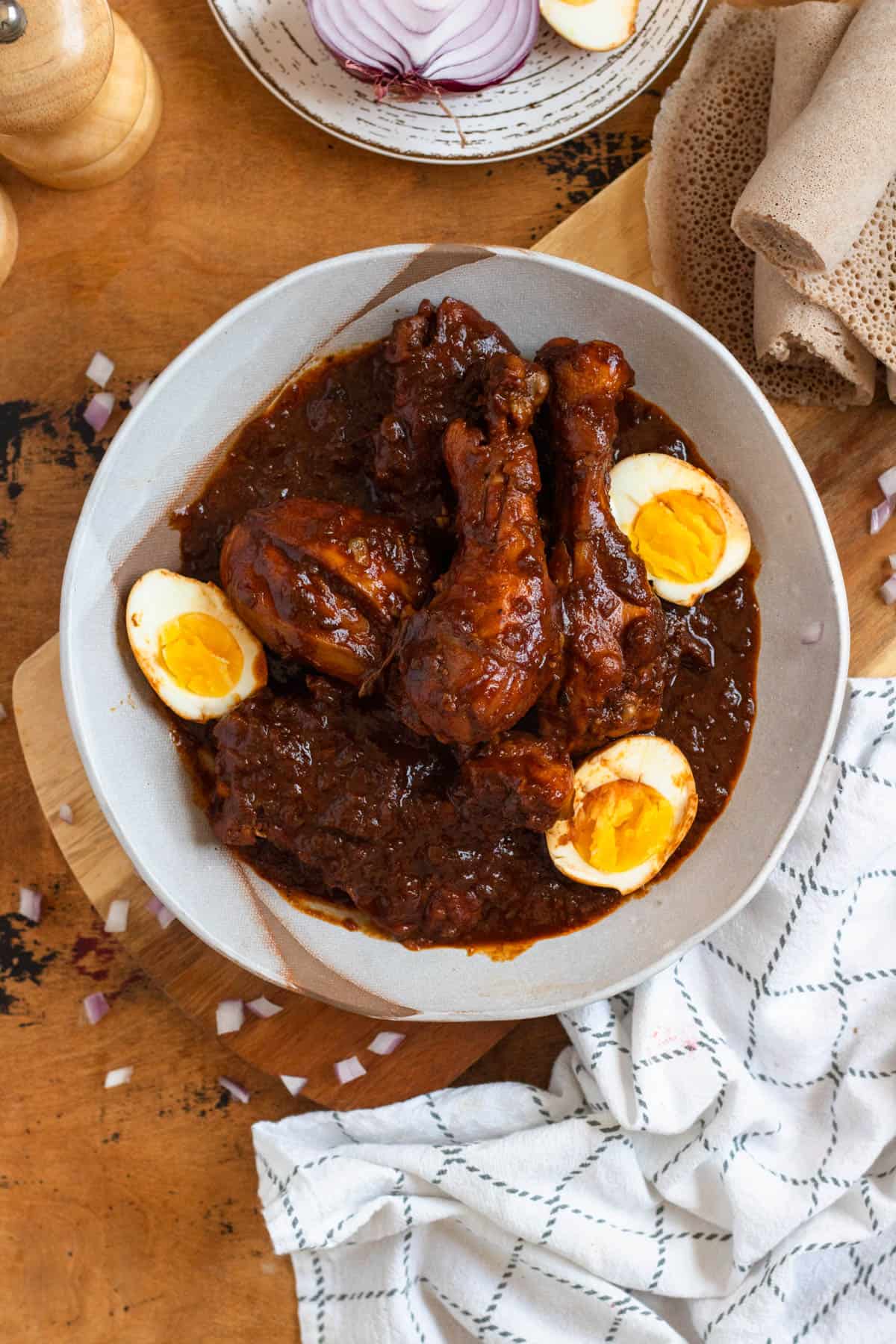
Step 8: Serve with injera and enjoy!
Expert Tips
- I cooked my onions for about 20 minutes without any oil before they started to burn. At this point, add some oil to keep your onions caramelizing instead of burning. The onions should look deep golden brown, almost jammy, when they are ready.
- Feel free to add more broth at the end if you prefer a thinner Doro Wat. If you want your sauce thick, leave the lid off for the last five minutes of cooking.
- If you want to hard boil the eggs in the Instant Pot instead of boiling them, you can definitely do this! I follow the 5-5-5 method, which is 5 minutes on HIGH pressure, 5 minute Natural Release, and 5 minutes in an ice cold bath.
- Wash your chicken with water, lime and salt before cooking to clean it thoroughly. This is a method that can also be found in my Haitian Griot recipe!
- The slices in the chicken and eggs allow for the spices to sink in deeper, giving each bite more flavor!
- Your chicken should be fully cooked after about 20 minutes but the longer it stews the more tender and flavorful it becomes!
Recipe FAQs
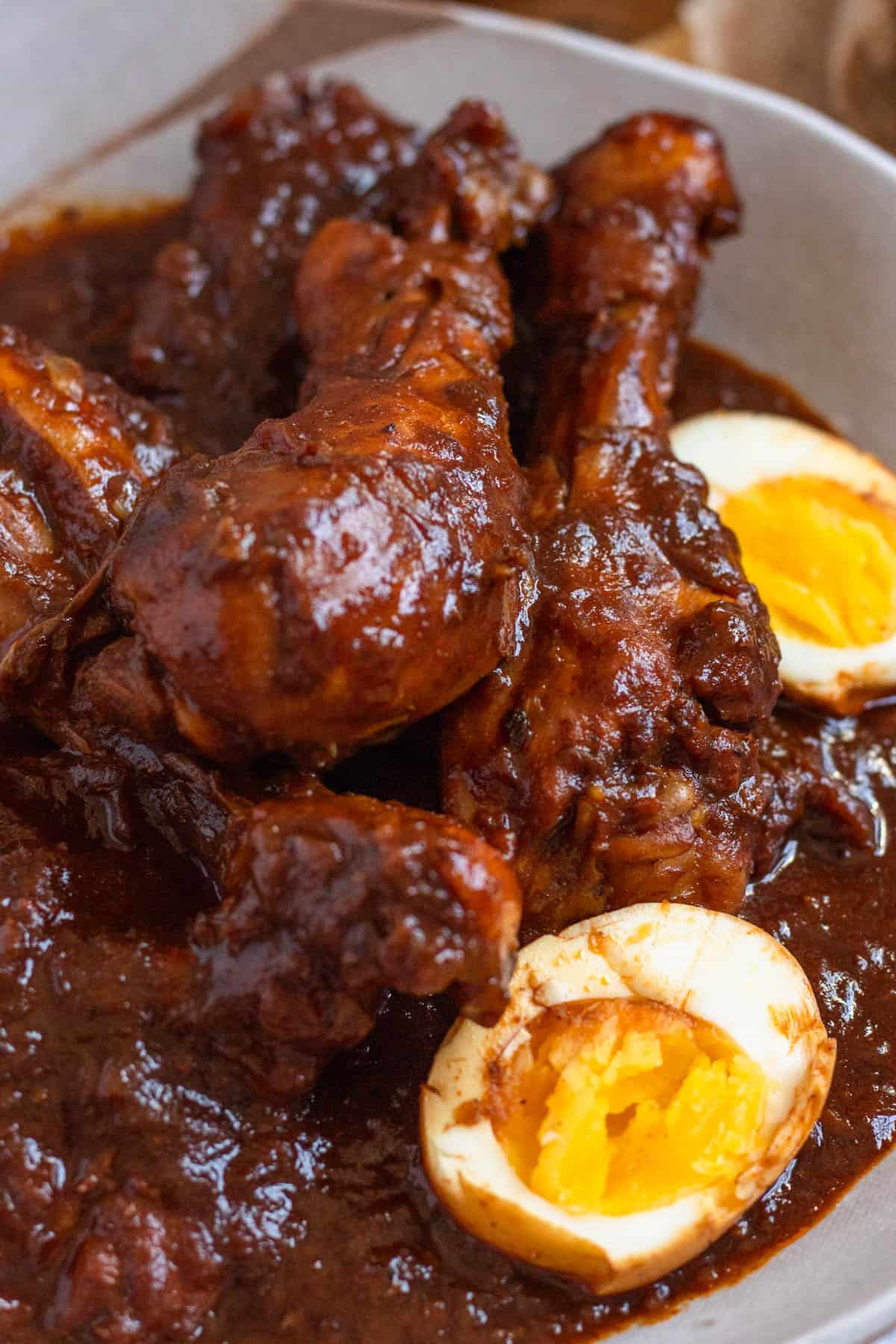
Traditionally, Doro Wat is made with a good amount of berbere, which is spicy. If spice is not your thing, you can still enjoy this dish. I would recommend making your own Berbere and adjusting to a spice level you’re comfortable with.
Hard-boiled eggs are simmered in the stew to soak up the flavors and serve as a hearty addition. They are a signature part of the dish and are considered a treat.
Yes! Like many stews, this recipe tastes even better the next day as the flavors deepen. It stores well in the refrigerator for several days and also freezes nicely.
Did you enjoy this Doro Wat Recipe from Ethiopia? If so, make sure to check out these other recipes I know you’ll love:
- Fata (Spicy Tomato Sauce and Bread) from Eritrea
- Dabo Kolo (Spicy Snack Bites) from Democratic Republic of the Congo
- Beet and Potato Salad from Ethiopia
- Pakistani Chicken Karahi
If you tried this Doro Wat Recipe or any other recipe on my website, please leave a 🌟 star rating and let me know how it went in the 📝 comments below!
Doro Wat from Ethiopia
Ingredients
- 4 red onions, finely chopped
- ¼ cup vegetable oil
- 1 Tbsp Garlic paste
- 1 Tbsp Ginger paste
- 3 tbsp tomato paste
- 1 tsp cardamom
- 1 tsp salt, more or less to taste
- 3-4 tbsp berbere, depending on how spicy you want it
- 3 tbsp ghee or Niter Kibbeh
- 2 lbs chicken , all cuts, bone in, skin removed
- 2 cups chicken broth
- 4 hard boiled eggs, with little slices cut into the whites
Instructions
- In a large pot or dutch oven, add the 4 red onions (do not add oil etc to the pot), and stir for 30-45 minutes until the onions are soft, dark brown, and caramelized. Start off by cooking the onions without any oil, but if halfway through they are starting to burn, you can add 2 Tbsp of the ¼ cup vegetable oil into the pot early.
- After the onions are dark, add the remaining vegetable oil, 1 Tbsp Garlic paste, 1 Tbsp Ginger paste, and 3 tbsp tomato paste and cook for another 5 minutes.
- Add the 1 tsp salt, 3-4 tbsp berbere, and 1 tsp cardamom and 3 tbsp ghee or Niter Kibbeh. Stir for another 5 minutes.
- Cut one slice into each piece of 2 lbs chicken , then place it in the pot. Stir to coat the chicken in the onion and tomato combination.
- Add 2 cups chicken broth in with the chicken, cover, and simmer for about 60 minutes until the chicken is cooked through and the sauce has thickened to look more like a stew.
- Add 4 hard boiled eggs and cook for another 5 minutes. If you want a thinner Doro Wat, you can add some water to the pot, and if you want it a little thicker, you can cook these last few minutes with no lid.
- Serve with injera and enjoy!
Video
Notes
- Red Onions: Feel free to add plenty more red onions in accordance with your taste. Some Doro Wat recipes use up to 3-5 kilograms of red onions for one stew.
- Garlic paste + Ginger paste: You can make this yourself by placing fresh garlic and fresh ginger in a food processor and pulsing into smooth. However, if you want less dishes, using the store-packaged stuff will work.
- Cardamom: Some Ethiopian recipes call for cardamom and some do not. Feel free to leave out if you prefer.
- Berbere: Berbere is a spice mix popular in Ethiopian cuisine, made with cumin, cayenne, paprika, nutmeg, ginger, and allspice. You can buy Berbere online, or make your own.
- Ghee or Niter Kibbeh: Niter Kibbeh is an Ethiopian ghee that is spiced with flavors like cumin, cinnamon, and cardamom. You can buy Niter Kibbeh online, or make your own Niter Kibbeh in the Instant Pot.
- Chicken: All cuts, bone in, skin removed. I used 2 pounds of a fully jointed chicken with the bones in, including thighs, breasts, & drumsticks. I discarded the chicken wings, as I didn’t want to overcook them but you can keep them if you prefer. For juicier, more flavorful cuts, use dark meat like thighs and legs. For cheaper, thicker cuts, use chicken breast.
- Tomato Paste: Tomato paste is not a common ingredient in Ethiopia, but it is a very common ingredient in Eritrea! Ethiopians have likened it to using cream in a carbonara recipe… It’s not the original way, but it’s common enough in some areas that it has become a valid way to make the dish! Feel free to omit it if you’d prefer.
- I cooked my onions for about 20 minutes without any oil before they started to burn. At this point, add some oil to keep your onions caramelizing instead of burning. The onions should look a deep golden brown, almost jammy, when they are ready.
- Feel free to add more broth at the end if you prefer a thinner Doro Wat. If you want your sauce thick, leave the lid off for the last five minutes of cooking.
- If you want to hard boil the eggs in the Instant Pot instead of boiling them, you can definitely do this! I follow the 5-5-5 method, which is 5 minutes on HIGH pressure, 5 minute Natural Release, and 5 minutes in an ice cold bath.
- Wash your chicken with water, lime and salt before cooking to clean it thoroughly. This is a method that can also be found in my Haitian Griot recipe!
- The slices in the chicken and eggs allow for the spices to sink in deeper, giving each bite more flavor!
- Your chicken should be fully cooked after about 20 minutes but the longer it stews the more tender and flavorful it becomes!
Nutrition
Recipe Origins
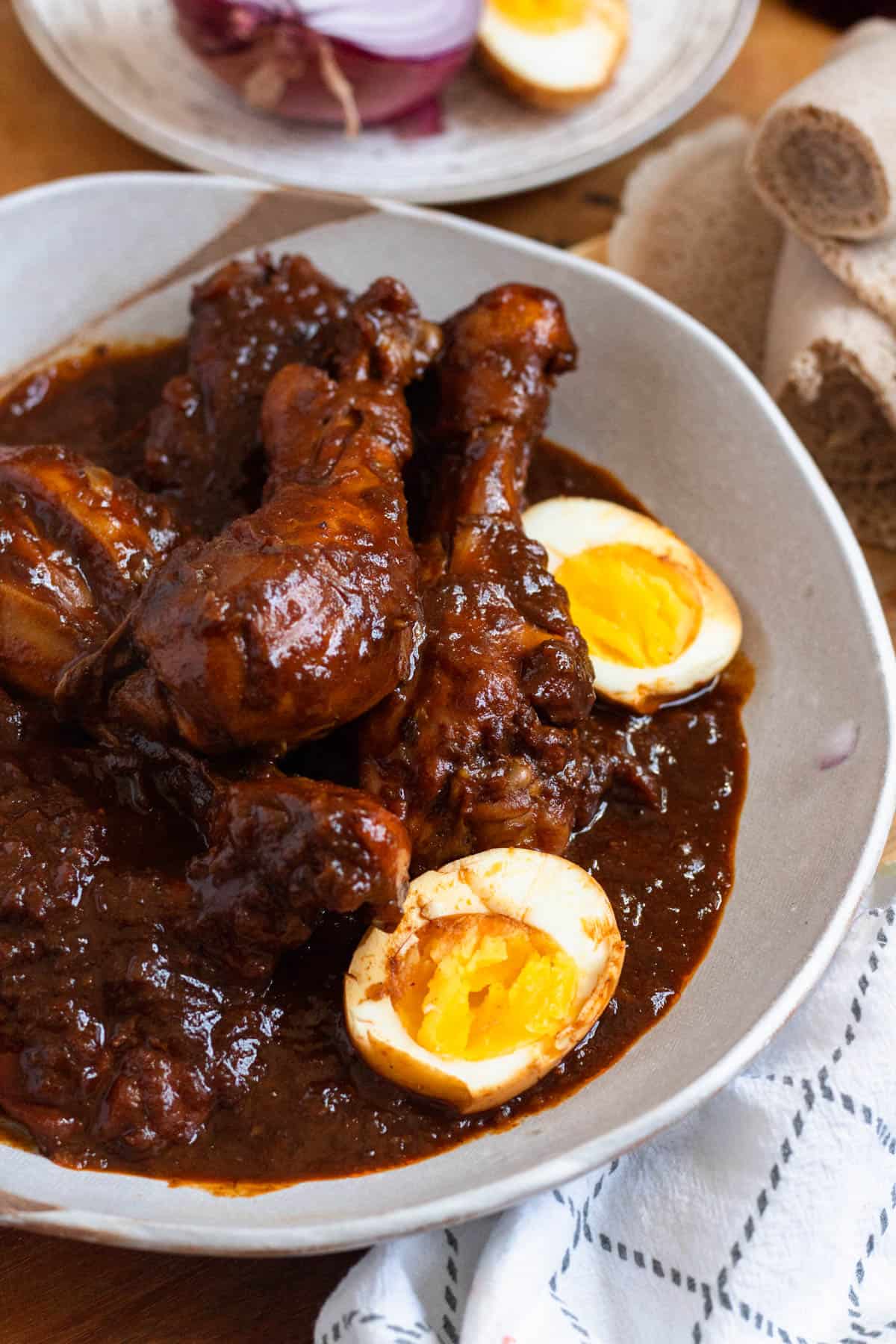
Doro Wat is a popular recipe in Ethiopian cuisine, and, even if not officially, basically the national dish of Ethiopia. Doro means “chicken”, and Wat means “stew” (or sometimes you can see it meaning “curry”).
Slow cooked and heavily spiced dishes like Doro Wat are popular in Ethiopian cuisine, but this recipe does a particularly excellent job of showcasing Ethiopia’s significant history in spice trade. The star of the show, Berbere, is a unique Ethiopian blend that varies from region to region. It has also been shared from region to region and around the world, and finally found its way into my kitchen! I loved it! Typically, it is eaten alongside injera, a flat, crepe-like food made with teff flour!
How Ethiopian Food is Served & Eaten
Ethiopian food is typically served on a large platter that is covered by Injera, a flat, crepe-like food made with teff flour.
Different sauces, vegetables, and prepared dishes are laid out on the injera platter with more injera being served on the side. Diners tear off pieces of injera and use it to scoop up the food on the platter.
According to this Toronto Star lesson, diners use only one hand to scoop up the food. Because you are sharing the food with many people, proper etiquette is to be careful not to get your fingers in the sauces and to never lick your fingers.


Leave a Reply