

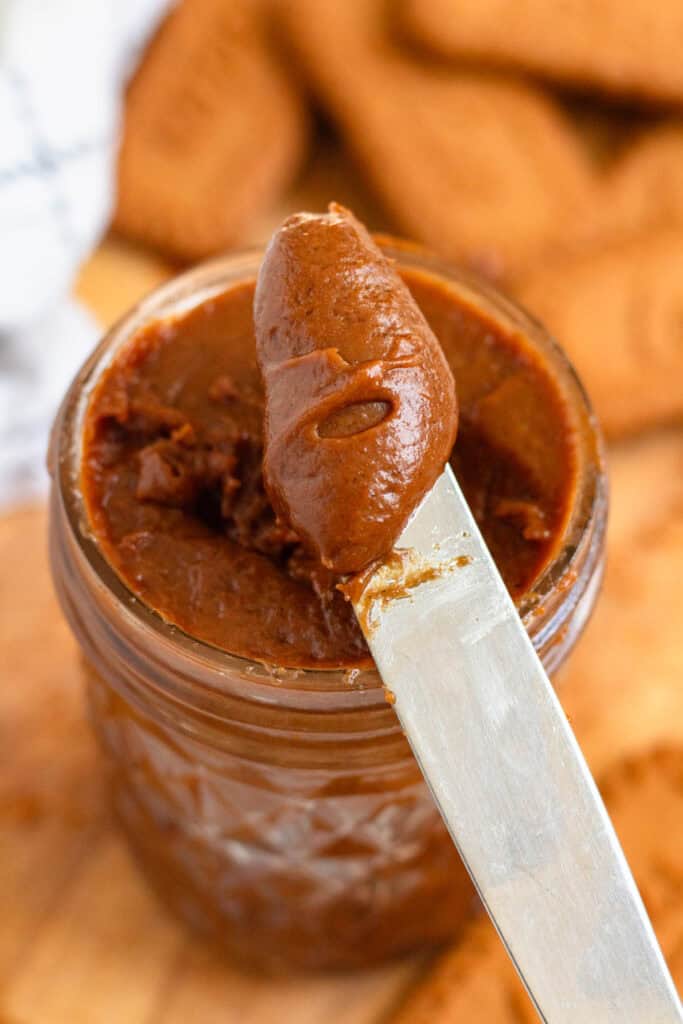
Cookie Butter is a delicious spread filled with warm spices and flavor. It’s the perfect spread to add some cozy comfort to any baked good or warm breakfast!
Hello Reader! I try my hardest to research recipes as best as I can before posting to ensure I am representing each culture correctly. If this recipe is from your country and I have made a mistake or you have suggestions for how to make it more authentic, I would love to hear! Please leave a comment below letting me know what should be different, and I will rework the recipe. It is always my intention to pay homage and respect to each cultural dish that I cook. Thanks for reading!
Cookie Butter is the ultimate indulgent spread. It tastes a little bit like cinnamon, a little bit like ginger and a little bit like Christmas magic. It’s everything you love about a crunchy Biscoff cookie in scoopable form.
It’s the perfect way to add a little luxury to toast, oatmeal, pancakes, crepes, waffles or even sliced apples and celery! It’s a simple little treat that can be enjoyed by the spoonful!
Recipe Origins
Cookie butter has its roots in Belgium, where it was inspired by the country’s beloved Speculoos cookies. These crisp, caramelized biscuits are traditionally baked during the winter holidays and date back to the 17th century. They were originally made to celebrate St. Nicholas Day, using a blend of warm spices like cinnamon, cloves, and ginger.
Why Make This Recipe
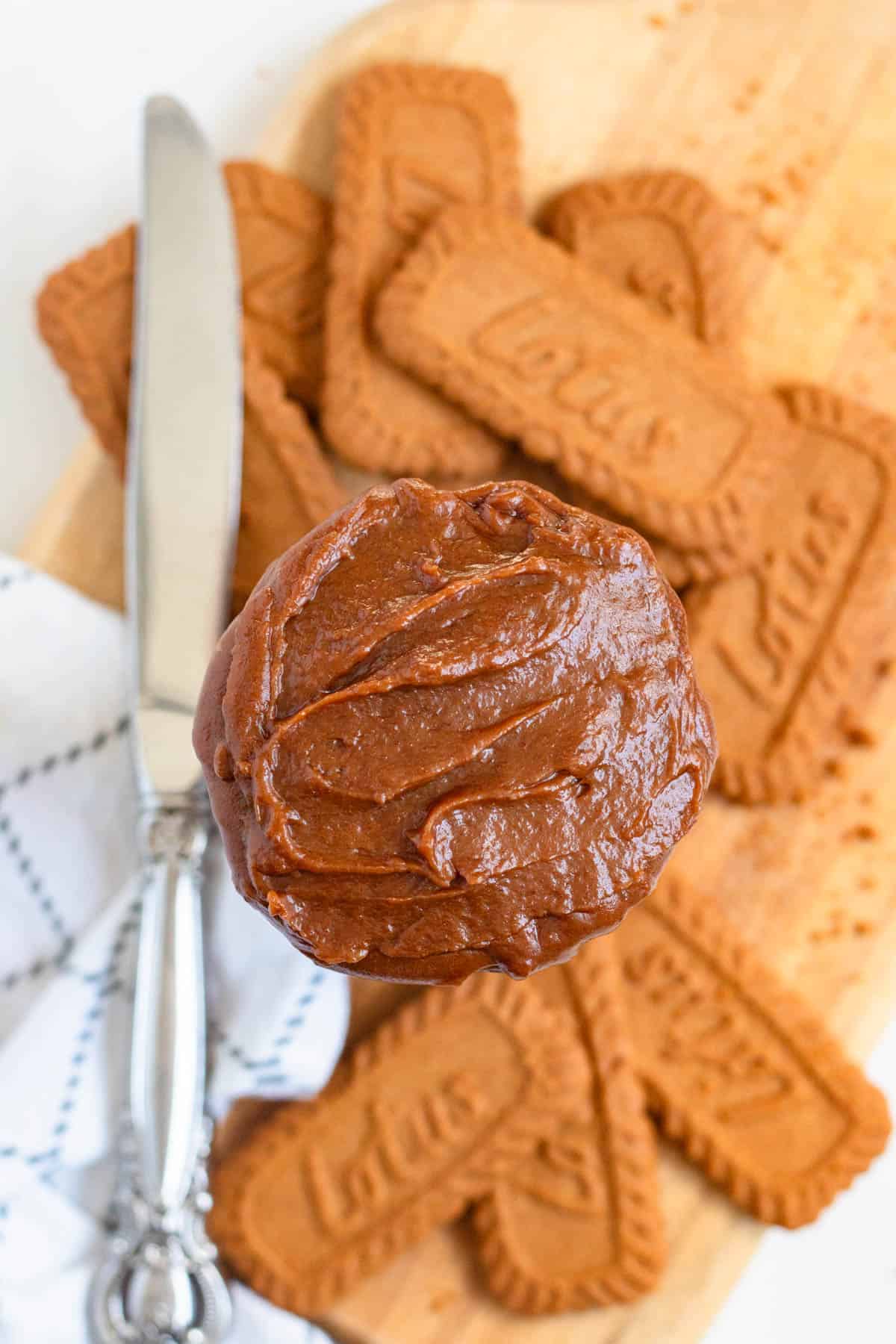
- Pure Comfort in a Jar: The warm, spiced flavor of Speculoos or Biscoff cookies makes this spread cozy and nostalgic and perfect for fall mornings or late-night treats.
- Versatile: Cookie butter isn’t just for spreading. You can use it in baking, stir it into ice cream, or fold it into frosting for a caramel-like depth of flavor. It’s the secret ingredient that makes any dessert unforgettable.
- Quick and Easy: You really just need a handful of ingredients to make your own version at home!
Key Ingredients for Cookie Butter
Here is a visual overview of the ingredients in the recipe. Scroll down to the recipe at the bottom for quantities.
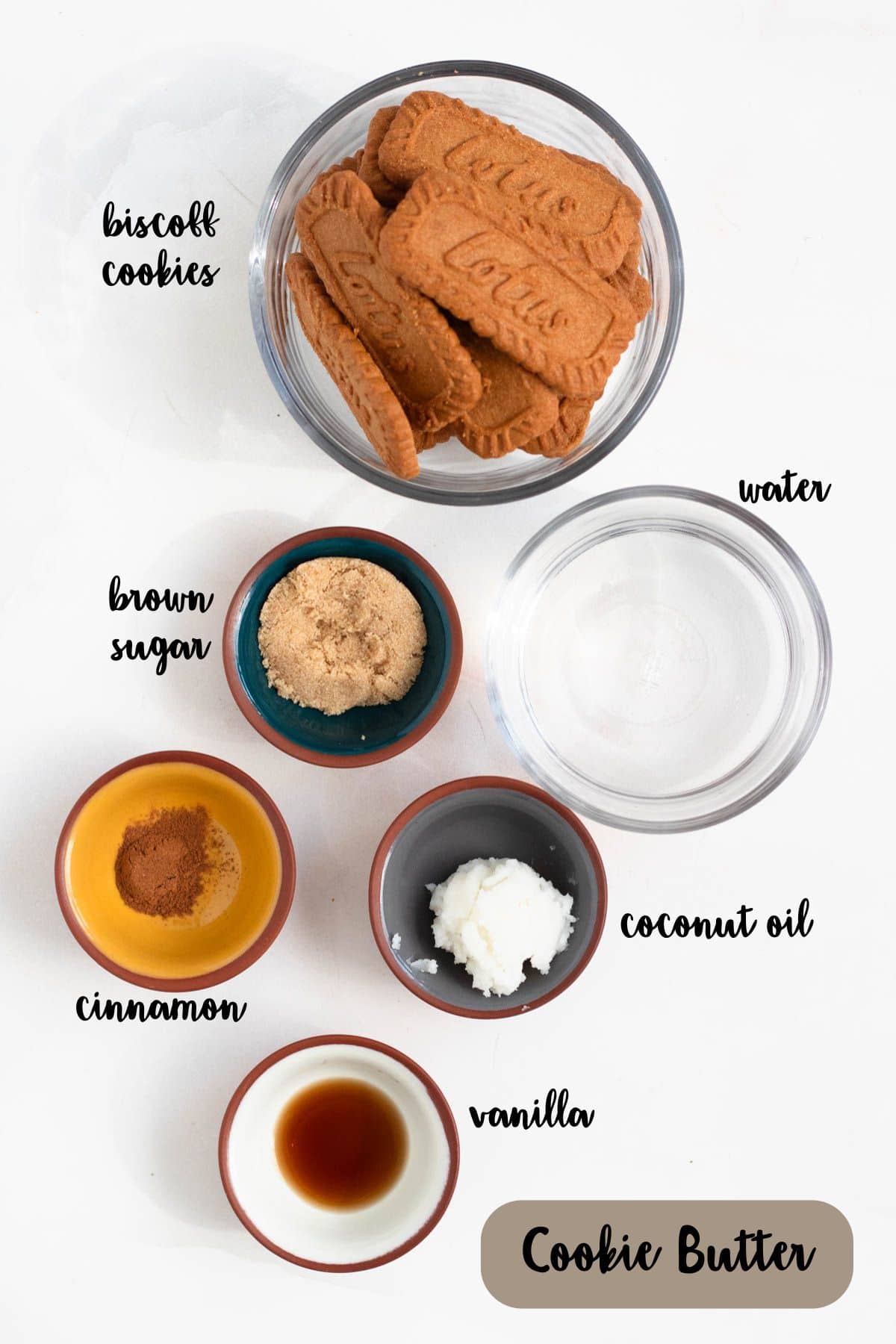
- Biscoff Cookies: You can use Biscoff cookies, Speculoos or any other crispy gingersnap cookies. I have tried this with freshly baked or stale homemade cookies, but the texture is more mushy than I prefer.
- Coconut Oil: Coconut oil in its solid form provides just the right amount of moisture to help the cookies blend and also keep that smooth texture.
- Boiling Water: To help the cookies break down into creamy perfection. This piece is key as it gets the cookies thin enough to make a spreadable “butter”.
Tools
- Food Processor or Blender: I recommend using a food processor for this recipe since you want your finished product to be smooth and spreadable.
How to Make Cookie Butter
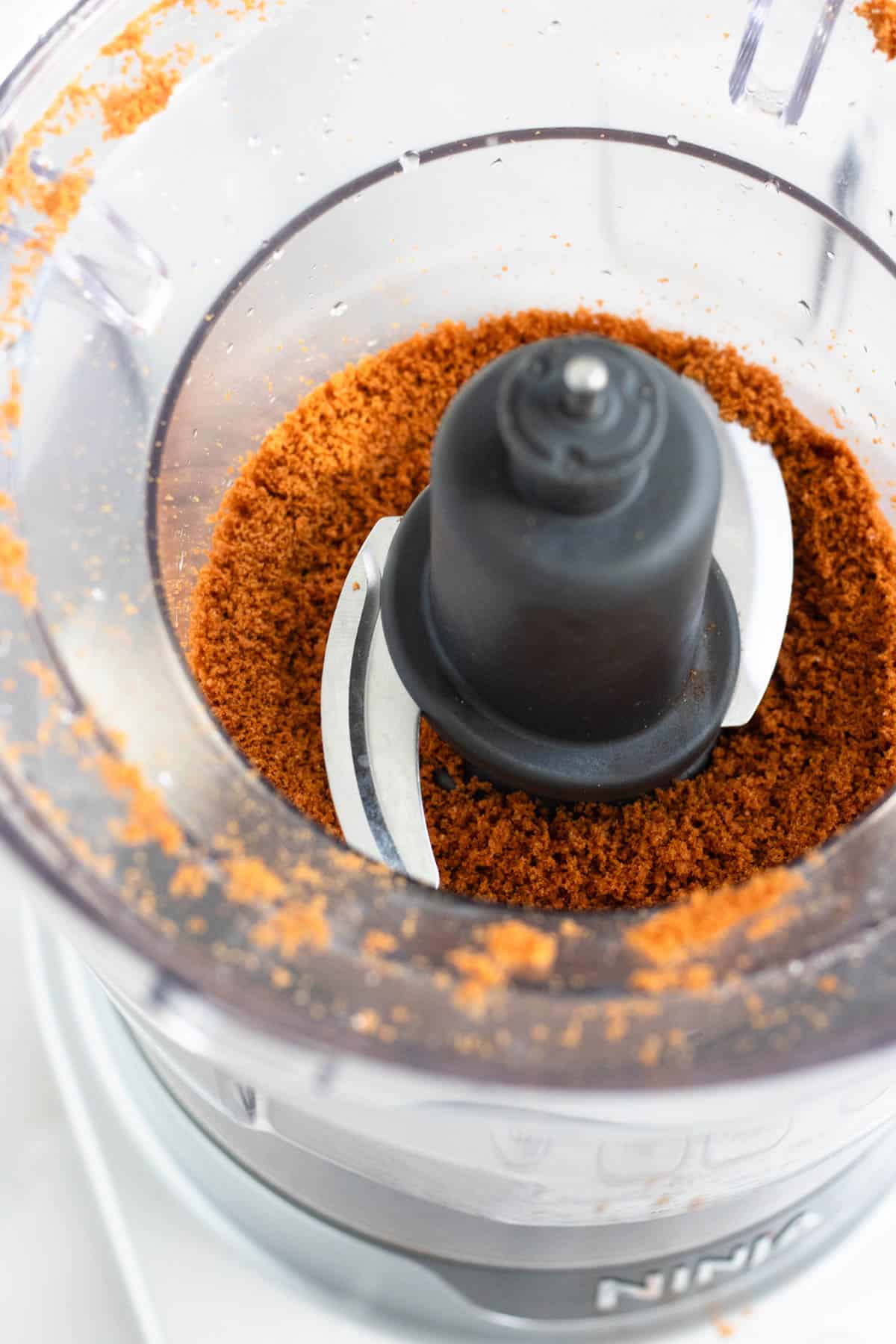
Step One: Pulse the cookies in a food processor until they become very fine crumbs.
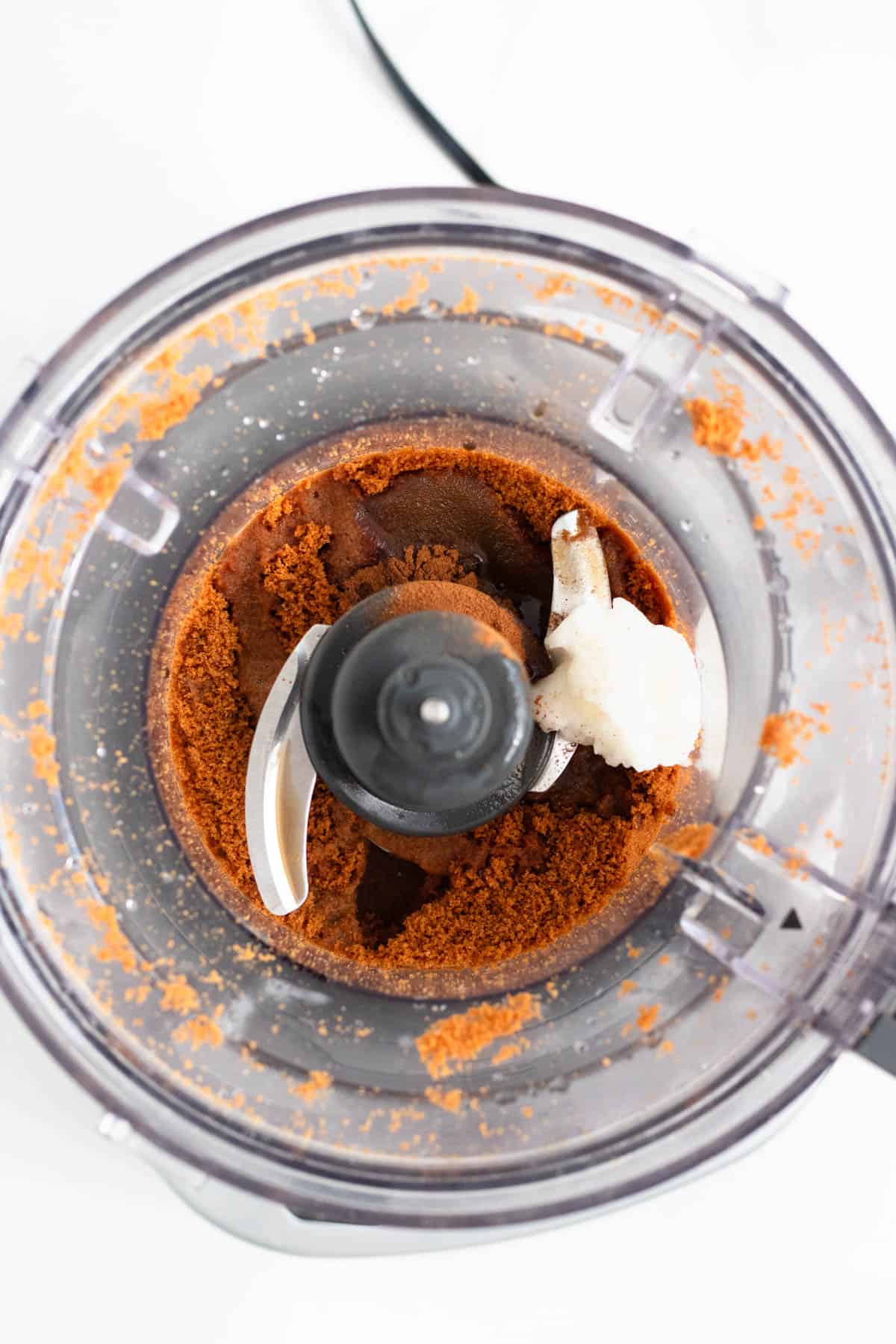
Step Two: Add the vanilla, coconut oil, and brown sugar into the crumbs and about half of the boiling water. Blend.
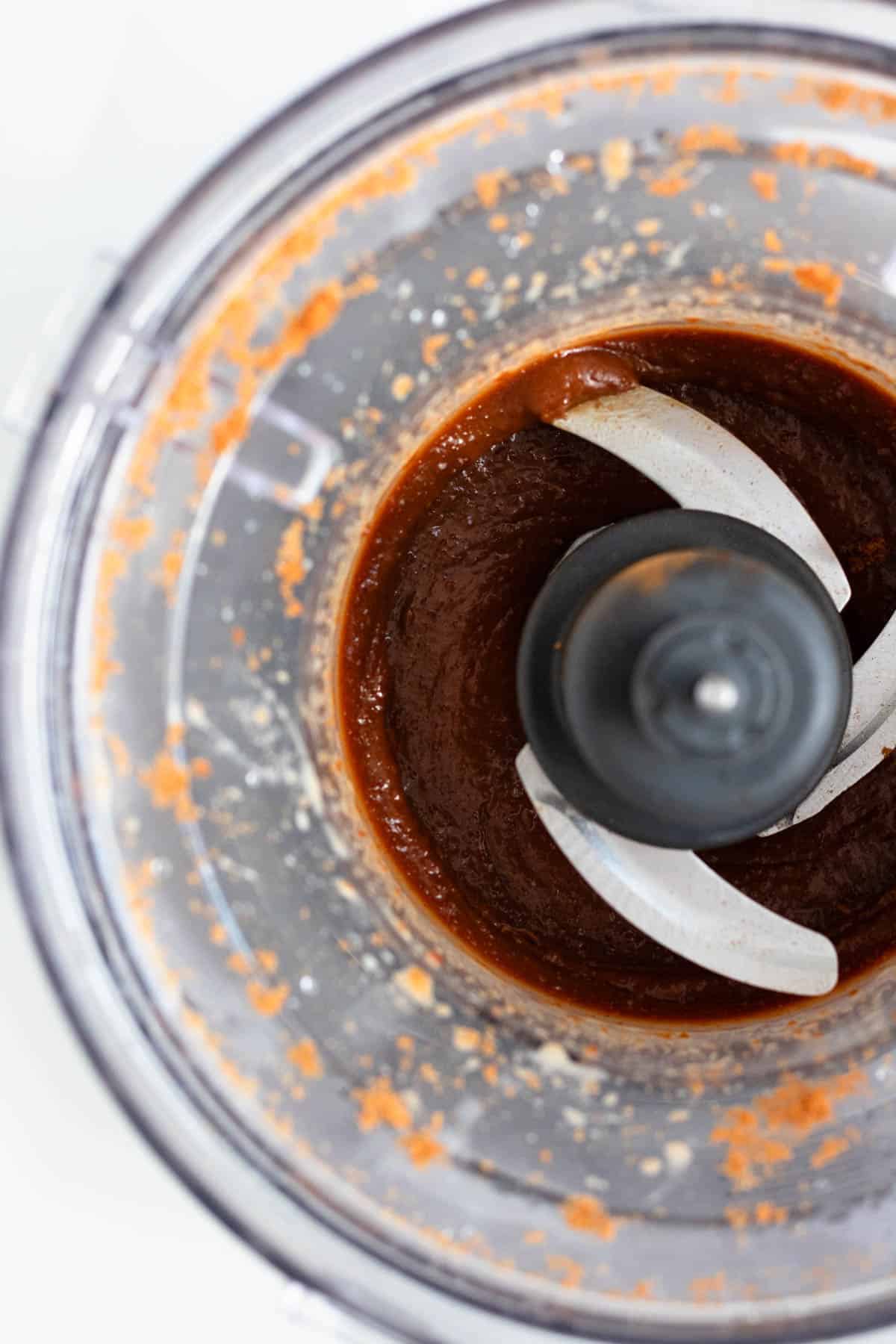
Step Three: Continue adding the boiling water one tablespoon at a time until it reaches your desired consistency.
Expert Tips
- The cookie butter will thicken as it cools, so it’s a good idea to add 1 or 2 tablespoons more water than you think you need.
- I tried this recipe with some heavy cream but found it didn’t break the cookies down as well as the water did. It also had a more mild cinnamon flavor, as the cream distracted from the taste.
Recipe FAQs
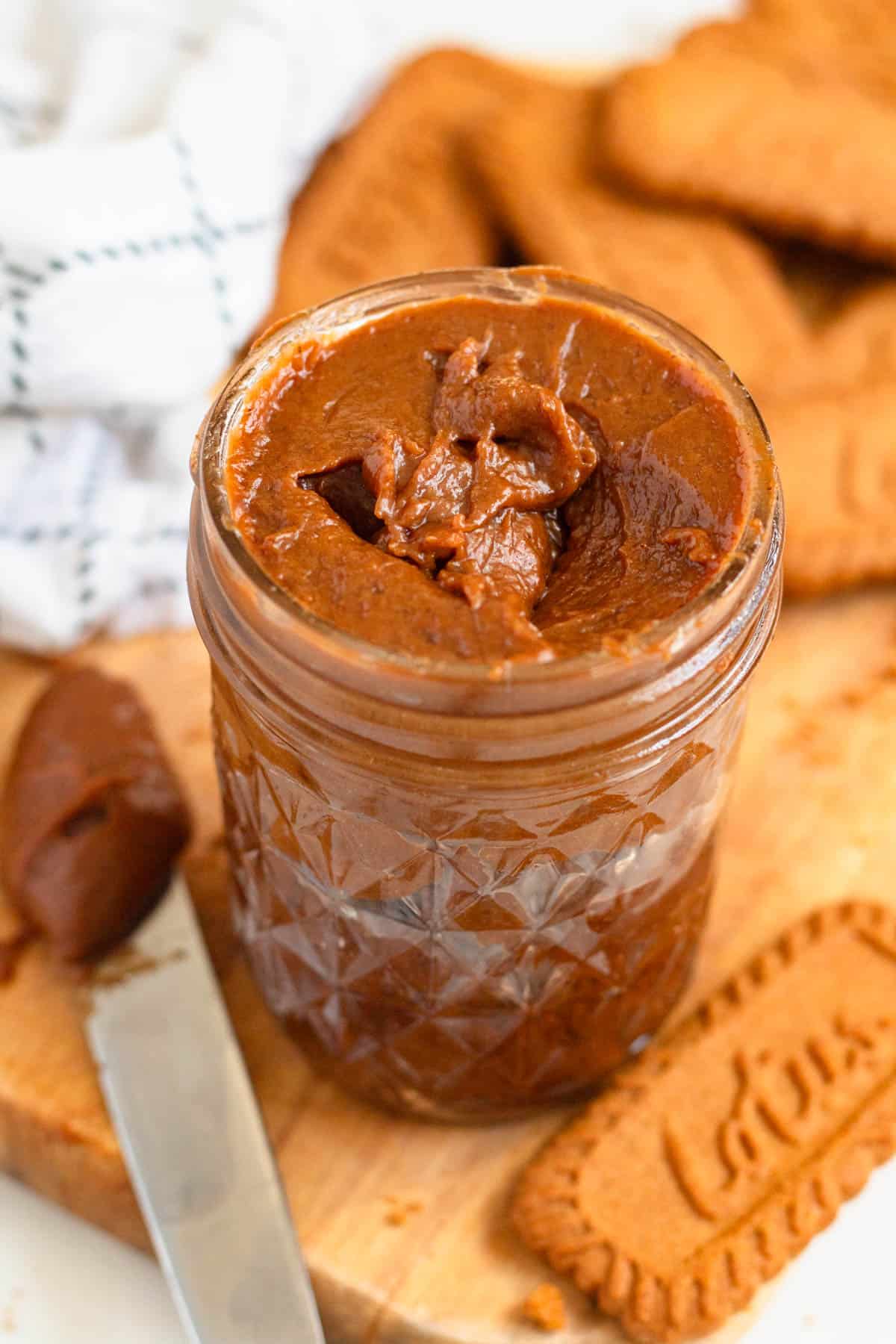
Store this homemade cookie butter in an airtight container in the refrigerator and it should stay good for up to two weeks. Give it a little stir before using! If you properly jar/can it, it can stay good for much longer, even months or a year! To do this, follow this process.
If you have a high powered blender, it should work. Just be sure and pulse in short bursts so your blender doesn’t overheat. Making this recipe by mixing by hand would be very difficult to get the right texture.
A better question is what can’t you use it for. Cookie butter is delicious as a spread on pancakes, waffles or crepes. It’s also great mixed into yogurt or oatmeal. It also makes a great dip for fruit, crackers, pretzels or even carrots and celery. You can also add a spoonful to baked goods, milkshakes or frosting for added flavor.
Yes, absolutely! Cookie butter is made to be eaten right out of the jar. It is made by grinding fully cooked cookies into a creamy texture. There is no risk to eating cookie butter raw.
Did you enjoy this recipe for Cookie butter? If so, check out these other cookie recipes I’ve selected just for you:
If you tried this Homemade Cookie Butter Recipe or any other recipe on my website, please leave a 🌟 star rating and let me know how it went in the 📝 comments below!
Cookie Butter
Equipment
- Food Processor/Blender
Ingredients
- 9 oz Biscoff Cookies, or other crispy gingersnap cookies
- 1 tsp vanilla
- 2 tbsp coconut oil, in its solid form
- 2 tbsp light brown sugar
- 10 tbsp boiling water
- ½ tsp cinnamon
Instructions
- Pulse 9 oz Biscoff Cookies in a food processor or blender until very fine crumbs are created.
- Add 1 tsp vanilla, 2 tbsp coconut oil, and 2 tbsp light brown sugar into the crumbs and about 5 tbsp of the boiling water.
- Blend the cookie butter together. At this point it will be pretty thick.
- Add the remaining 5 tbsp boiling water one tablespoon at a time, blending between each addition until your desired consistency is reached. Make the cookie butter a little thinner than you’d like it because it thickens as it cools. Serve and enjoy!
Video
Notes
- Biscoff Cookies: You can use Biscoff cookies, Speculoos or any other crispy gingersnap cookies. I have tried this with freshly baked or stale homemade cookies, but the texture is more mushy than I prefer.
- The cookie butter will thicken as it cools, so it’s a good idea to add 1 or 2 tablespoons more water than you think you need.
- I tried this recipe with some heavy cream but found it didn’t break the cookies down as well as the water did. It also had a more mild cinnamon flavor, as the cream distracted from the taste.





Leave a Reply