

Maldives Country Introduction and Recipes
Fun Facts
-
The Maldives is made up of 1,192 coral islands grouped into 26 atolls, scattered across the Indian Ocean.
-
It’s the lowest-lying country in the world, with an average ground level of just 1.5 meters (5 feet) above sea level.
-
The Maldives is famous for its crystal-clear turquoise waters, white sandy beaches, and luxury overwater villas.
-
The nation’s economy relies heavily on tourism and fishing.
-
The Maldives is about 99% water and 1% land, making it one of the most ocean-dependent countries on Earth.
About the Flag
The Maldivian flag features a red background with a large green rectangle in the center and a white crescent moon in the middle of the green field.
-
Red symbolizes the courage and sacrifice of national heroes.
-
Green represents peace, prosperity, and the country’s palm-filled islands.
-
The white crescent moon signifies Islam, the state religion and a central part of Maldivian life.
Influence on the Food
Maldivian cuisine — known locally as Dhivehi cuisine — is shaped by the country’s geography and history as a crossroads for South Asian, Arab, and East African traders.
-
With limited farmland, the diet relies heavily on the sea and coconut palms.
-
Over centuries, trade brought in spices, rice, and curries, leading to flavorful dishes influenced by India and Sri Lanka while maintaining distinct local touches.
Flavors of the Food
Maldivian food is fresh, spicy, and coconut-rich:
-
The main ingredients are fish (especially tuna), coconut, rice, and chilies.
-
Curry flavors dominate, often featuring blends of turmeric, cumin, coriander, and cardamom.
-
Coconut is used in every form — grated, milked, or as oil — to add richness.
-
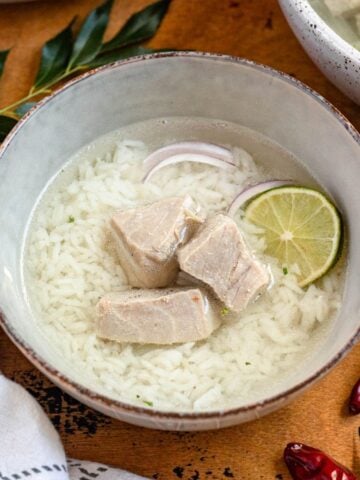
Dishes like mas huni (a mix of tuna, coconut, onion, and chili served with flatbread) and garudhiya (fish soup) are daily staples.
Food Culture
Food in the Maldives reflects a deep connection to the ocean and community life.
-
Meals are simple but shared with warmth and generosity.
-
Freshly caught fish is celebrated, and cooking methods are passed down through generations.
-
Tea time, often with sweet or savory snacks like bajiya (pastry filled with tuna and coconut), is an important social ritual.
-
The influence of Islamic culture means meals are often shared after prayer, and special foods are prepared during Ramadan and Eid.
Dining Style
Maldivian dining is relaxed and communal:
-
Meals are often eaten family-style, with shared platters served on mats.
-
Hands are traditionally used for eating, especially in local homes, though utensils are common in modern settings.
-
Rice, flatbreads, and curries are central to every meal.
-
While resort dining tends to be international, traditional meals emphasize freshness, simplicity, and togetherness — the essence of Maldivian hospitality.