

Madagascar Country Introduction and Recipes
Fun Facts
-
Madagascar is the fourth-largest island in the world, located off the southeast coast of Africa.
-
About 90% of its wildlife is found nowhere else on Earth, including lemurs and baobab trees.
-
The island split from mainland Africa over 160 million years ago, which helped create its unique ecosystem.
-
Malagasy culture is a blend of African, Southeast Asian, and Arab influences.
-
The country has 18 ethnic groups, each with its own traditions and customs.
About the Flag
Madagascar’s flag features two horizontal stripes of red and green on the right, with a vertical white stripe on the left.
-
White represents purity and loyalty.
-
Red symbolizes sovereignty and the blood of ancestors.
-
Green stands for hope and the island’s lush landscapes.
The colors reflect both the country’s history and its connection to the land.
Influence on the Food
Malagasy cuisine is shaped by the island’s unique position at the crossroads of cultures.
-
Southeast Asian influence shows up in rice-based meals and cooking techniques.
-
African traditions contribute hearty stews and local greens.
-
Arab and French influences introduced spices, bread, and new flavor pairings.
Rice is the foundation of almost every meal and is eaten multiple times a day.
Flavors of the Food
Food in Madagascar is comforting, aromatic, and gently spiced:
-
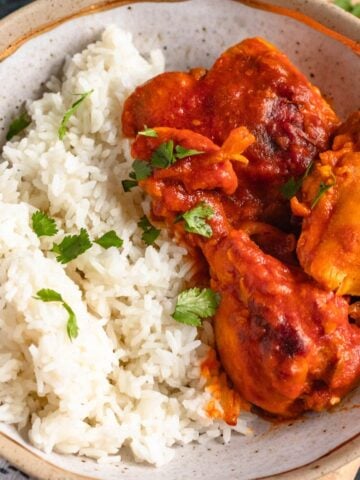
Rice is paired with flavorful accompaniments called laoka.
-
Tomatoes, onions, garlic, and ginger form the base of many dishes.
-
Coconut milk adds richness, especially in coastal regions.
-
Spices are used with restraint — flavors are layered but not overpowering.
-
Sweet and savory elements often coexist, especially with coconut or fruit-based dishes.
Food Culture
Food in Madagascar is deeply tied to family, tradition, and respect.
-
Meals are often shared and eaten together, reinforcing community bonds.
-
Cooking is practical and rooted in what’s locally available.
-
Many dishes are passed down through generations, reflecting both heritage and geography.
Hospitality is important, and guests are always offered food, even in modest homes.
Dining Style
Malagasy meals are typically simple and communal.
-
Food is often eaten with the hands, especially rice and stews.
-
Meals revolve around a central rice dish with one or more accompaniments.
-
Dining is relaxed, unhurried, and focused on togetherness rather than formality.
-
Eating together is seen as a sign of unity and mutual respect.