

• Skip to primary navigation
  • Skip to main content
  • Skip to primary sidebar
  • Skip to footer
The Foreign Fork logo
  • Home
  • Countries We’ve Cooked
  • Recipe Index
    • Search by Interactive Map
    • African Recipes
    • Asian Recipes
    • Caribbean Recipes
    • Central American Recipes
    • European Recipes
    • Middle Eastern Recipes
    • North American Recipes
    • Oceanic Recipes
    • South American Recipes
    • Search by Course
      • Breakfast
      • Appetizers
      • Drinks
      • Breads
      • Soups
      • Main Courses
      • Sauces
      • Side Dishes
      • Desserts
    • Search by Ingredient
      • Beef Recipes
      • Chicken Recipes
      • Potato Recipes
      • Rice Recipes
      • Seafood Recipes
  • About
  • Contact
  • Nav Social Menu

    • Facebook
    • Instagram
    • Pinterest
    • YouTube
menu icon
go to homepage
search icon
Homepage link
  • Home
  • Recipe Index
    • Search by Interactive Map
    • African Recipes
    • Asian Recipes
    • Caribbean Recipes
    • Central American Recipes
    • European Recipes
    • Middle Eastern Recipes
    • North American Recipes
    • Oceanic Recipes
    • South American Recipes
    • Search by Course
      • Breakfast
      • Appetizers
      • Drinks
      • Breads
      • Soups
      • Main Courses
      • Sauces
      • Side Dishes
      • Desserts
    • Search by Ingredient
      • Beef Recipes
      • Chicken Recipes
      • Potato Recipes
      • Rice Recipes
      • Seafood Recipes
  • Countries We’ve Cooked
  • About
  • Contact
    • Facebook
    • Instagram
    • Pinterest
    • YouTube
  • ×

    Eswatini Country Introduction and Recipes
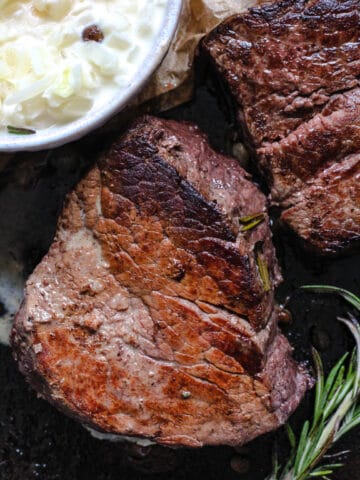
    Filet served in a cast iron skillet with rosemary next to it.

    Filet Steak in Cast Iron Skillet with Cream Sauce

    Everything you need to know about Eswatini (formerly Swaziland) including background, food culture, history of Eswatini, and popular recipes to make.
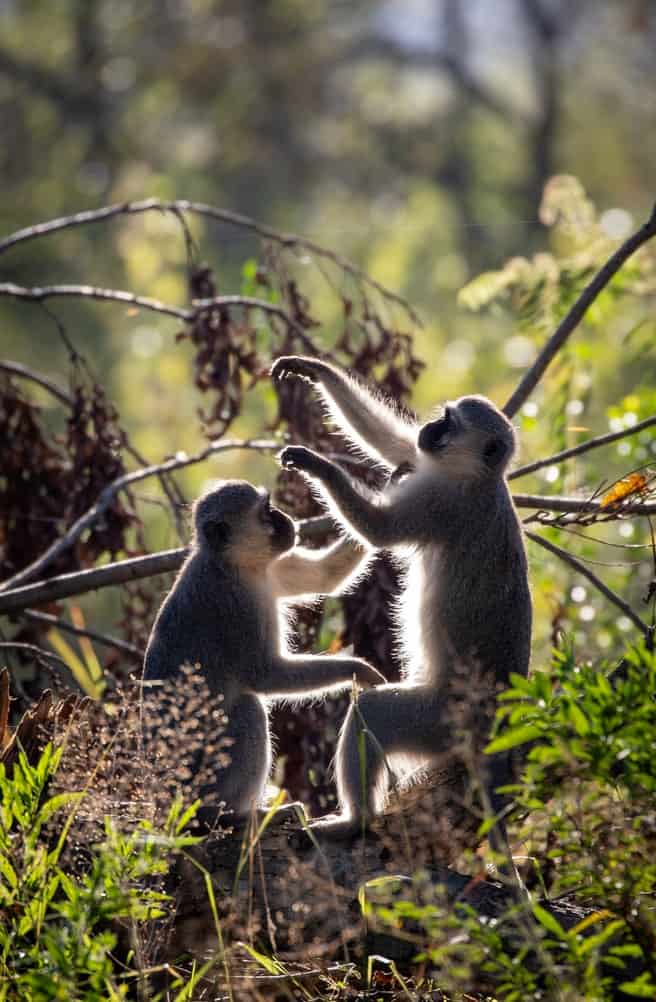
    two monkeys hanging from a tree in Eswatini

    Fun Facts about Eswatini 

    Flowers ad leaves with a purple background

    • The longest reigning monarch in the world was a Swazi king. Sobhuza II, KBE reigned from July 1899- August 1982, for a total of 82 years and 254 days. It is estimated that he had more than 70 wives and 210 children. He took over the throne at 4 months of age when his father died.
    • The Ngwenya mine is the world’s oldest mine, and is thought to be used during the stone age.
    • Eswatini is famous for Swazi candles! These are beautiful candles that are molded into shapes, normally of animals.

    Flag Friday
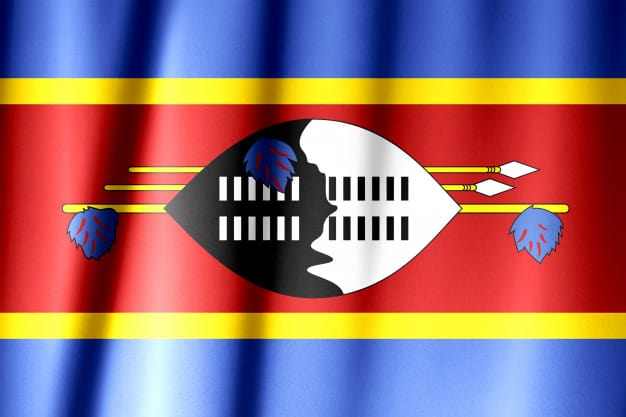
    Flag of Eswatini

    The flag of Eswatini features a large, horizontal blue stripe in the center of the flag bordered by two horizontal yellow stripes, then two horizontal blue stripes on the outside.

    The red banner in the center is home to the traditional black and white Nuguni shield made of ox hide with two spears & a staff behind the shield. The feathered tassels hanging off of the spears is called Njobo.

    The blue stands for peace and stability in the country. The yellow stands for the country’s resources, mostly the minerals the country produces. The red stands for the struggles of the nation.

    The shield is black and white to represent not only the color of the ox, but also the unity of the people of the black and white people of the country.

    The presence of the shield represents military traditions and protection from the nation’s enemies.

    Geography

    Map of Eswatini with a flag in the corner

    Eswatini is located in Southern Africa, bordered by Mozambique and South Africa. The capital of the country is Mbabane but the royal family lives in Lobamba. It is about 17,363 square kilometers (6,703 square miles).

    The Mt. Makhonjwa mountain range is the oldest mountain range in the world.

    Though Eswatini is small, it is home to the “Big 5” animals (lions, rhinos, buffalo, giraffes, and leopards), which makes it a good place for a safari. The national animal, the Thomson’s gazelle, can also be found in the country.

    History 

    Animals on a grassy cliff with rocks.

    The kingdom was established in the mid-18th century under leadership of Ngwane III, but Eswatini (formerly Swaziland) got its name from a 19th century ruler, King Mswati II. Under him, Swaziland expanded into an empire.

    The present boundaries of the country were established during the Scramble for Africa in 1881.

    Swaziland was a British protectorate from 1903 until it gained independence on September 6, 1968.

    In April 2018, the country changed its (English) name from Swaziland to Eswatini to celebrate 50 years of independence from British rule. The name means “place of the Swazi”.

    Eswatini’s Government
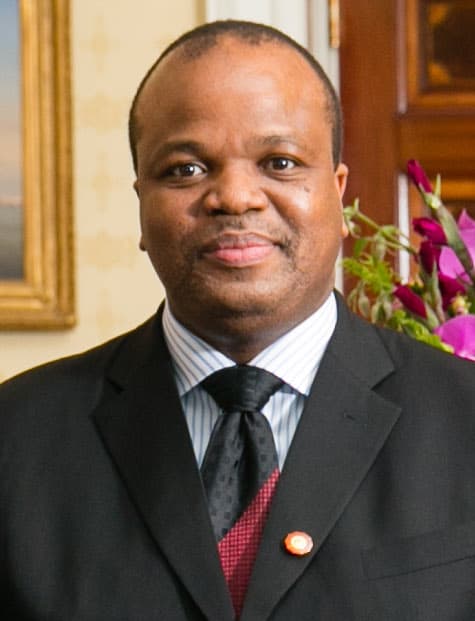
    King Mswati III
    President Barack Obama and First Lady Michelle Obama greet His Majesty King Mswati III, Kingdom of Swaziland, and Her Royal Highness Queen Inkhosikati La Mbikiza, in the Blue Room during a U.S.-Africa Leaders Summit dinner at the White House, Aug. 5, 2014. (Official White House Photo by Amanda Lucidon)

    Eswatini is run by Africa’s last absolute monarchy and the last diarchy. A diarchy means that the country is ruled by two completely independent authorities. In the case of Eswatini, the King rules (and is called the lion), and his mother, his equal in terms of political power, is called the She-Elephant.

    Eswatini’s kings are polygamous. Tradition says that the king cannot marry his fiances until they have become pregnant, as a way to prove that they can bear him children.The first wife is called the Ritual wife, and she isn’t allowed to have children.

    King Mswati III is the current ruler of Eswatini. King Mswati has 15 wives and (currently) 23 children. The monarchy does not follow the typical “first born son” rule for who takes over the throne. It can be any of the princes.

    Members of the royal family are easy to spot as they wear red feathers in their hair.

    Population

    galaxy as the view from Eswatini

    women singing in red robes in Eswatini

    The population of Eswatini is made up of 1.3 million people. These people are called Swazi!

    The national language of the country is Swati (or Siswati), but English is also taught in schools (a byproduct of being a British protectorate decades ago).

    About 97% of people in the country are Swazi, and about 83% of the country identify as Christian.

    Eswatini faces an incredibly difficult HIV crisis. It is estimated that about 25% of adults between the ages 15-49 are HIV positive, meaning that over 200,000 people of the 1.3 million people in the country are living with the virus.

    Because of this, Eswatini has one of the lowest life expectancies in the world at about 50 years. It is estimated that about 1 in 6 children are orphaned due to both of their parents dying from HIV.

    Culture

    Women dancing with reeds at the Umhlanga ceremony
    Women in traditional costumes marching at the Umhlanga aka Reed Dance ceremony - 01-09-2013 Lobamba, Swaziland

    The Umhlanga is an 8 day cultural tradition that celebrates chastity and virginity. Women (virgins only) travel from around the country to gather and dance at this ceremony, and, at the end of it, the King is permitted to choose a wife from the dancers. These days, the ceremony is more about preserving heritage than it is about finding a wife for the king.

    • Filet Steak in Cast Iron Skillet with Cream Sauce

    Primary Sidebar

    What are you looking for?

    Welcome to The Foreign Fork, I'm Alexandria!

    And I'm cooking one meal from every country in the world. 196 countries, and we’re cooking them all! On The Foreign Fork, each dish is researched using local cooks and sources to ensure every recipe brings real Culture to your Kitchen. I have been featured in major national news publications, won the Saveur Blog Award for Most Groundbreaking Voice, and published a cookbook of my most well-loved recipes. I can't wait to show what the world has to offer... Welcome to the adventure! 

    Learn More

    Trending Recipes

    • A serving bowl piled high with farofa and some spilling over onto a platter next to a serving spoon laying beside it.
      Farofa (Toasted Cassava Flour) from Brazil
    • Slices of Rainbow Roll sushi with chopsticks and soy sauce.
      Rainbow Roll Sushi Recipe
    • Hand pulling apart a pupusa, in front of a plate of pupusas, curtido, and dipping sauce.
      Pupusa Recipe from El Salvador
    • A bowl of Sopita topped with queso fresco and surrounded by limes and cilantro.
      Sopita Recipe (Sopa de Conchas): Mexican Shells and Cheese

    Christmas Recipes

    • A close-up of creamy cookie butter being scooped from a jar with a butter knife.
      Homemade Cookie Butter Recipe
    • A bite taken out of a buttery pecan snowball cookie sitting on a bowlful of them.
      Buttery Pecan Snowball Cookies
    • Beautiful traditional Italian Pizzelle cookies laying on a wooden serving board with powdered sugar dusted over some of them.
      Traditional Italian Pizzelle Recipe
    • Chopped walnuts laying around a stack of freshly baked walnut cookies that are dusted with powdered sugar, laying on parchment paper.
      Walnut Cookies

    Footer

    • Home
    • About
    • Contact
    • Press
    • HTML Sitemap
    • Privacy Policy
    • Accessibility Statement
    • Facebook
    • Instagram
    • Pinterest
    • TikTok
    • YouTube

    Copyright © 2025 The Foreign Fork