

• Skip to primary navigation
  • Skip to main content
  • Skip to primary sidebar
  • Skip to footer
The Foreign Fork logo
  • Home
  • Countries We’ve Cooked
  • Recipe Index
    • Search by Interactive Map
    • African Recipes
    • Asian Recipes
    • Caribbean Recipes
    • Central American Recipes
    • European Recipes
    • Middle Eastern Recipes
    • North American Recipes
    • Oceanic Recipes
    • South American Recipes
    • Search by Course
      • Breakfast
      • Appetizers
      • Drinks
      • Breads
      • Soups
      • Main Courses
      • Sauces
      • Side Dishes
      • Desserts
    • Search by Ingredient
      • Beef Recipes
      • Chicken Recipes
      • Potato Recipes
      • Rice Recipes
      • Seafood Recipes
  • About
  • Contact
  • Nav Social Menu

    • Facebook
    • Instagram
    • Pinterest
    • YouTube
menu icon
go to homepage
search icon
Homepage link
  • Home
  • Recipe Index
    • Search by Interactive Map
    • African Recipes
    • Asian Recipes
    • Caribbean Recipes
    • Central American Recipes
    • European Recipes
    • Middle Eastern Recipes
    • North American Recipes
    • Oceanic Recipes
    • South American Recipes
    • Search by Course
      • Breakfast
      • Appetizers
      • Drinks
      • Breads
      • Soups
      • Main Courses
      • Sauces
      • Side Dishes
      • Desserts
    • Search by Ingredient
      • Beef Recipes
      • Chicken Recipes
      • Potato Recipes
      • Rice Recipes
      • Seafood Recipes
  • Countries We’ve Cooked
  • About
  • Contact
    • Facebook
    • Instagram
    • Pinterest
    • YouTube
  • ×

    Gabon Country Introduction and Recipes
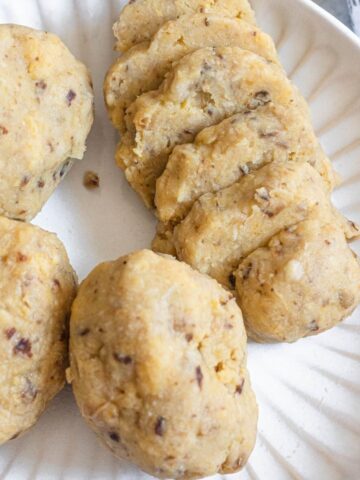
    Plantain pile pieces on a large white plate in a pile.

    Plantain Balls (Plantain Pilé) from Gabon

    Everything you need to know about Gabon including background, food culture, history of Gabon, and popular recipes to make.
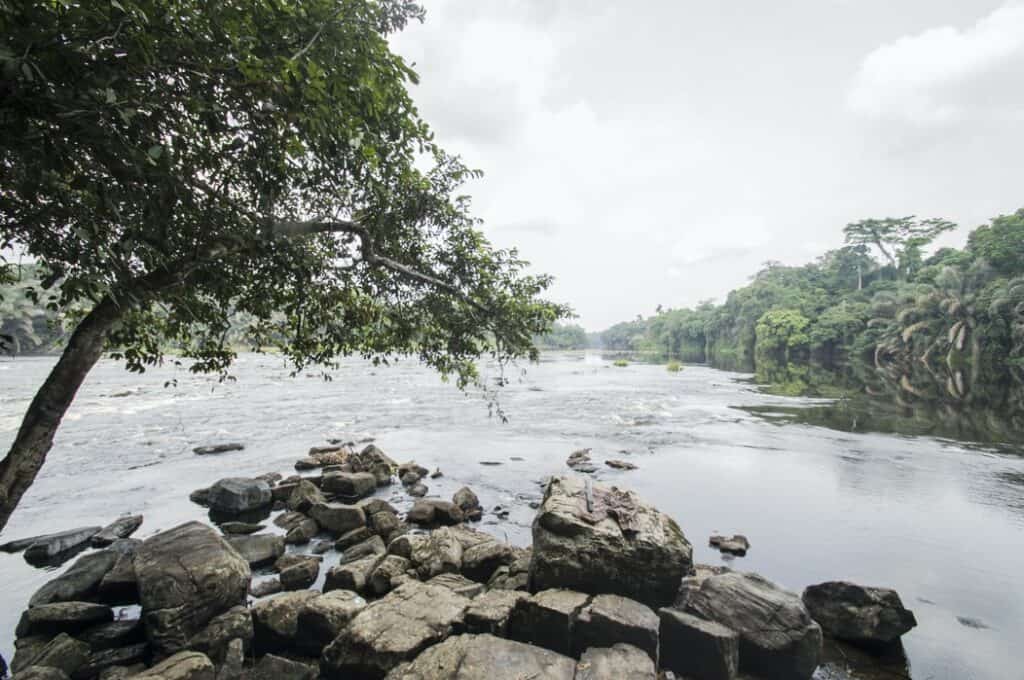
    Water and rocks in Gabon

    Fun Facts

    • 85% of Africa’s gorilla population lives in Gabon
    • The national animal is the black panther
    • Gabon is home to the oldest known fossils of a multicellular organism
    • Oklo is home to the only natural nuclear fission reactor, with the nuclear fission reactions taking place 1.7 billion years ago

    The Flag of Gabon
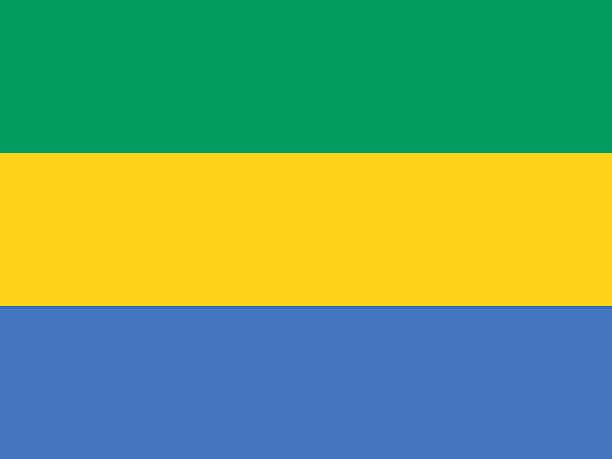
    Gabonese flag

    The flag of Gabon is made up of 3 horizontal stripes. The green stripe on the top represents the rainforest and natural resources in the country.

    The middle stripe is yellow and symbolizes the sun and the equator that passes through the country.

    The bottom stripe is blue and represents the Atlantic Ocean.

    Geography 
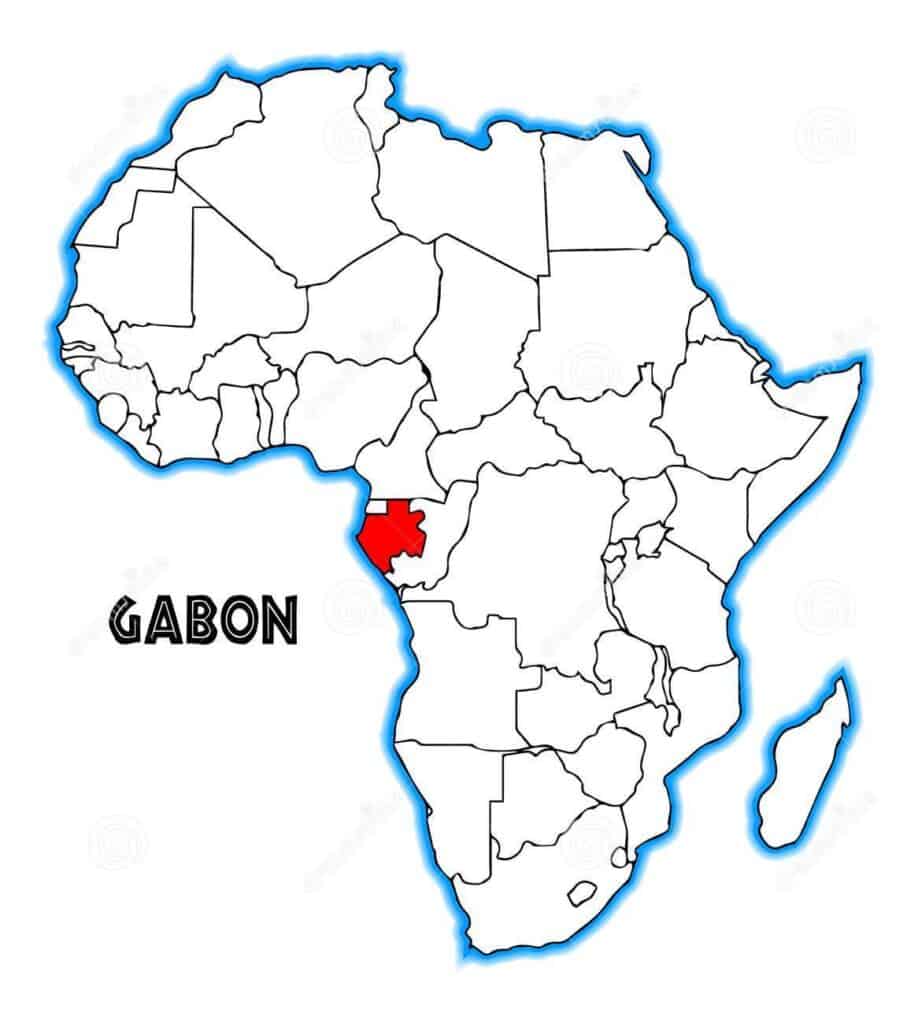
    Gabon on a map

    Gabon is located on the western side of Central Africa. It borders Cameroon, Equatorial Guinea, and the Republic of the Congo.

    The capital city of Gabon is “Libreville”. Libreville was started by 52 freed slaves that were left there by the French in 1846. They named the town Libreville because it means “Free Town”.

    The country is made up of 3 different regions: the coastal plain, the central highlands, and the thick jungle interior. In 2005, Gabon announced that it would set aside 10% of its land as protected national parks.

    This announcement was a big deal for the country, as it is the 2nd most forested African country and is home to 80% of the world’s gorillas. Up until this point, Gabon didn’t have any national parks in place.

    80% of Gabon’s exports are oil, which brings in a lot of money for the country. Because of the oil industry, Libreville is one of the most expensive cities in Africa.

    Population 
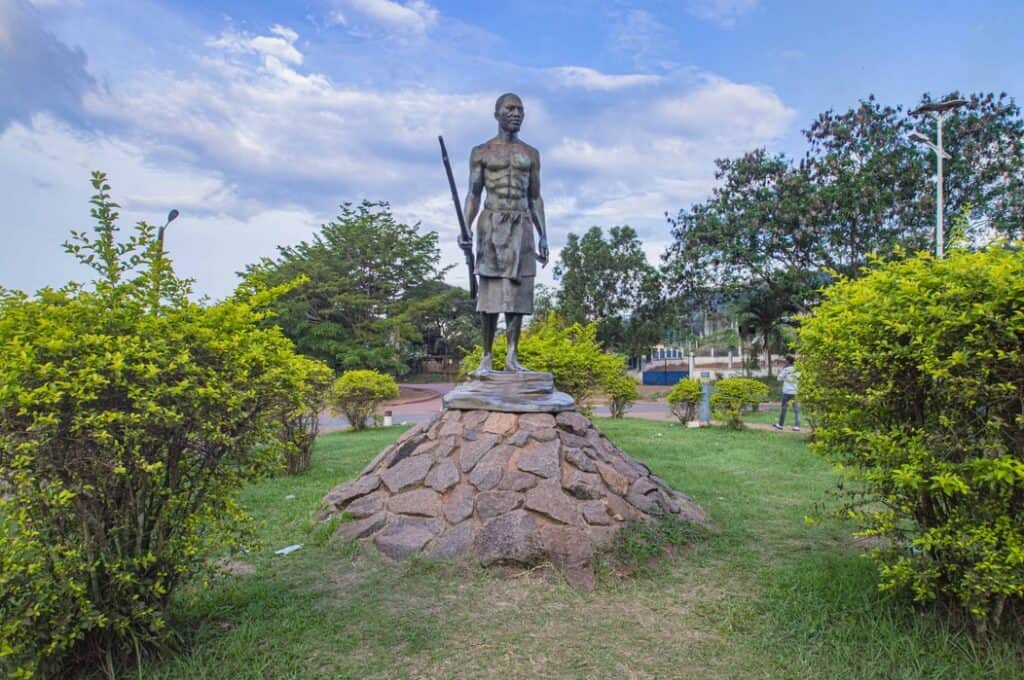
    Statue in a park

    2.1 million people live in Gabon. Of these people, most are of Bantu origin. About 30% of Gabonese are of the Fang people.

    ¾ of the Gabonese are Christians. The official language is French and 80% of the population speaks it as their first language.

    There is a cultural norm (in Gabon and many other African countries) that in case of divorce any children born before the marriage “belong” to the woman. Any children born after marriage “belong” to the man.

    History of Gabon 
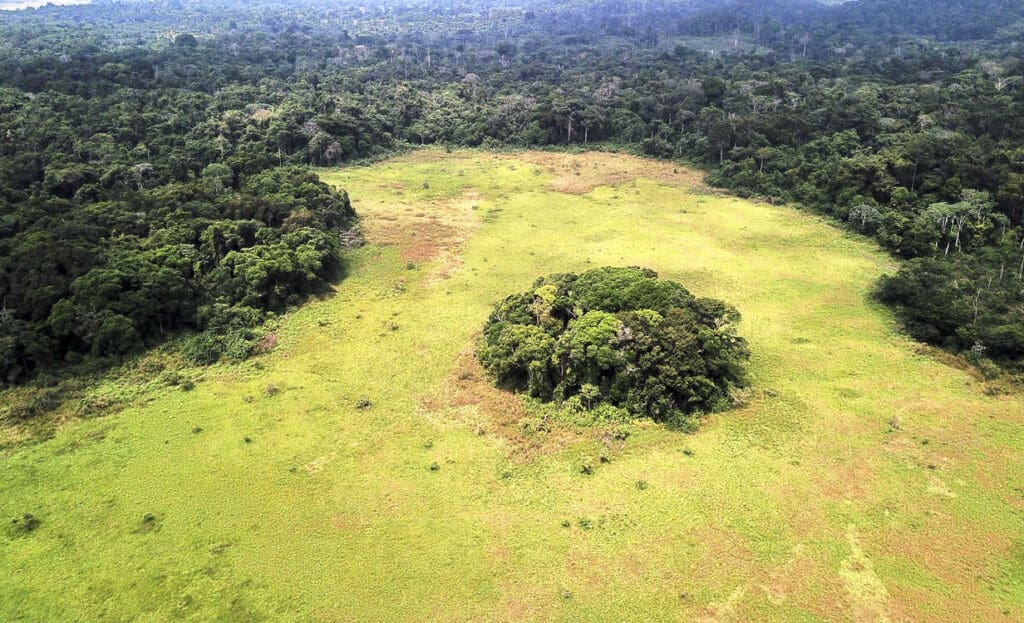
    Oflope National Park

    Gabon was initially populated by pygmy people. In between 1000 BC and 1 AD, the Bantu people moved into the area. The Bantu made up the Fang people, the Kota people, and many more in modern-day Gabon.

    In 1472, the Portuguese sighted Gabon. In 1885, France claimed Gabon and had control over the country until Gabon declared its independence in 1960.

    After this, Léon M’ba was the first president of the country, serving from 1902-1967. M’ba was a dictator and physically demanded respect from the citizens of Gabon, even whipping citizens that didn’t salute him in the streets.

    The next president was Omar Bongo Ondimba, one of the longest ruling leaders in the world, serving for around 42 years. He died in 2009.

    Present day, the son of Omar Ondimba, Ali Bongo Ondimba, is now president.

    Food in Gabon
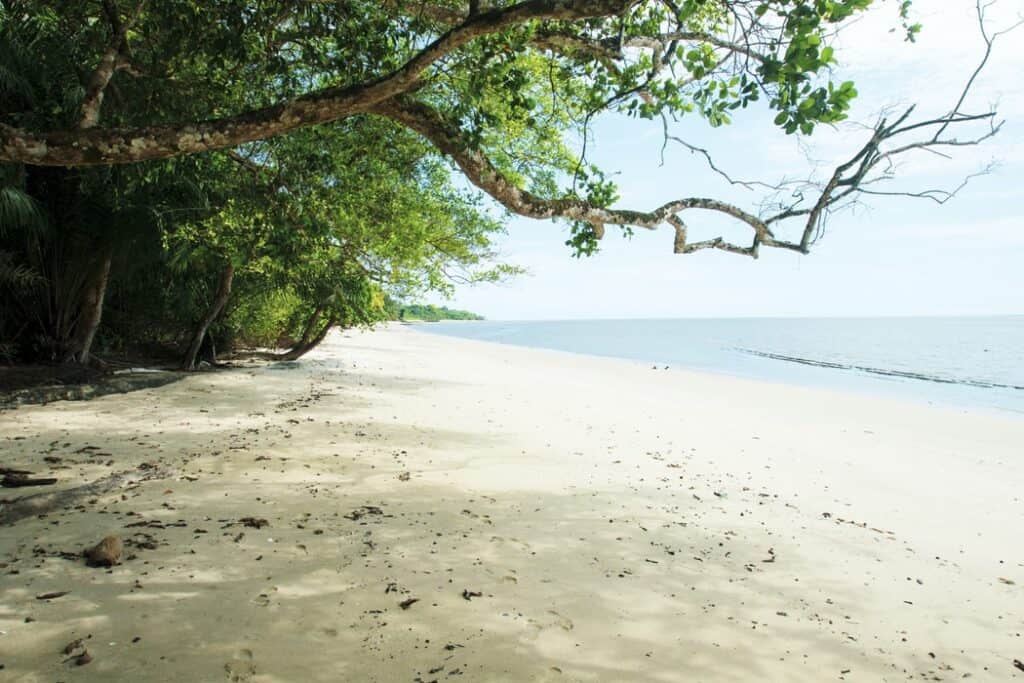
    White sandy beach with green trees

    Due to its history with French occupation, there is a lot of French flavor in Gabonese cuisine.

    Beignets are popular as are baguettes. However, instead of butter, baguettes are eaten with boiled atanga fruit.

    Palm nuts are popular and red palm oil is common in most Gabonese dishes. The national dish of Gabon is Nyembwe Chicken, a chicken stew made with palm oil.

    Iboga root drinks are a cultural practice that induce hallucinogens.

    • Plantain Balls (Plantain Pilé) from Gabon

    Primary Sidebar

    What are you looking for?

    Welcome to The Foreign Fork, I'm Alexandria!

    And I'm cooking one meal from every country in the world. 196 countries, and we’re cooking them all! On The Foreign Fork, each dish is researched using local cooks and sources to ensure every recipe brings real Culture to your Kitchen. I have been featured in major national news publications, won the Saveur Blog Award for Most Groundbreaking Voice, and published a cookbook of my most well-loved recipes. I can't wait to show what the world has to offer... Welcome to the adventure! 

    Learn More

    Trending Recipes

    • A serving bowl piled high with farofa and some spilling over onto a platter next to a serving spoon laying beside it.
      Farofa (Toasted Cassava Flour) from Brazil
    • Slices of Rainbow Roll sushi with chopsticks and soy sauce.
      Rainbow Roll Sushi Recipe
    • Hand pulling apart a pupusa, in front of a plate of pupusas, curtido, and dipping sauce.
      Pupusa Recipe from El Salvador
    • A bowl of Sopita topped with queso fresco and surrounded by limes and cilantro.
      Sopita Recipe (Sopa de Conchas): Mexican Shells and Cheese

    Christmas Recipes

    • A close-up of creamy cookie butter being scooped from a jar with a butter knife.
      Homemade Cookie Butter Recipe
    • A bite taken out of a buttery pecan snowball cookie sitting on a bowlful of them.
      Buttery Pecan Snowball Cookies
    • Beautiful traditional Italian Pizzelle cookies laying on a wooden serving board with powdered sugar dusted over some of them.
      Traditional Italian Pizzelle Recipe
    • Chopped walnuts laying around a stack of freshly baked walnut cookies that are dusted with powdered sugar, laying on parchment paper.
      Walnut Cookies

    Footer

    • Home
    • About
    • Contact
    • Press
    • HTML Sitemap
    • Privacy Policy
    • Accessibility Statement
    • Facebook
    • Instagram
    • Pinterest
    • TikTok
    • YouTube

    Copyright © 2025 The Foreign Fork