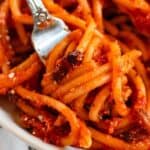
Bucatini all'Amatriciana with Extra Crispy Guanciale
Amatriciana is a classic Roman pasta dish made with crispy guanciale (pork cheek), tomatoes, Pecorino Romano, and pasta tossed together into a rich, savory sauce. This Amatriciana recipe keeps the ingredients simple and traditional, but we add one step at the end that really takes your recipe to next-level-crispiness!
Servings 6 servings
Calories 499kcal
Ingredients
- 1 (28 oz) can San Marzano tomatoes
- 6 oz guanciale skin removed and chopped into strips
- ¼ cup white wine
- 1 red chili pepper seeds removed and minced
- ¾ lb dry bucatini or spaghetti
- ½ cup grated Pecorino Romano cheese
Instructions
- Put 1 (28 oz) can San Marzano tomatoes in a bowl and crush them by hand. Place a pot of water on the stove to start boiling (we will use this to cook the pasta later).
- Put 6 oz guanciale in a dry, hot pan and sauté until the fat renders and the guanciale crisps up, about 7–8 minutes.
- Add ¼ cup white wine to the guanciale and allow it to simmer until it reduces to half. Use a slotted spoon to remove the guanciale and set aside.
- Add 1 red chili pepper to the fat still in the pan and saute for about 30 seconds.
- Then add the crushed tomatoes and reduce the heat to low for 10–12 minutes. Cook, stirring occasionally, and add salt as needed.
- While the sauce is heating, add the ¾ lb dry bucatini or spaghetti to the boiling water and cook according to the package instructions. When done, use tongs or a slotted spoon to remove the pasta from the pot, reserving some pasta water.
- Once the sauce has warmed, add about ¾ of the guanciale back to the sauce and stir to combine. Then add the cooked pasta to the sauce on the stove and stir to make sure the pasta is coated.
- Remove the pasta from the heat, then sprinkle with ½ cup grated Pecorino Romano cheese. Toss the pasta in the pan until the cheese melts into the dish.
- Serve and top each plate with more Pecorino Romano and the remaining guanciale. Enjoy!
Video
Notes
Recipe researched using Chef Jean-Pierre and Giallozafferano Recipes.
Recipe Copyright The Foreign Fork. For educational or personal use only.
- Guanciale: Guanciale is cured pork cheek and the traditional meat used in Amatriciana. It has a rich, silky fat that renders beautifully into the sauce while becoming crisp around the edges. While it looks like bacon, it is typically much fattier and less meaty. If guanciale is unavailable, pancetta is the next best substitute. Bacon can work in a pinch, but try to use unsmoked bacon so the smoky flavor does not overpower the dish.
- San Marzano Tomatoes: San Marzano tomatoes are naturally sweeter and less acidic than many canned tomatoes, making them ideal for simple sauces like Amatriciana where the tomato flavor really shines. Crushing them by hand creates a rustic texture that clings beautifully to the pasta.
- Pecorino Romano Cheese: Pecorino Romano adds a sharp, salty flavor that balances the richness of the guanciale. Since the dish uses very few ingredients, using authentic Pecorino Romano makes a noticeable difference in flavor and grating it yourself will make a huge difference in the texture.
- Red Chili Pepper: Fresh chili adds subtle heat that cuts through the richness of the sauce. Crushed red pepper flakes or Calabrian chili paste can also work if fresh chilies are unavailable.
- Bucatini or Spaghetti: Bucatini is the traditional pasta choice because its hollow center helps trap the sauce, but spaghetti works beautifully as well.
- Use freshly grated Pecorino Romano for the smoothest texture and best flavor.
- Save a little pasta water before draining in case the sauce needs loosening. Add a tablespoon at a time until the sauce reaches your desired consistency.
- Cook the guanciale slowly enough to properly render the fat without burning it. Be patient!
- Avoid adding garlic or onion if you want the dish to stay traditional.
- Toss the cheese into the pasta off the heat to prevent clumping or separation.
- For restaurant-style presentation, twist the pasta into a ladle before plating to create a neat swirl shape.
Nutrition
Serving: 1serving | Calories: 499kcal | Carbohydrates: 53g | Protein: 15g | Fat: 25g | Saturated Fat: 10g | Polyunsaturated Fat: 1g | Monounsaturated Fat: 1g | Cholesterol: 39mg | Sodium: 522mg | Potassium: 552mg | Fiber: 4g | Sugar: 8g | Vitamin A: 390IU | Vitamin C: 23mg | Calcium: 148mg | Iron: 3mg